
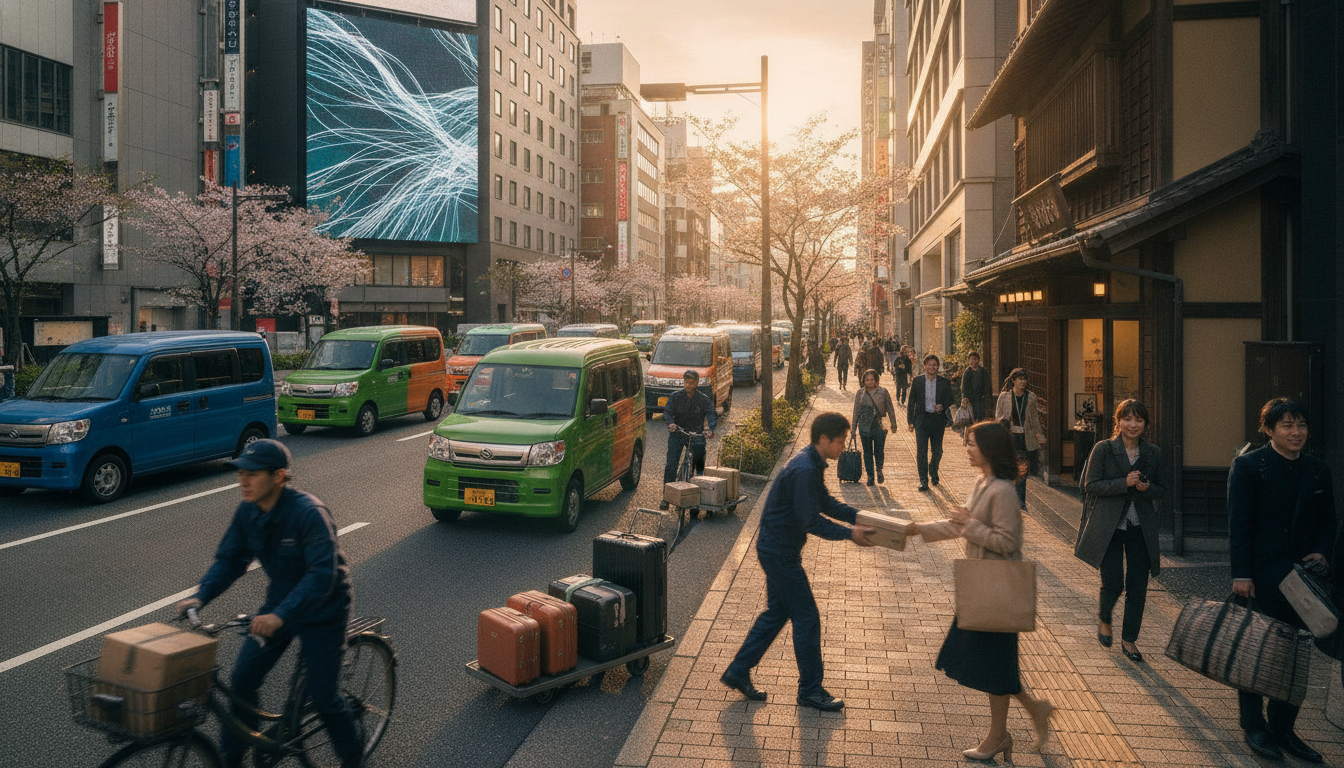
Luggage delivery in Japan: updated guide to same‑day and next‑day forwarding, prices and top providers
Luggage delivery in Japan: a practical, up‑to‑date guide to same‑day and next‑day forwarding, typical fares, booking steps and restrictions — updated August 28, 2026.
Japan’s network of luggage‑forwarding services now offers a predictable mix of next‑day economy options and limited same‑day runs that can save travellers time and hassle. Luggage delivery in Japan remains widely available at major airports, city counters and hotel front desks, with prices and cut‑off times that vary by carrier. This guide summarizes the options, typical costs as of August 28, 2026, and the practical steps travellers should follow to forward bags across cities or to and from airports.
Prices and service availability updated August 28, 2026
As of August 28, 2026, most domestic forwarding is priced from roughly ¥1,700 to ¥4,700 for standard suitcases, depending on size and route. Major players — Yamato TA‑Q‑BIN, Sagawa, JAL ABC, Airporter, Bounce and LuggAgent — publish distinct price bands for carry‑on, regular (up to 160 cm) and oversized pieces. Same‑day services exist but are the exception rather than the rule and carry a premium that can exceed standard next‑day fees by several thousand yen.
Service availability differs by airport and city; Haneda and Narita retain multiple counters and same‑day options for selected destinations, while Kansai and New Chitose offer more limited walk‑up same‑day desks. Many prices quoted in this guide reflect carrier rates and partner platforms checked in August 2026; travellers should confirm rates at the time of booking for the most current fare.
Same‑day delivery: routes, deadlines and costs
Same‑day deliveries are offered on a limited set of routes and require strict adherence to drop‑off windows and registration rules. In Tokyo, several providers run same‑day airport‑to‑hotel services with cut‑offs typically in the late morning: common deadlines include 11:00 a.m. for Yamato’s Haneda same‑day option and 1:00 p.m. for some Sagawa counters. Airporter and LuggAgent offer same‑day runs when booked in advance, but the precise drop‑off and pick‑up windows vary by airport and hotel location.
Costs for same‑day transfers are noticeably higher than next‑day forwarding. Example fares checked in August 2026 include Yamato same‑day Haneda deliveries at around ¥5,170 for a 160‑cm bag on certain routes, LuggAgent (via third‑party booking) starting from roughly ¥4,700 per bag, and JAL ABC flat same‑day fares of about ¥1,800 for specific Maihama and Shin‑Urayasu partner hotels. For intercity same‑day moves by Shinkansen, the Luggage Express service from JTB can exceed ¥13,000 on long routes such as Tokyo–Kyoto.
Leading providers and typical fares
Yamato TA‑Q‑BIN remains the most extensive nationwide network, offering airport counters, konbini drop‑offs and hotel collection for next‑day and, in selected cases, same‑day service. Typical airport‑to‑central‑Tokyo fares for a 160‑cm suitcase range from about ¥3,290 to ¥3,680 plus an airport counter fee. Yamato’s maximum accepted size is generally 200 cm and 30 kg, and standard cover is up to ¥300,000 per bag.
Sagawa Express is competitive on walk‑up same‑day hotel delivery from key Tokyo locations and airports. Same‑day hotel delivery from Haneda and central Tokyo counters can start as low as around ¥910 for the smallest categories and go up to approximately ¥2,440 for larger suitcases. Sagawa’s same‑day footprint varies by prefecture and tends to be limited to partner hotels and staffed desks.
JAL ABC operates widespread airport counters and accepts walk‑up shipments to most hotels nationwide. Standard airport delivery to the Kantō area for a 160‑cm piece was about ¥2,820 as of August 2026. JAL ABC provides specific same‑day runs from Haneda to a fixed list of Maihama and Shin‑Urayasu hotels for a flat fee, and Kansai Airport offers a one‑way same‑day service to central Osaka and Kyoto for a surcharge.
Airporter specializes in same‑day bookings between hotels and airports, with English booking and credit card payments. Within Tokyo, Airporter’s hotel‑to‑airport fares start near ¥1,650 for carry‑on size bags and rise to about ¥2,200 for regular suitcases. Airporter’s network links multiple airports and major hotel districts in a single day, but it requires hotel front‑desk participation and prebooking.
Bounce operates as a consumer booking platform that leverages Yamato’s network and provides an English booking flow. Bounce’s starting prices for small bags are advertised from about ¥2,090, with regular categories from roughly ¥3,070; Bounce applies Yamato size and weight limits and offers a discretionary protection scheme up to a stated compensation level. JTB and related partners were planning to integrate Luggage Express booking into app platforms from September 2026.
LuggAgent, often booked through third‑party vendors, emphasizes same‑day airport pickup and English‑language confirmations. Base fares checked in August 2026 start near ¥4,700 per bag with a common two‑bag minimum when booked via reseller platforms, and surcharges may apply for oversized or overweight items.
Booking and practical steps for travellers
Confirm hotel acceptance before you forward luggage; most same‑day hotel deliveries require a staffed front desk able to receive registered guests’ packages. When booking, supply a reliable contact number — hotels’ landlines are usually acceptable for hotel deliveries, but private rentals or unstaffed properties often require a local mobile number. If you intend to use a travel eSIM or voice SIM, ensure the number you give supports calls or SMS for delivery notifications.
Allow time to measure and weigh luggage accurately; carriers use combined length (height + width + depth) to determine size bands. Pack overnight items and valuables in a daypack if you are sending luggage ahead on a next‑day schedule. Always ask for a receipt or booking confirmation with tracking details and photo evidence if the provider requires a drop‑off photo, and keep the confirmation until your bag has been received at its destination.
For airport‑bound shipments, note that many carriers require bags to be sent two days before departure when using standard airport services, though some same‑day airport options exist with earlier cut‑offs. If you need same‑day delivery to an airport, confirm the required lead time, the collection point and the documentation you must show to collect the bag at the departures counter.
Restrictions, insurance and items to keep with you
All carriers restrict hazardous materials, valuables and certain fragile items from standard forwarding services. Typical exclusions include cash, passports, important documents, lithium batteries not correctly packed, perishables and high‑value items unless special arrangements or additional insurance are purchased. Each provider publishes compensation limits — for example, some services offer standard cover amounts around ¥100,000 to ¥300,000 per customer or per item, with optional top‑ups available for higher declared values.
Size and weight limits differ by service: common caps are 160 cm and 30 kg for regular airport delivery, while city‑to‑city and TA‑Q‑BIN limits can extend to 200 cm and 30 kg, or higher for specialty large‑item handling. Oversized items often require separate booking classes and can carry a significant surcharge. If you are shipping electronics, musical instruments or fragile goods, check whether the carrier accepts them under standard terms or requires bespoke packing and insurance.
Keep passports, travel documents, cash, jewelry and devices with you at all times; do not rely on luggage‑forwarding insurance for items you cannot afford to lose. Record item lists and take dated photographs of contents before drop‑off; these steps accelerate claims for loss or damage and are frequently requested by carriers during incident handling.
When forwarding luggage saves time and when it doesn’t
Forwarding luggage is most effective when it eliminates trips with heavy bags across congested transit or when you plan multi‑city travel with hotel changes. Sending luggage ahead can speed transfers from the airport into the city, reduce the need for taxis or luggage‑unfriendly trains, and free you to sightsee before hotel check‑in. For multi‑city itineraries, next‑day TA‑Q‑BIN forwarding lets you travel light on intercity trains and buses while your bags arrive at your next hotel.
Same‑day forwarding is worth the premium when you must reclaim checked baggage quickly after an early flight or when switching hotels within the same urban area. However, the economics do not always favour same‑day or premium Shinkansen‑based services for long distances; in some cases, the cost of a premium luggage transfer can approach or exceed the traveller’s own fare on a reserved Shinkansen seat. If timing is flexible, next‑day economy forwarding typically offers the best balance of cost and convenience.
Final checks before choosing a service should include the receiving party’s ability to accept packages, the provider’s published cut‑off times, the exact size and weight of your bags, and the compensation terms for loss or damage. Always compare total door‑to‑door costs rather than base fares alone, since counter fees, same‑day surcharges and optional insurance can materially change the final price.
Travellers who value time over a marginal fee often find forwarding luggage in Japan a decisive convenience that simplifies movement between airports and urban centres, provided they plan around the documented cut‑offs and hotel acceptance rules.

