
Shinagawa Station guide: updated services, facilities and tips for travelers ahead of 2027 season
Shinagawa Station remains a major Tokyo transport hub with new service changes and facility updates travellers should note before the busy mid-February to early March 2027 travel window. This guide to Shinagawa Station covers recent ticketing changes, intercity bus routes, accessibility upgrades, luggage options and dining and shopping inside the Ecute complex. Read on for practical navigation tips and nearby destinations that will help commuters and visitors plan journeys through one of Tokyo’s busiest rail interchanges.
Key changes and travel updates at Shinagawa Station
Shinagawa Station has seen a number of operational adjustments in recent years that affect how both domestic and international passengers use the site. The JR EAST Travel Service Center at Shinagawa closed in March 2025, shifting English-language in-person support to the TAKANAWA GATEWAY Travel Service Center one stop away on the Yamanote Line. This closure means passengers seeking face-to-face help with JR passes or Shinkansen reservations should allow extra time to reach the alternate service center.
Another notable change that affects long-distance travellers is the removal of smoking rooms aboard JR trains, which JR phased out in March 2024. Despite that national policy, Shinagawa Station retains two designated smoking rooms inside the ticketed area for bullet train passengers. These rooms are located past the Shinkansen gates and offer a restricted space for those who require it before boarding.
The station also serves as a departure point for several highway bus services, including lines to Chiba Prefecture and weekend services to Gotemba Premium Outlets, making Shinagawa a convenient interchange for passengers heading beyond central Tokyo. Seasonal and schedule variations occur, so travellers should verify specific departure times, especially during peak travel periods such as the mid-February to early March 2027 window referenced by local event listings.
Shinagawa’s retail and facility landscape continues to evolve with new pop-ups and long-term tenants inside Ecute and the surrounding development areas. Recent neighborhood developments such as Takanawa Gateway City and the opening of MoN Takanawa in March 2026 add cultural and leisure options near the station that affect how passengers plan layovers and onward itineraries.
Train and bus connections from Shinagawa Station
Shinagawa Station functions as an important node on Tokyo’s rail map, linking local lines with the Tōkaidō Shinkansen and multiple private railways. The station handles local and rapid services on the Yamanote, Keihin-Tōhoku and Tōkaidō lines, while the Tōkaidō Shinkansen provides direct high-speed links to Nagoya, Kyoto and Osaka. For travellers heading to regions not served by the Tōkaidō Shinkansen, Tokyo Station remains the principal departure point.
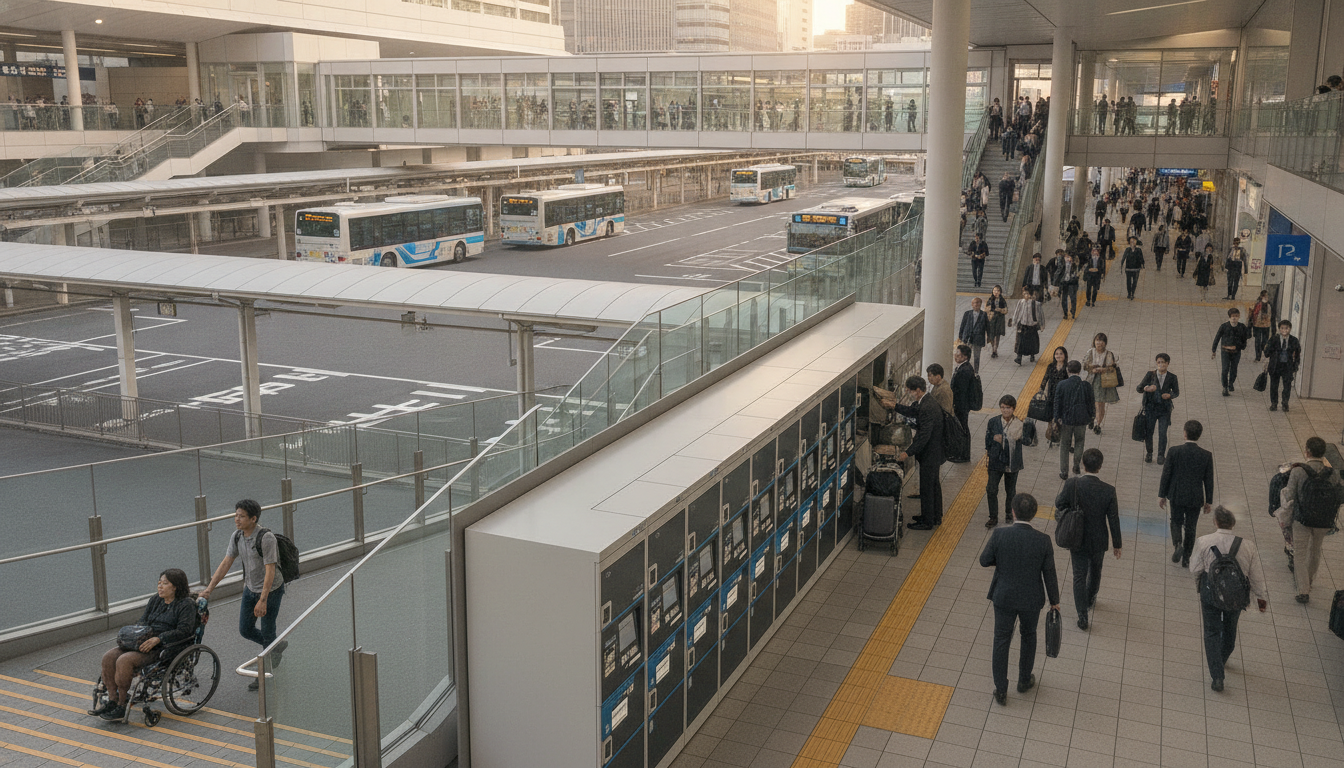
Highway bus services operate from the Kōnan Exit for many regional and suburban destinations. Direct buses from Shinagawa reach Sodegaura Bus Terminal, Kisarazu Station and Nagaura Station in Chiba Prefecture, offering a straightforward alternative to rail for certain journeys. Weekend and holiday-only services also connect Shinagawa with leisure destinations such as Gotemba Premium Outlets, providing a practical option for shoppers without a private car.
Shinagawa is also a convenient boarding point for long-distance buses bound for the Mount Fuji area. Some services run between Haneda Airport and Shinagawa Station and continue on to Kawaguchiko Station and Fujisan Station, creating a single-seat option for passengers travelling to the Fuji Five Lakes region. Given the variety of operators and routes, passengers should confirm departure platforms and advance reservation requirements when planning trips that combine rail and bus segments.
For airport transfers, private car services remain an efficient alternative for travellers with heavy luggage or complex itineraries. These booked transfers typically provide door-to-door convenience and flexible waiting times, which can be especially helpful for early-morning or late-night flights when public transport options are reduced.
Facilities, accessibility and passenger services
Shinagawa Station balances essential commuter functions with amenities intended to improve passenger comfort and accessibility. The station complex offers restrooms, staffed and automated ticketing services, free Wi-Fi hotspots in public areas and a comprehensive lost-and-found desk. These baseline services are distributed across the JR and private rail precincts to serve different passenger flows.
Accessibility installations are extensive and clearly signposted throughout Shinagawa Station. Standard features include tactile guidance tiles for visually impaired passengers, elevators that link concourses and platforms, accessible restrooms and ramps in key concourse areas. For parents and caregivers, the station provides a sizeable nursing room located close to the JR area turnstiles, offering private facilities for infant care in a conveniently central location.
Ticketing support inside Shinagawa has adapted following the closure of the JR EAST Travel Service Center. The JR Ticket Office remains operational in several locations across the complex, including opposite the Central Gate and near the Shinkansen platforms, and ticket vending machines operate almost continuously from early morning until the last trains. Travellers requiring longer, language-assisted services should plan to visit the TAKANAWA GATEWAY Travel Service Center, which maintains English-language staff and operates on a defined schedule.
Passenger comfort features include waiting areas furnished with seating and a couple of massage chairs near the Shinkansen ticket gates. These short-stay facilities are popular among commuters and long-distance travellers seeking a brief rest before boarding. The presence of convenience stores, kiosks and a tax-free counter within Ecute supports both daily commuters and international visitors.
Lockers, ticket offices and luggage options at Shinagawa Station
Shinagawa Station provides multiple luggage solutions to suit short and longer duration storage needs. Coin lockers are available at several strategic points in the station, including the south end of the Ecute mall inside the Central Gate, near the west or Takanawa entrance and along the north wall inside the North Gate. These lockers accept cash and many also accept rechargeable transit cards such as Suica, providing convenient payment flexibility.
Locker sizes range to accommodate everyday bags up to medium suitcases, with prices generally varying by size. Typical fees for lockers fall in a range that accommodates quick stows for commuters and longer holds for travellers who plan to explore the city unencumbered. For full-sized suitcases or extended storage needs, passengers should inquire at staffed ticket offices or consider external baggage services that provide same-day delivery or hotel transfer options.
Ticketing for bullet trains and JR services remains accessible despite the Travel Service Center closure. The JR Ticket Office and multiple machines handle seat reservations, non-reserved ticket purchases and rail pass activations, but travellers who rely on multilingual, in-person assistance should visit the TAKANAWA GATEWAY center for English support. During peak travel days, advance reservations or seat bookings are recommended to avoid standing in long ticket queues at the last minute.
For those transferring to airports or heading to tourist destinations with large luggage, private transfer services from Narita and Haneda offer door-to-door options priced by vehicle rather than per passenger. These services typically include flight tracking and flexible waiting windows, which can reduce stress for groups and families carrying multiple bags.
Food, shopping and services inside Ecute Shinagawa
Ecute Shinagawa is the station’s principal retail and dining complex and offers a broad selection of takeaway counters, restaurants and specialty shops. The mall hosts around 35 takeaway outlets catering to commuters who collect prepared meals on the way home, while approximately 15 sit-down restaurants and cafes provide options for longer breaks between connections. Options span familiar Japanese comfort foods—ramen, udon and sushi—to international-brand cosmetics counters and artisan pop-ups.
Ekiben options are a highlight for passengers catching the Shinkansen, and dedicated vendors near the bullet train gates sell boxed meals designed for consumption on long journeys. Hanagataya is a prominent ekiben purveyor offering certified bento recognized by JR, and additional shops inside and beyond the turnstiles stock a range of regional and creatively themed bentō. For travellers with dietary concerns, many vendors provide allergen information via QR codes or printed labels on the packaging.
Ecute’s specialty stores include international beauty counters, a selection of Japan-made textile and accessory shops, and rotating pop-up spaces that showcase local artisans and seasonal items. These rotating vendors make Ecute a dynamic shopping environment where commuters often find last-minute gifts and souvenirs. Regular shoppers report that discounted items are frequently available later in the day as shops clear evening inventory.
For coffee and light refreshments, passengers can choose between Saza Coffee inside Ecute and Lat. 25 located in the Shinkansen waiting area. Craft beer enthusiasts will find an outpost of Hitachino Brewing on the second floor, a convenient stop for a meal and local beer prior to long-distance departures. Tea specialists are also present, offering refined options such as roasted stem-only green tea from Ishikawa Prefecture for visitors who prefer a traditional beverage.
Nearby developments and destinations within easy reach of Shinagawa Station
The area surrounding Shinagawa Station is evolving from a predominantly business district into a mixed-use neighborhood with new cultural and commercial attractions. Takanawa Gateway City, which opened in phases beginning in 2025, offers new retail spaces, restaurants and public plazas that are a short walk or one Yamanote stop from Shinagawa. The district now includes MoN Takanawa, a museum and cultural complex designed by Kengo Kuma that opened in March 2026 and adds a compelling reason to linger in the area.
To the south, Tennozu Isle is an arts and waterfront district reachable on foot in around 20 minutes from Shinagawa Station. Former warehouses now house galleries, design studios and cafes, making the area an attractive diversion for visitors seeking creative spaces and waterside walks. Ōimachi, a short rapid train ride away, remains a retro urban neighborhood with lively food alleys and local eateries that showcase traditional Tokyo dining scenes.
Shopping streets such as Togoshi Ginza are accessible by a short train ride and offer a glimpse into local daily life with small grocers, specialty shops and casual restaurants. For travellers aiming to combine cultural exploration with routine errands, these nearby neighborhoods complement Shinagawa Station’s rail and bus connectivity by providing varied urban experiences just beyond the station precinct.
Practical connections to the downtown and greater Tokyo area remain fast and frequent, and the station’s role as a gateway to both western Japan via the Tōkaidō Shinkansen and regional destinations by highway bus makes it a strategic starting point for many itineraries. Passengers planning day trips or short stays should consider these nearby developments when scheduling time between trains or arranging meetups.
Practical navigation tips for passengers using Shinagawa Station
Familiarizing yourself with station wayfinding saves time in the complex and often crowded environment at Shinagawa. Colored floor lines guide movement between major services: follow the red line toward the Keikyū Line, the black line for the Narita Express, and the blue line to reach the Shinkansen concourse. These painted lines are most useful when transitioning between ticketed and non-ticketed areas or when moving from local platforms to the elevated bullet train concourse.
If you are boarding a highway bus, make your way to the Kōnan Exit where most long-distance bus departures are organized. Signs and electronic displays in English indicate platform assignments, but service patterns can shift during weekends and public holidays, so arrive early and reconfirm the platform for your bus. When in doubt, ask station staff at the JR Ticket Office or the station information counters for the current departure point.
For dining and shopping within Ecute, schedule time to browse rather than rushing straight to the platforms. Ecute can be particularly busy during evening commuter hours when locals pick up prepared meals on the way home, so visiting during late morning or early afternoon provides a more relaxed experience. If you require tax-free services or duty-free purchasing, locate the station’s tax-free counter in advance to streamline the process, especially during peak tourist seasons.
Finally, if you need multilingual, in-person assistance for passes or complex reservations, plan an additional stop at TAKANAWA GATEWAY Travel Service Center which operates specific hours for English-language help. Allow extra time during weekends and national holidays when staff demand increases, and consider using online reservation systems ahead of arrival to reduce time spent in queues.
Shinagawa Station continues to adapt to shifting travel patterns and neighborhood development while maintaining its core role as a major Tokyo transport hub. Whether you are changing between local trains, catching the Tōkaidō Shinkansen, boarding a highway bus or simply spending time in Ecute, a little advance planning and awareness of the station’s updated services will make transfers and layovers smoother.

