
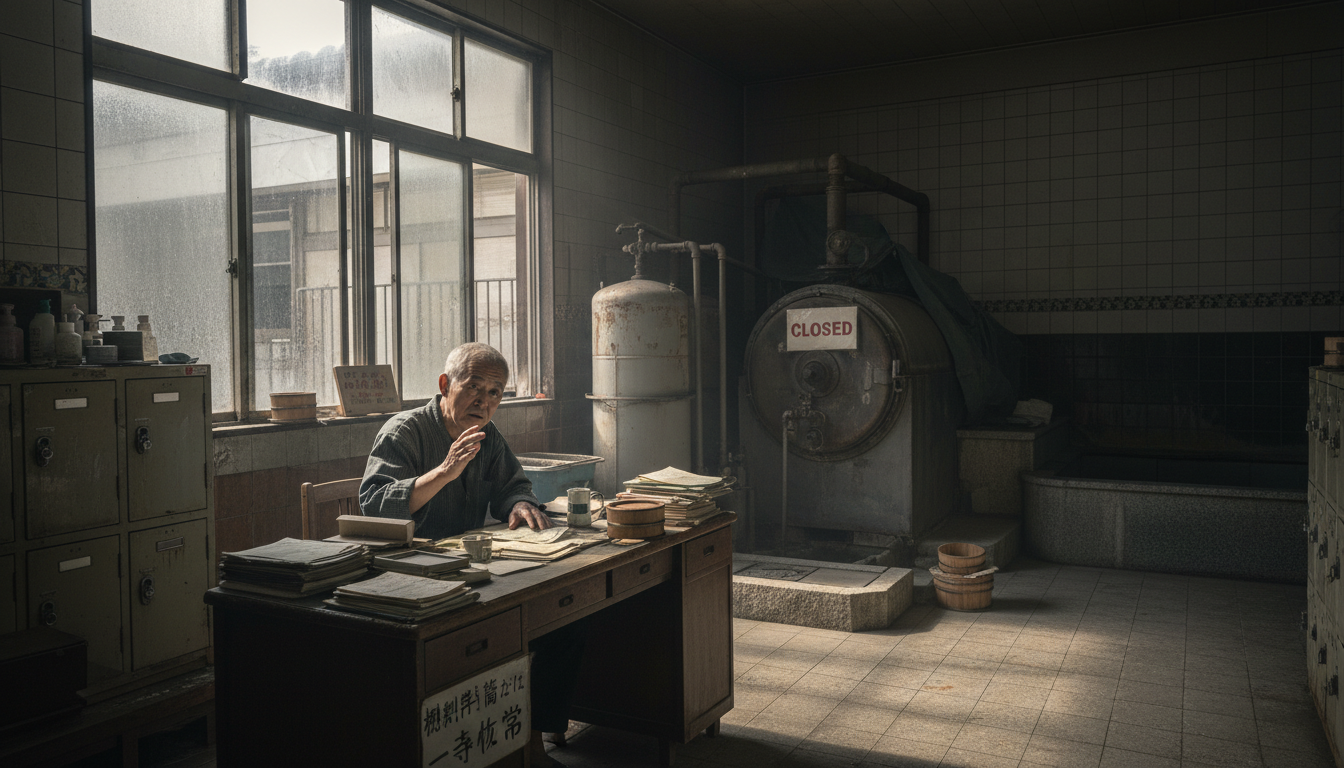
Japan’s public bathhouses feel the heat as fuel costs force price hikes and service cuts
Rising fuel costs squeeze Japan’s public bathhouses, prompting price hikes, service cuts and appeals for local support as operators weigh costly energy upgrades.
TOKYO — Rising fuel prices are putting new pressure on Japan’s public bathhouses, threatening long-established sento that rely on oil-fired boilers to heat communal baths. Operators, some of whom have run facilities for more than a century, are reporting sharply higher bills that are eroding already thin margins and forcing difficult decisions about pricing and services.
Fuel costs and boiler dependence
Many public bathhouses in regional cities and older neighbourhoods still depend on fuel oil or aging gas boilers to maintain hot water and steam throughout the day. Those fuel systems are a central operating cost; when global oil and gas prices rise, bills for the boilers rise immediately, leaving little room for short-term cost recovery.
Owners say maintenance and replacement of decades-old equipment also add to expense, creating a combined financial strain that is particularly acute for small, family-run operations. The cost shock is hitting at a time when customer numbers are struggling in areas with aging and declining populations.
Operators raise prices and trim services
Faced with mounting fuel bills, many operators have begun to increase admission fees, implement tiered pricing for peak hours, or reduce operating hours to save on heating. These measures are intended to stabilize cash flow, but operators worry they may deter regular customers who are price-sensitive.
Some bathhouses are also limiting services such as daily deep-clean cycles, reduced hot-water temperatures between peak periods, or temporarily closing sauna rooms. Managers describe these steps as last resorts to preserve the viability of the business while searching for more permanent solutions.
Local governments and community interventions
Municipalities and local business groups have begun to respond in pockets where public bathhouses serve as community hubs. In some towns, officials are exploring modest subsidies, emergency grants, or accelerated support for equipment replacement to prevent closures that would erode neighbourhood services.
Community-led initiatives have also emerged, with volunteers organising donation drives, benefit events and promotional campaigns to bring customers back into ageing bathhouses. Such efforts underscore the social role of public bathhouses as places of daily hygiene, social contact and care for the elderly.
Barriers to energy transition
Switching from oil-fired boilers to lower-emission systems presents practical and financial hurdles for many owners. Upgrading to modern gas boilers, electric heat pumps, or hybrid systems often requires major capital investment, structural changes to buildings, and compliance with updated safety standards.
Operators point to the up-front cost as the main barrier, along with limited access to technical expertise for retrofitting century-old facilities. While government incentive programs for energy efficiency exist in some regions, those measures may not fully cover installation costs or the time it takes to secure approvals and contractors.
Changing customer patterns and cultural stakes
Public bathhouses have cultural and communal significance that extends beyond simple bathing. However, demographic shifts—particularly in smaller cities—mean fewer regular patrons and a shrinking workforce to maintain operations. Younger consumers’ leisure choices and stricter hygiene expectations have also altered demand patterns.
To counter this, some operators are diversifying services by adding small cafés, partnering with local tourism initiatives, or promoting wellness and sauna experiences to attract inbound and younger customers. These adaptations can broaden revenue streams but typically require investment and marketing capacity that many small operators lack.
Industry advocacy and future options
Industry associations representing sento and community baths are pushing for targeted support measures such as equipment subsidies, low-interest loans and streamlined permitting for energy upgrades. They argue that preserving public bathhouses delivers social benefits—especially for isolated elderly residents—that justify public assistance.
Experts also point to collective solutions, including shared heating networks in dense neighbourhoods, cooperative ownership models, and coordinated procurement to reduce upgrade costs. Such approaches would require collaboration among operators, local authorities and energy providers to translate into viable projects.
As costs continue to fluctuate, operators say clear and timely policy support will determine whether many historic public bathhouses can survive the current squeeze. The coming months are likely to reveal which establishments can adapt through investment and community backing, and which may be forced to scale back or close.
Public bathhouses embody a daily ritual and local social fabric that many residents want to preserve, but the economic reality of rising fuel costs and ageing infrastructure means the sector faces a pivotal moment. Operators, communities and policymakers will need to align financial, technical and cultural resources to keep these communal spaces open for future generations.

