
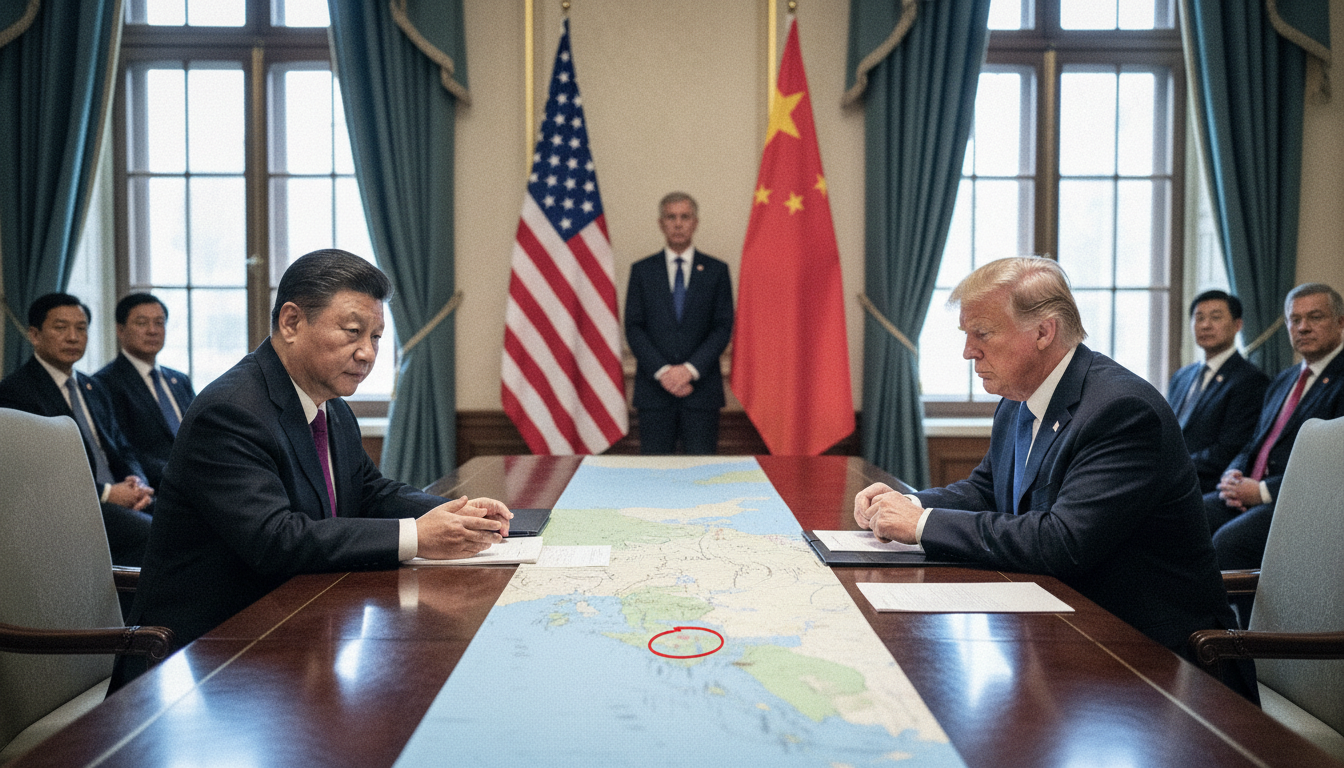
Trump Visit to China: Xi Warns Taiwan Policy Could Lead to Conflict as Leaders Discuss Trade and Iran
During President Trump’s visit to China, Xi Jinping warned mishandling Taiwan could spark conflict as leaders discussed trade, Iran and regional stability.
Leaders Open Summit with Starkly Different Tones
The summit in Beijing opened with a highly choreographed ceremonial welcome before moving into two hours of closed-door discussions at the Great Hall of the People. President Trump praised his host and called the meeting an honor, while President Xi Jinping used his opening remarks to deliver a cautionary message on Taiwan and broader U.S.-China ties. The contrast set the tone for a visit heavy on symbolism and cautious diplomacy rather than immediate breakthroughs.
Xi framed Taiwan as the most important issue in bilateral relations and warned that improper handling could produce clashes or even armed conflict. A Chinese foreign ministry readout said Xi urged both sides to avoid the so-called “Thucydides Trap,” stressing that cooperation benefits both nations while confrontation harms them. Beijing’s language underscored the red lines Beijing seeks to draw as the two governments attempt to stabilize relations.
Elaborate Ceremony Highlighted Pageantry
Trump’s arrival was marked by a formal state welcome featuring ceremonial cannon salutes, national anthems, and a large youth performance. Hundreds of schoolchildren waved flags and presented flowers as the two leaders walked a review route together, providing a highly staged backdrop for the summit. The public itinerary also included a visit to the historic Temple of Heaven and a planned state banquet, emphasizing the diplomatic theater that has accompanied the talks.
The visual display aimed to project mutual respect even as substantive disagreements remained. Organizers balanced pomp with tight control of public messaging, signaling Beijing’s intent to showcase an orderly, dignified reception while prioritizing its core diplomatic positions.
Closed-Door Talks Focused on Taiwan, Trade and Security
According to official briefings, the leaders spent roughly two hours behind closed doors discussing trade, regional security, and other bilateral concerns. Chinese officials said Xi reiterated Taiwan’s primacy in bilateral ties and called for a relationship model between major powers based on strategic stability. U.S. officials emphasized their desire for concrete trade outcomes, including expanded purchases of American agricultural and industrial goods.
Neither side released a detailed joint communiqué immediately after the meeting, leaving the specifics of any agreements or understandings opaque. Washington has signaled interest in a Board of Trade mechanism to manage commercial disputes, while Beijing highlighted promises to widen market access and support foreign investment as part of its economic pitch.
Taiwan Arms Sales and Taipei’s Response
A central friction point during the visit was Washington’s approved arms package for Taiwan, valued at roughly $11 billion, which Beijing views as a direct challenge to its sovereignty claims. Beijing warned that such transactions risk destabilizing the relationship and could precipitate confrontations if not managed carefully. Taipei expressed gratitude for Washington’s long-standing support, framing the arms arrangements as contributing to regional stability and deterrence.
Taiwanese officials said they welcomed any U.S. measures that helped deter coercion and maintain security in the Taiwan Strait. The differing perceptions of deterrence and provocation underscore the persistent diplomatic tightrope that both Washington and Beijing face when navigating cross-strait dynamics.
Trade Ambitions Tempered by Broader Geopolitics
The U.S. delegation arrived in Beijing with clear economic aims, seeking commitments on purchases of soybeans, beef and aircraft and a framework to resolve ongoing trade disputes. China reiterated intentions to open markets further and to reassure American businesses of a hospitable environment for investment. Observers noted, however, that concrete, verifiable commitments were not immediately presented and that existing trade frictions and global uncertainties complicate negotiations.
Economic ties between the two countries remain deep but fraught, with prior tariff tensions giving way to a tentative truce that both sides have an interest in preserving. Business leaders who accompanied the president held separate sessions with Chinese officials, signaling the administration’s effort to blend diplomatic and commercial diplomacy.
Iran Conflict and Energy Supply Concerns Loom Over Talks
The war involving Iran and related disruptions to shipping lanes emerged as a critical subject, given its potential to affect global energy markets and economic stability. China, as a major purchaser of Iranian oil, faces complex choices about its economic relationship with Tehran and international pressure to contain escalation. U.S. officials said they would press Beijing to use leverage to ease the crisis in the Strait of Hormuz, arguing that prolonged disruption would harm global demand for Chinese goods.
President Trump downplayed assertions that he would make strong public entreaties on Iran during the summit, reflecting differing public postures on how aggressively to press Beijing. Nonetheless, energy security and inflationary pressures tied to the conflict were salient undercurrents, informing both trade calculations and broader strategic discussions.
While the visit yielded high-profile images and symbolic gestures, it produced limited immediate detail about substantive agreements beyond broad statements of intent. Both capitals appear to be pursuing a blend of managing competition while avoiding direct confrontation, but clear mechanisms to resolve tensions on Taiwan, trade enforcement and regional security remained to be defined.
The summit closed with a state banquet and public gestures of cordiality, but officials on both sides signaled that follow-up work and consultations would be necessary to turn rhetoric into durable policy outcomes.

