
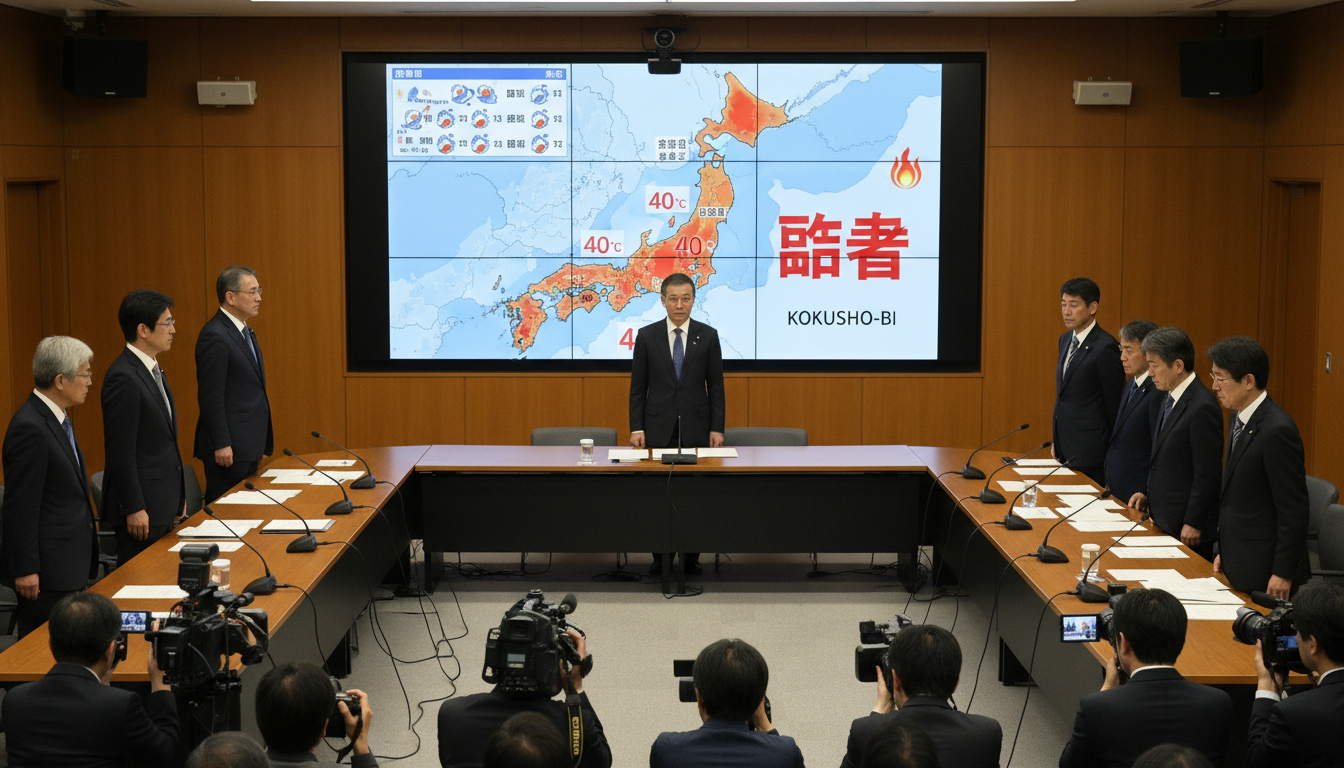
Kumagaya Thermometer in Saitama Marks New "kokusho-bi" for 40°C Days
Kumagaya’s thermometer in Saitama now marks "kokusho-bi", the Japan Meteorological Agency’s new term for days reaching 40°C, with twice-daily temperature updates.
New JMA designation ‘kokusho-bi’ introduced
The Japan Meteorological Agency has introduced the term "kokusho-bi" to designate days when the maximum temperature reaches at least 40°C. The label aims to standardize public messaging about extreme heat as Japan experiences increasingly frequent high-temperature events.
Officials said the designation is intended to clarify the severity of such days for residents, emergency services, and local governments. The move reflects a broader effort to align public-alert language with evolving climate risks.
Kumagaya thermometer adds visible ‘kokusho-bi’ mark
In Kumagaya, Saitama Prefecture, a large outdoor thermometer now displays the "kokusho-bi" label adjacent to the 40°C mark. The town has long used the public thermometer as a daily reference, and the new marking visually signals the threshold at which a day is classified as brutally hot.
The thermometer is updated twice each day to reflect readings announced by the Kumagaya Meteorological Office. The prominent display has become both a civic landmark and a practical tool for residents to track extreme temperatures.
Daily update schedule from the Kumagaya Meteorological Office
The Kumagaya Meteorological Office provides local readings that are posted on the thermometer at 11 a.m. and again at 2 p.m. each day during the summer display period. Those regular updates are intended to give residents timely information during the hours when temperatures typically climb highest.
Local authorities noted that the two scheduled updates help businesses, schools, and care facilities plan operations and adjust activities during peak heat. The updates also serve as a public reminder to follow heat-safety precautions.
Kumagaya’s history as one of Japan’s hottest cities
Kumagaya has developed a reputation as one of the hottest cities in Japan, and the town frequently records summer high temperatures that rank among the nation’s top readings. The thermometer has been a seasonal fixture, drawing attention to both daily weather and broader patterns of rising heat.
Meteorological data and local experience have prompted municipalities in Saitama and neighboring prefectures to adopt more robust heat countermeasures in recent years. The visible thermometer now joined with the "kokusho-bi" mark underscores the real-world impacts of extreme heat on urban life.
Local authorities emphasize health and safety measures
Officials in Saitama and surrounding areas urged residents to take the "kokusho-bi" designation seriously and to follow heat-health guidance on hot days. Recommendations include staying hydrated, limiting strenuous outdoor activity during peak hours, and checking on elderly or vulnerable neighbors.
Municipalities said they will coordinate cooling centers, public advisories, and outreach to schools and care facilities when "kokusho-bi" conditions are forecast or observed. Health services and emergency responders are also preparing for a potential uptick in heat-related calls when temperatures approach 40°C.
Businesses and public services adjust operations during extreme heat
Commercial operators and local services in Kumagaya are adapting schedules and facilities to mitigate the effects of extreme heat on employees and customers. Some businesses shift outdoor work to early morning or late evening hours, while retailers and transit agencies increase cooling and hydration options for the public.
Tourism officials noted that visible temperature displays and the new "kokusho-bi" label help visitors plan activities and understand local weather risks. At the same time, city planners said longer-term measures—such as increased shading, green infrastructure, and heat-resilient urban design—remain crucial to limit future heat impacts.
Japan’s adoption of the "kokusho-bi" term and Kumagaya’s decision to mark the 40°C threshold on its public thermometer are part of a wider effort to make extreme-heat information clearer and more actionable. The visible cue, combined with twice-daily updates from the Kumagaya Meteorological Office, is intended to help residents and institutions respond promptly when the mercury crosses the new threshold.

