
US-China summit in Beijing yields managed stability but few concrete breakthroughs
Meta description: Trump and Xi met in Beijing on May 14, 2026; the US-China summit preserved a managed relationship with modest economic gestures but no decisive outcomes on Taiwan or Iran.
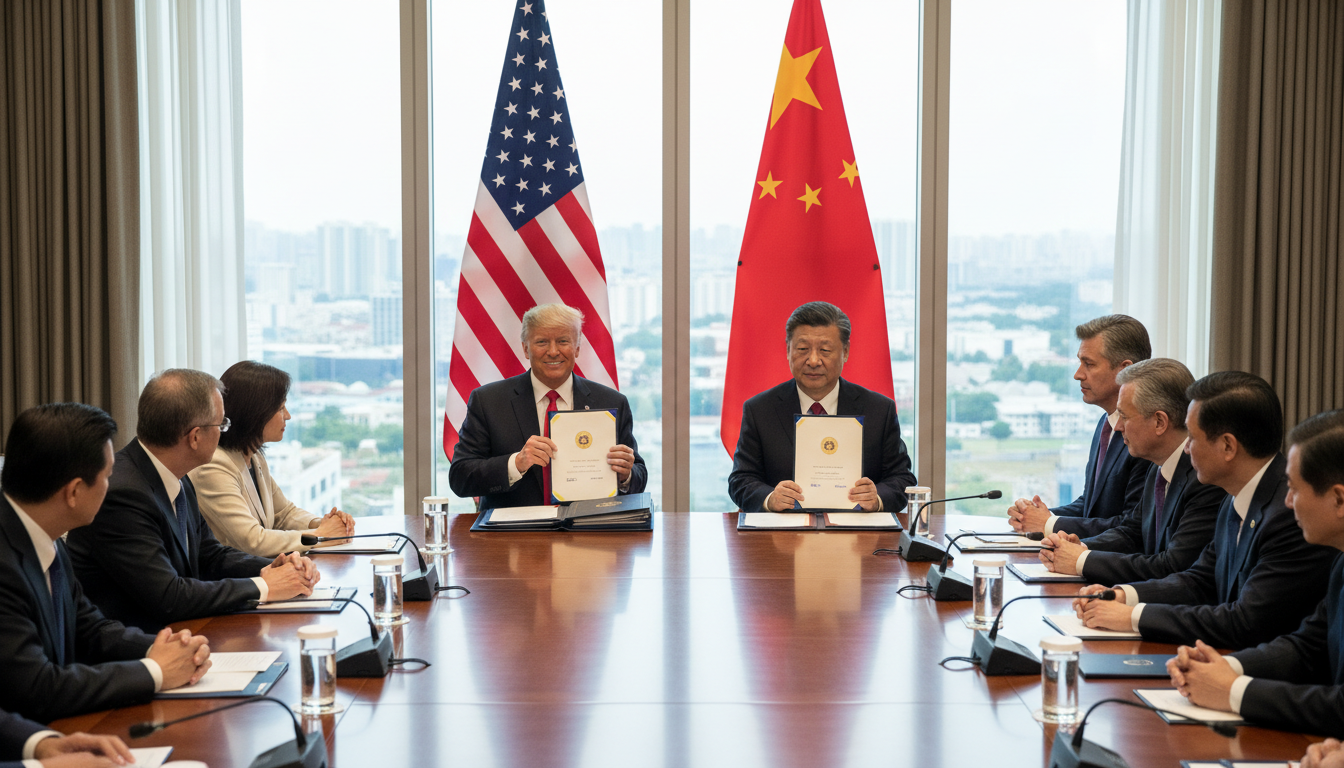
The US-China summit in Beijing on May 14, 2026, ended with both leaders signaling a desire to maintain a stable, managed relationship rather than deliver sweeping agreements. President Donald Trump and President Xi Jinping met at the Great Hall of the People amid a ceremonial reception, and officials described the talks as broadly constructive. The summit’s chief result for Washington was modest economic openings and a public narrative of success, while substantive geopolitical shifts were limited.
Ceremony and setting in Beijing
The leaders arrived in a carefully staged diplomatic environment that underscored China’s intent to control the optics of the meeting. Children and officials greeted President Trump as he walked toward the Great Hall of the People, reinforcing Beijing’s message of ceremony and state authority. Observers noted that the pageantry framed the summit as much as the substantive talks did.
Economic pitch and U.S. expectations
Washington entered the summit with an eye on tangible economic gains, including expanded exports of agricultural and energy products to China. The White House sought to present post-meeting deliverables that could be highlighted ahead of the U.S. midterm elections in November 2026. Chinese officials reportedly offered targeted purchases and trade measures that the U.S. can point to as wins, though these fell short of broad structural concessions.
Those willing-to-share purchases gave American policymakers a visible outcome to showcase to domestic audiences, even if long-term market access or major tariff rollbacks were not secured. Trade aides characterized the outcome as pragmatic—useful for short-term political messaging but unlikely to resolve deeper disagreements over technology, supply chains, and investment screening.
Taiwan and strategic signals
Taiwan was discussed during the talks, and Beijing used the summit to reiterate core red lines while couching its messaging in diplomatic language. Chinese statements following the meeting emphasized warnings to third parties about interference, reflecting Beijing’s consistent stance on sovereignty and reunification. U.S. officials said the two sides agreed to continue dialogue, but no new framework for de‑escalation or formal guarantees was announced.
Security analysts warned that the absence of a detailed, enforceable mechanism on Taiwan means the risk of miscalculation remains. Both capitals affirmed the need to manage differences, yet the substance of any operational crisis‑management steps was thin, leaving questions about how tensions would be contained in a future contingency.
Analysts say China projected parity
Political analysts interviewed after the summit described the encounter as one in which Beijing sought to demonstrate an equal footing with Washington. Tokyo University expert Ryō Sahashi told reporters that the meeting showcased Chinese skill in extracting visible concessions while avoiding major reciprocal demands. In his view, the summit reinforced China’s growing confidence in shaping the bilateral agenda without conceding strategic advantage.
Trump’s domestic calendar and tactical goals
U.S. domestic politics shaped the delegation’s priorities, with the administration eager to convert diplomatic contact into short-term economic and messaging advantages. With the November 2026 midterm elections approaching, visible exports and trade announcements offer political capital that can be presented as a diplomatic payoff. Administrators framed modest Chinese purchases and cooperation as proof of effective presidential diplomacy.
Limited effect on Iran and broader crises
Despite some attention in media and commentary, the summit is unlikely to alter trajectories in Iran or other major global flashpoints in the near term. Officials on both sides focused on stabilizing bilateral channels rather than negotiating new multilateral security arrangements. Analysts said that without deeper commitments or third‑party frameworks, events such as the Iran situation will continue to evolve independently of the summit’s outcomes.
The Beijing meeting appears to have achieved what both sides prioritized: maintaining functional lines of communication and producing a record of engagement that domestic audiences can interpret as progress. For Washington, the gains are pragmatic and political; for Beijing, the session reinforced a posture of parity and restraint in concessions. Absent further, binding agreements, the summit sets the stage for continued managed competition rather than a substantive reset of U.S.-China relations.

