
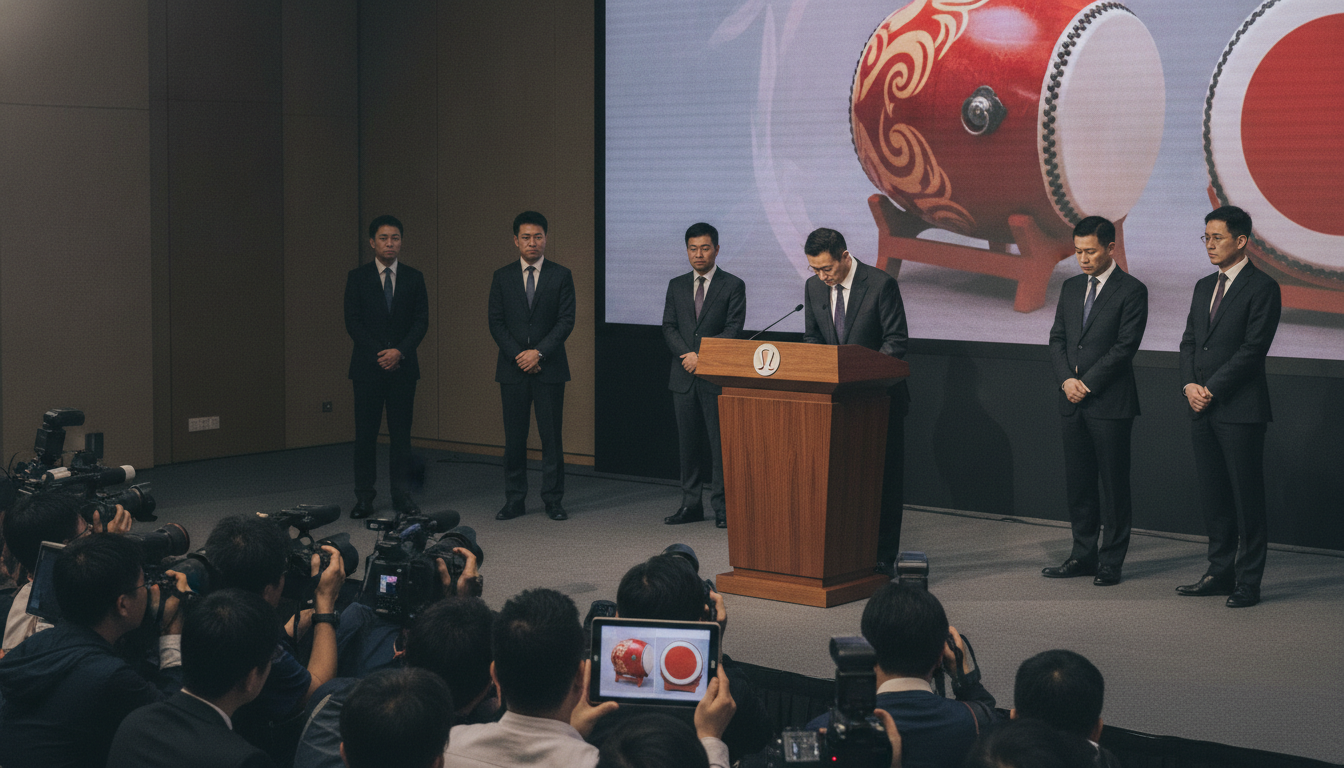
Lululemon apology after China drum campaign sparks backlash over taiko resemblance
Lululemon apology in China follows online uproar after a marketing image featuring a drum drew criticism for resembling a Japanese taiko, prompting a public statement.
Lululemon apologizes after marketing image draws criticism
Lululemon issued a public apology after an image from a marketing campaign in China prompted online criticism for featuring a drum that many users said resembled a Japanese taiko. The company acknowledged the concerns and said it regretted causing offence as the post circulated widely across Chinese social media.
The apology was released amid heightened sensitivity over cultural symbols and national identity, a dynamic that has increasingly affected foreign brands operating in China. Company officials said the intent had been purely promotional and that the image would be removed and reviewed.
Details of the campaign and online reaction
The campaign image showed a promotional scene in which a drum was used as part of visual merchandising and lifestyle imagery for the activewear brand. Netizens quickly noted the drum’s stylistic similarity to a taiko, leading to a wave of posts criticizing the brand for insensitivity.
Comments ranged from calls for an explanation to demands for a public apology and removal of the material. The backlash accelerated as users shared screenshots and commentary, amplifying the incident beyond its initial local audience and prompting a rapid corporate response.
Corporate response and promised actions
In its statement, Lululemon said it had removed the post and was conducting a review to ensure future marketing materials respect local cultural sensitivities. The company also indicated it would brief teams involved in creative approval to prevent similar issues from recurring.
Executives emphasized that the brand values its customers in China and would take steps to rebuild trust. The statement did not provide a detailed timeline for the review but underscored a commitment to learn from the episode.
China’s market importance for Western apparel brands
China remains a strategic market for international apparel companies, and for Lululemon specifically it has become an important revenue contributor. In 2025, China accounted for roughly 16% of the company’s group revenue, underscoring the business risks when local sentiment turns negative.
Analysts say that even relatively small reputational incidents can have outsized commercial implications in a market where consumer nationalism has been rising. For brands with significant retail footprints and marketing investments in China, maintaining cultural fluency is increasingly tied to sales performance.
Broader trend: rising scrutiny of cultural elements
The episode follows a series of incidents in which global brands have faced scrutiny in China for perceived cultural missteps, from product design to advertising imagery. Observers link the pattern to a combination of heightened national pride and amplified scrutiny on social platforms.
Companies that have succeeded recently are those that embed local cultural considerations into product development and creative processes. Legal and public-relations teams are also playing larger roles in pre-launch reviews to reduce the chance of misinterpretation.
Industry reactions and expert commentary
Brand consultants say the Lululemon apology reflects a pragmatic approach: swift removal, a public statement, and an internal review to contain fallout. Such responses can stem the immediate commercial impact but may not fully repair consumer sentiment without follow-up engagement.
Experts recommend brands invest in local cultural advisors and diversify creative input across markets to catch potential issues before they go public. They add that transparent communication and demonstrable actions often carry more weight than brief expressions of regret.
Lululemon’s spokeswoman said teams would consult cultural specialists and local partners as part of the review and that the company aims to ensure its marketing resonates positively with local audiences. Industry observers will be watching how the company translates those plans into policy.
The incident places renewed attention on how multinational retailers navigate cultural nuances while promoting global brand consistency. For Lululemon and peers, the challenge will be balancing creative flexibility with a heightened need for cultural sensitivity in each market.
Public sentiment in China can shift quickly, and social-media driven controversies often have short, intense lifecycles that still leave lasting reputational effects. Companies that respond rapidly and follow through with concrete measures tend to reduce long-term commercial damage, but the path to restored consumer trust can be uneven.

