
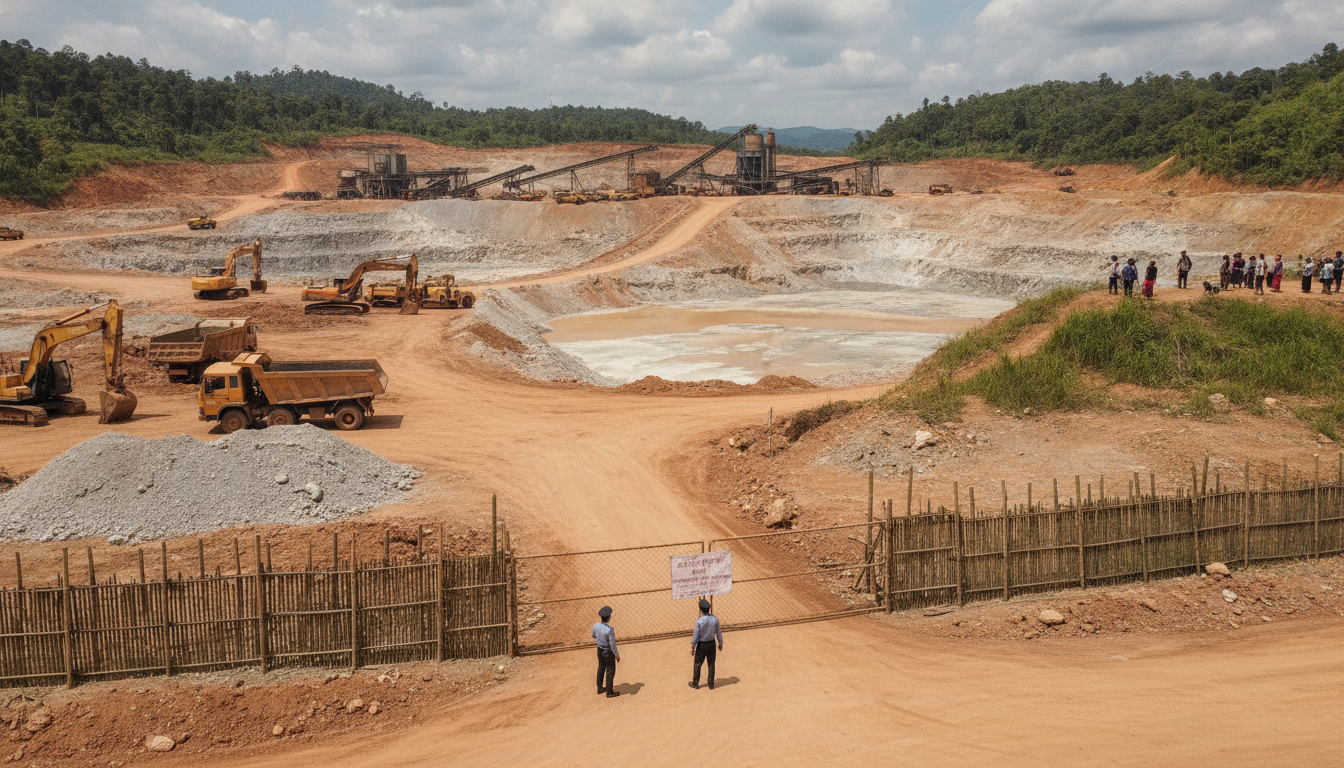
Chinese Company Halts Rare‑Earth Mine in Laos, Spotlighting Industry Risks
Chinese firm halts rare-earth mine in Laos on Aug. 11, 2026 to "ensure compliance with law", exposing supply and regulatory risks amid booming demand.
The operator of a Chinese-run rare-earth mine in Laos said on Aug. 11, 2026 that it had suspended operations to “ensure compliance with law,” drawing attention to regulatory and environmental uncertainties in a sector that has seen rapid expansion and strong profits. The rare-earth mine in Laos suspension was announced as the industry celebrated robust first-half earnings, underscoring how fast growth can collide with legal and local issues. Officials and company statements so far have offered limited detail about the nature of the non-compliance or the expected timeline for resumption.
Mine Suspension Cited as Legal Compliance Measure
The company statement described the halt as a temporary measure to address compliance requirements with Lao law and regulations. No immediate safety incident was reported, and the operator framed the move as preventive and administrative in nature.
Local authorities in the province where the mine operates confirmed they had requested a review but provided few specifics about the scope of the inquiry. Stakeholders said the pause aims to avoid potential penalties while inspections and documentation reviews are completed.
Operations and Stakeholders Involved
The project is run by Chinese investors who have been expanding rare-earth extraction capacity across Southeast Asia to meet global demand for permanent magnets and high-tech materials. The mine produces bastnaesite-type ore, a feedstock widely used to extract light and some medium rare-earth elements.
Laos has courted foreign mining investment as part of broader economic development plans, but the partnership mix includes Chinese companies, Lao state units and local contractors. Workers and supply-chain partners have been placed on standby pending clearer guidance from both company management and provincial regulators.
Market and Supply Chain Implications
Analysts cautioned that a temporary halt at a single site is unlikely by itself to materially alter global rare-earth inventories. Most market participants pointed out that primary supply remains concentrated in a few countries and that the industry has inventory cushions and alternative suppliers.
Nonetheless, the announcement amplified concerns among buyers about potential bottlenecks in specific grades of ore needed for magnet production. Buyers of separated rare-earth oxides and downstream manufacturers will likely monitor the situation closely for any escalation that could affect spot prices or delivery schedules.
Earnings Surge Among Chinese Producers
The suspension comes against a backdrop of strong first-half earnings reported by major Chinese rare-earth firms, which have benefited from higher prices and sustained demand for electric vehicles, wind turbines and electronics. Public filings and quarterly results from several large companies showed improved margins and expanded output capacity over the past year.
That financial strength has accelerated investment in overseas projects, but analysts say rapid expansion can outpace the administrative and environmental due diligence required in host countries. The juxtaposition of booming returns and a sudden operational pause highlights how corporate strategy and local governance can be misaligned.
Regulatory and Environmental Questions in Laos
Environmental groups and some Lao community representatives have previously raised concerns about the impacts of rare-earth extraction, including water use, tailings management and land access. In Laos, the regulatory framework is evolving and enforcement has been uneven, prompting calls for clearer rules and stronger oversight.
Industry officials emphasize that modern rare-earth operations must meet stringent waste-handling and emissions standards to avoid long-term contamination risks. The current review reportedly includes inspections of permits, environmental impact assessments and paperwork related to social and land agreements.
Chinese operators and Lao authorities have signaled a willingness to cooperate to resolve outstanding issues, but the pace of any corrective action will determine whether the halt remains short-lived. The international community is watching how the case will be handled, since outcomes could influence future foreign investment and the reputational cost of extracting strategic minerals abroad.
The pause at the rare-earth mine in Laos serves as a reminder that rapid industrial growth brings added regulatory scrutiny and logistical complexity. Companies expanding overseas will need tighter compliance systems and clearer engagement with host governments to sustain production without interruption.

