
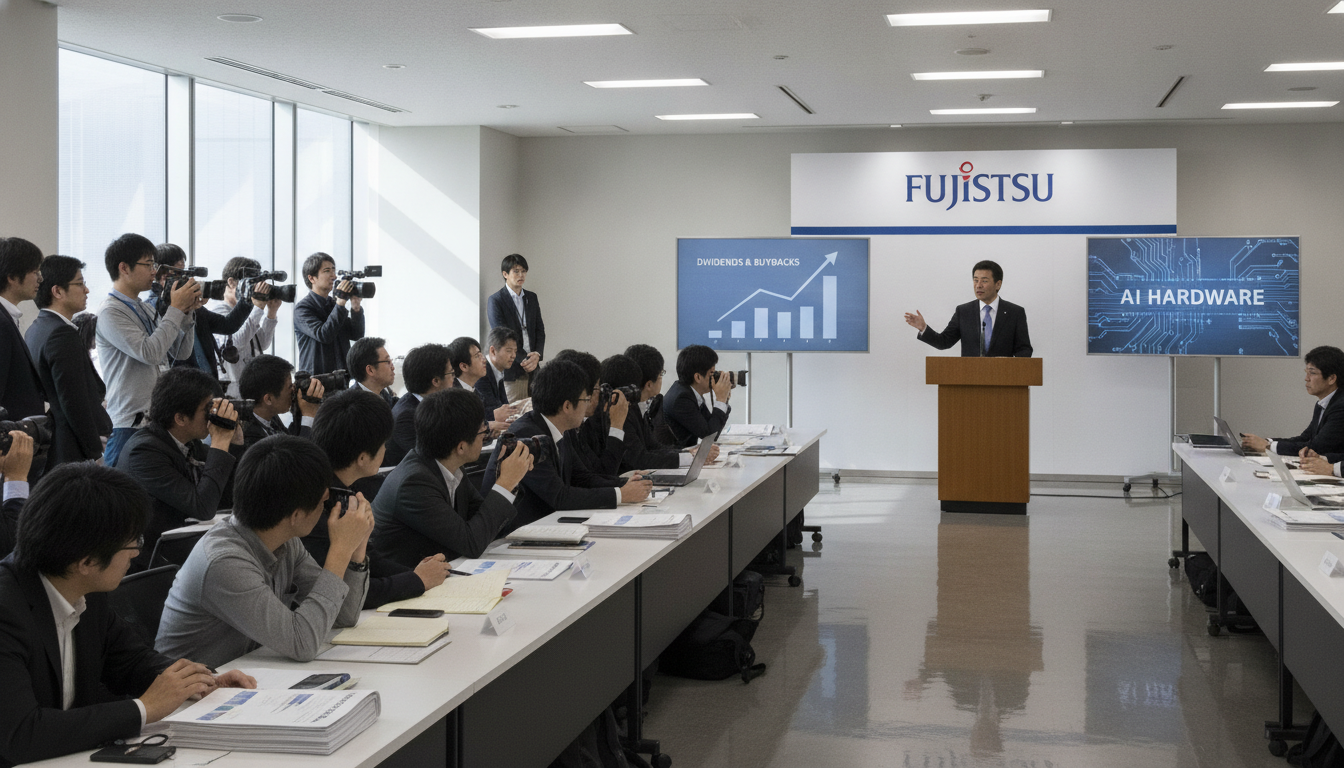
Fujitsu shifts toward AI hardware while weighing transfers of non-core operations
Fujitsu posts strong earnings as client IT investment lifts services. CFO Takeshi Isobe prioritises dividends, growth and buybacks while backing AI hardware.
TOKYO — Fujitsu reported robust earnings on September 3, 2026, as continued system investment by corporate clients strengthened demand for its information technology services. The company signalled a strategic tilt toward developing hardware for artificial intelligence applications while indicating it may transfer or streamline other, non-core operations. Chief Financial Officer Takeshi Isobe told reporters that capital priorities will focus on dividends, targeted growth investments and stock buybacks. The move reflects a broader reshaping of Fujitsu’s portfolio to capture rising AI-related infrastructure spending.
Earnings driven by corporate IT investment
Fujitsu’s recent results showed an uptick in revenue tied to enterprise systems integration and managed services. Clients upgrading core systems and deploying hybrid cloud environments have increased demand for Fujitsu’s consulting and implementation work. That steady service revenue helped underpin operating performance even as global tech markets remain uneven. Management described the trend as a durable driver rather than a one-off boost.
The company’s services arm benefited from multi-year contracts and increasing spending on digital transformation projects. That included work supporting customers’ AI pilots and scaling projects into production. Analysts noted the higher-margin services activity provided room for Fujitsu to reallocate capital toward strategic initiatives. The earnings strength also bolsters the firm’s capacity for shareholder returns and reinvestment.
Company pins future on AI hardware development
Fujitsu signalled that its strategic priorities now more clearly include building hardware tailored to artificial intelligence workloads. The company believes custom servers, accelerators and edge devices will be essential as enterprises move from AI experimentation to full-scale deployment. Executives argue that owning more of the hardware stack can create differentiation and recurring revenue streams tied to AI infrastructure support.
Investment in AI hardware would complement Fujitsu’s existing services and systems integration capabilities. By combining bespoke hardware with integration and managed services, the firm aims to offer end-to-end solutions for enterprise customers. However, management acknowledged the capital intensity and competitive pressure in hardware, underlining the need for disciplined investment and potential partnerships.
CFO outlines capital allocation priorities
Takeshi Isobe made clear on September 3 that shareholder returns and strategic investment are both central to Fujitsu’s capital plan. He identified dividends, growth-focused capital expenditure and share buybacks as the top priorities for available cash. The company intends to balance rewarding investors with funding R&D and targeted acquisitions to accelerate AI hardware and software capabilities.
Isobe emphasised that capital allocation will remain flexible and market-sensitive. Fujitsu plans to preserve financial strength while deploying resources to areas with the highest long-term returns. That approach is designed to support both near-term shareholder value and longer-term competitiveness in AI and cloud-related markets.
Consideration of transferring non-core operations
Alongside reinvestment, Fujitsu is evaluating the transfer or reorganisation of businesses that management deems non-core to its AI and services strategy. The company did not specify which divisions might be affected but indicated that selective divestments or strategic partnerships are under consideration. The aim is to free management bandwidth and capital for priority areas while allowing other units to scale under different ownership structures.
Such transfers could take the form of carve-outs, joint ventures or outright sales, depending on the business and buyer interest. Management insisted any decisions would be pursued with the intent of maximising value for stakeholders and ensuring continuity for customers and employees. Observers expect these moves to be incremental rather than abrupt, reflecting a measured approach to portfolio reshaping.
Market reaction and analyst perspectives
Investors reacted to the combination of solid earnings and a clearer strategic emphasis on AI hardware with cautious optimism. Market commentators highlighted the appeal of steady service revenue plus potential upside from hardware innovation. Some analysts warned that hardware markets are competitive and capital-intensive, which could pressure margins if execution stalls.
Others noted that Fujitsu’s emphasis on shareholder returns, through dividends and buybacks, could support valuations while the company invests in AI. The balance between rewarding investors and funding growth will be closely watched in coming quarters. Analysts expect management to provide further clarity on specific hardware investments and any planned transfers during investor updates.
Outlook and execution risks ahead
Fujitsu’s near-term outlook depends on continued corporate IT spending and successful execution of its hardware strategy. The company faces execution risks common to firms moving into AI-focused infrastructure, including supply chain constraints and competition from established server and chipmakers. At the same time, long-term demand for integrated AI solutions presents a substantial market opportunity.
Management has signalled steady capital discipline and a willingness to pursue partnerships to mitigate risk. Investors and customers will be watching the pace of hardware development, the economics of any transferred operations, and the company’s ability to translate R&D into commercial offerings. Clear milestones and transparent reporting will be key to sustaining confidence through the transition.
Fujitsu’s direction on September 3, 2026 underscores a dual objective: to monetise near-term demand for IT services while building capabilities in AI hardware that could define its competitive position. How effectively the company balances shareholder returns with the heavy lifting required to enter hardware markets will shape its trajectory over the next several years.

