
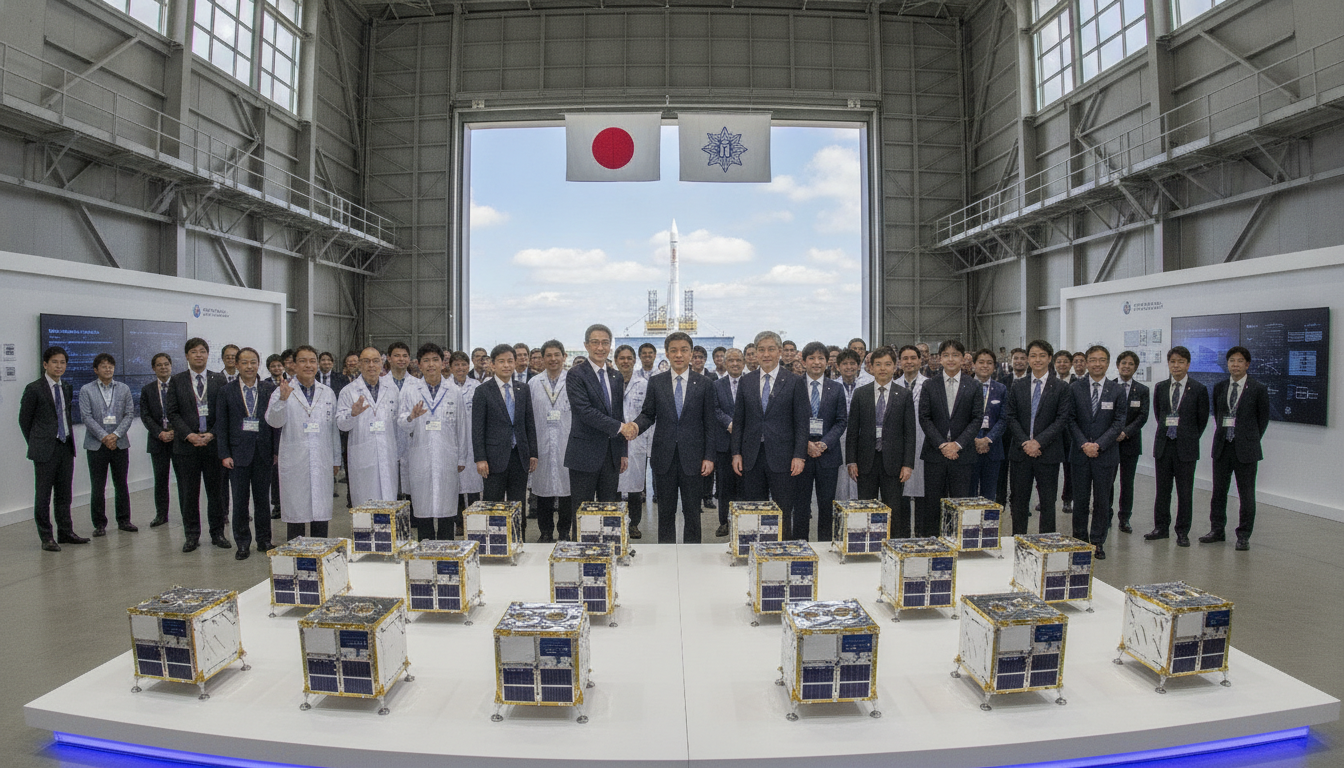
University of Tokyo microsatellites propel Japan’s space startup sector
University of Tokyo microsatellites are driving a surge in Japan’s space startup scene as 15 small satellites developed by the university reach orbit and underpin new commercial collaborations.
The launch of 15 small satellites built by the University of Tokyo’s Intelligent Space Systems Laboratory marks a decisive moment for Japan’s nascent commercial space industry. The University of Tokyo microsatellites programme has supplied core hardware, software and mission experience that local startups are now adapting for commercial services. Industry observers say the demonstration accelerates the transfer of university research into marketable products across communications, Earth observation and in-orbit servicing.
Lab satellite fleet completes demonstration
The Intelligent Space Systems Laboratory designed and assembled a fleet of microsatellites intended to validate miniaturised platforms and distributed mission concepts. These University of Tokyo microsatellites tested communications payloads, autonomous control software and standardised bus components to reduce development time for follow-on missions.
Laboratory staff and partner firms view the successful deployment as confirmation that academic prototypes can meet orbital performance requirements. The demonstration also provided flight heritage for components that startups are licensing or incorporating into their own satellite designs.
Spawning startups and spin-offs
Several new companies trace their technology and talent directly to the university’s laboratory, using lessons learned from the microsatellite programme to launch commercial ventures. Founders and early employees say access to flight-proven systems and mentorship from academic researchers materially shortened product development cycles.
Investors have taken notice, with venture capital increasingly targeting teams that combine university-derived hardware with private-sector service models. The result is a growing cluster of firms focused on smallsat manufacturing, mission operations and data analytics built on the University of Tokyo microsatellites’ technical foundations.
Commercial applications and partnerships
Companies are adapting the microsatellite designs for Earth-imaging constellations, narrowband communications and Internet-of-Things relay services. Startups argue that smaller, cheaper satellites, validated by the university programme, make distributed architectures economically viable for Japanese and regional customers.
The programme also catalysed partnerships with domestic suppliers and launch-service companies that are integrating standardised subsystems into commercial production lines. Those supply-chain connections aim to reduce unit costs and improve time-to-orbit for future commercial constellations.
Funding, policy and launch landscape
Public and private funding has followed demonstration success, with research grants and corporate investment supporting scale-up efforts. Policymakers and industry groups are citing the microsatellite programme as evidence that targeted university research can accelerate national industrial capability in space technologies.
At the same time, Japan’s regulatory and launch infrastructure must keep pace with demand for smallsat deployments, industry participants warn. Streamlining licensing, ensuring reliable access to domestic and international launch slots, and expanding ground-station networks are recurring priorities cited by companies building on the University of Tokyo microsatellites.
Workforce development and academic collaboration
The microsatellite programme has become a training ground for engineers and mission operators who then enter startup roles or spin out new ventures. Students involved in design, testing and operations gain rare hands-on experience that industry partners find difficult to replicate in commercial-only settings.
Universities and private firms are formalising collaboration through joint research projects, internships and shared facilities. That closer integration of academic research and industrial practice strengthens the talent pipeline needed to sustain growth in Japan’s space startup ecosystem.
Operational challenges and orbital responsibility
Industry leaders acknowledge challenges that accompany rapid smallsat expansion, including space-traffic management, debris mitigation and long-term sustainability in low Earth orbit. Companies using components from the University of Tokyo microsatellites emphasise the need to design end-of-life deorbit plans and to comply with international norms to protect orbital environments.
Supply chain constraints and component lead times remain practical hurdles as more firms attempt to scale production. Startups say securing reliable, high-quality parts and qualified manufacturing capacity is essential if Japan’s smallsat industry is to compete internationally.
Japan’s space startup sector is at an inflection point, and the flight of the University of Tokyo microsatellites demonstrates a clear pathway from academic research to commercial activity. As firms convert laboratory prototypes into customer-facing services, the coming years will test how effectively policy, investment and industrial capabilities align to sustain a competitive, responsible and export-ready smallsat industry.

