
Meccha Chameleon Emerges as Global Indie Hit, Selling Millions and Attracting Google Collaboration
Meccha Chameleon, a two-person Japanese indie game, sold several million copies in its first month and has drawn global partnerships with Google and fans.
Meccha Chameleon, created by a two-person team in Japan, became an international sensation after its July release, selling several million copies within the first month of availability. The game’s rapid rise has prompted collaborations with major firms and a wave of community activity, positioning it as one of the standout indie successes of 2026.
Rapid sales surge
The title achieved what industry analysts described as an exceptional early commercial performance, moving several million units in its opening month. That pace of sales elevated Meccha Chameleon into bestseller lists on multiple digital storefronts and drew attention well beyond Japan’s independent games scene.
Retail and platform data showed unusually high peaks in daily downloads and player counts during the first weeks after launch. The phenomenon translated into sustained visibility for the game on streaming platforms and social media, reinforcing word-of-mouth growth.
Two-person development team
The studio behind Meccha Chameleon consists of just two creators based in Japan, an arrangement that highlights the growing influence of compact, highly focused development teams. Sources close to the project say the pair handled design, programming and art direction between them, outsourcing only limited technical tasks.
Their small-team origin has become part of the game’s narrative, with coverage emphasizing how minimal resources combined with a clear concept and strong community engagement can produce outsized commercial results. The developers’ pathway has renewed discussion about barriers to entry and opportunity in game development.
Gameplay and appeal
Meccha Chameleon is presented as a hide-and-seek-style multiplayer experience that blends stealth mechanics with playful competitive elements. Players assume the role of a camouflaging character, using environment and timing to evade opponents and achieve objectives.
Observers point to the game’s simple entry point, tight round structure and moments of emergent play as key drivers of its broad appeal. Streamers and casual players alike have highlighted how the core loop rewards both spontaneous creativity and social interaction.
Global partnerships and collaborations
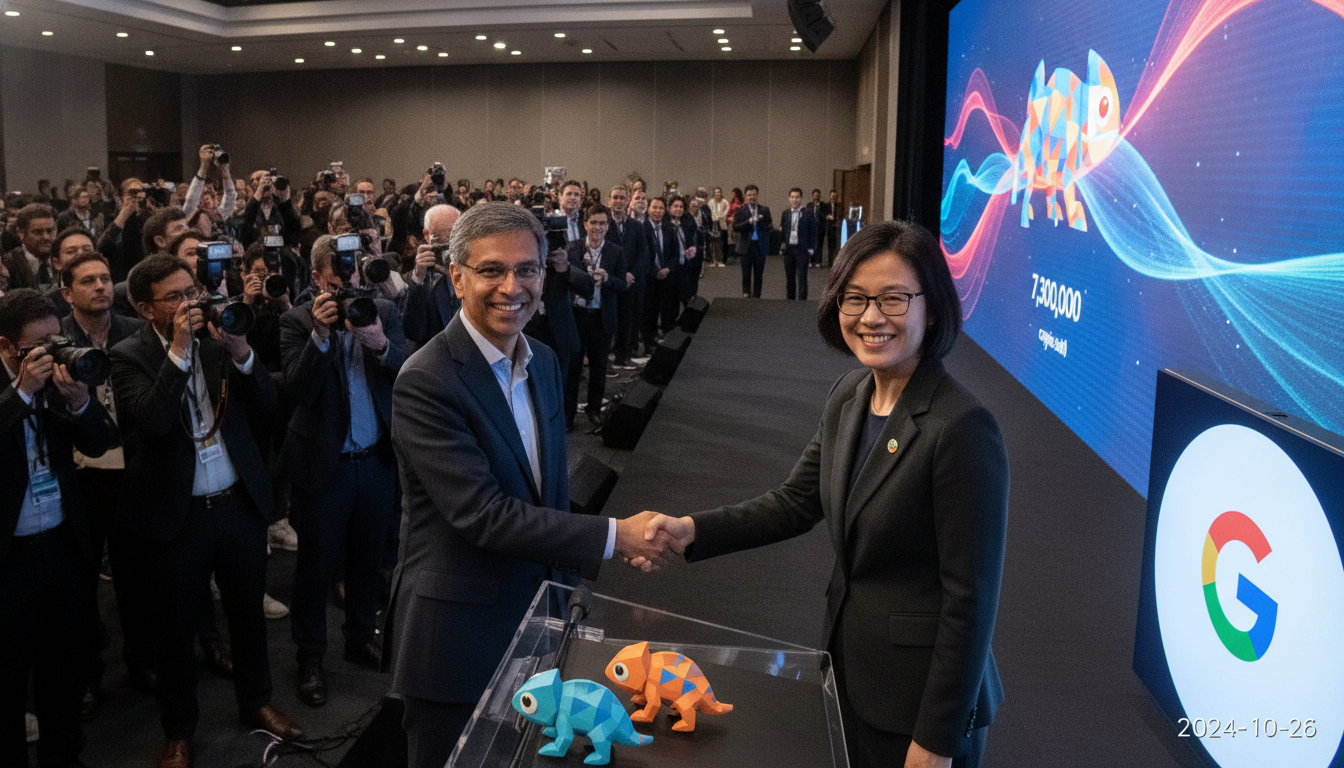
The game’s unexpected momentum attracted commercial interest, including a partnership announced with U.S. tech giant Google. That collaboration is one among several tie-ups between the developers and external creators or platforms, signalling broader commercial opportunities arising from the title’s success.
Collaborations span promotional activities, platform support and creator-led content, amplifying Meccha Chameleon’s reach across markets. Industry watchers note that such alliances can accelerate visibility for indie titles and create new revenue streams beyond initial sales.
Industry reaction and cultural impact
Industry commentators in Japan and abroad have framed Meccha Chameleon as a bellwether for the current indie landscape, where tightly designed experiences can outcompete bigger-budget releases for attention. The game’s performance has prompted renewed interest in small-team development models and alternative publishing approaches.
Culturally, the title has generated creative output across channels, inspiring fan art, short-form videos and community-hosted tournaments. That response reflects a broader appetite for social, shareable gaming experiences that can be scaled quickly through online platforms.
Market implications and future prospects
Meccha Chameleon’s success is already influencing commercial thinking among platforms and publishers that seek breakout indie hits. Analysts suggest the game’s performance will inform marketing and curation strategies, especially for titles targeting viral growth through streaming and user-generated content.
While precise long-term revenue figures and roadmap details have not been publicly disclosed as of August 12, 2026, the combination of strong initial sales and multiple collaborations points to a sustained commercial lifecycle. Observers expect continued updates, platform expansions and community-driven initiatives to shape the title’s trajectory.
The story of Meccha Chameleon underscores how a compact creative team and a well-executed idea can capture global attention, reshape industry expectations and create new commercial pathways for independent developers.

