
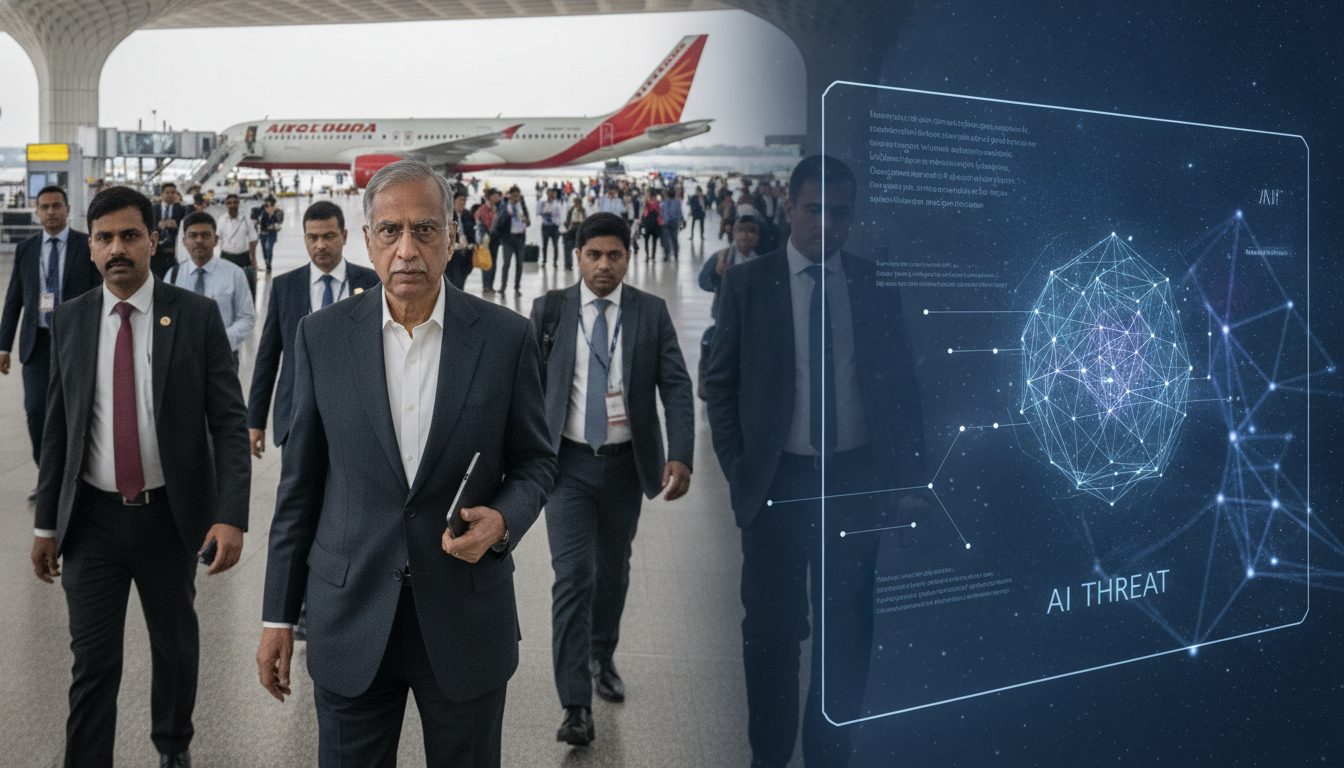
Tata Sons chair successor to inherit Air India overhaul and rising AI risks
Tata Sons chair successor will face an Air India turnaround, rising AI risks and investor scrutiny as the conglomerate defines its next strategic priorities.
In a leadership transition that marks a new phase for India’s largest conglomerate, the Tata Sons chair successor will confront an urgent operational and strategic agenda that includes the ongoing Air India overhaul and the management of technology risks. The appointment follows Natarajan Chandrasekaran’s tenure, which began in 2017 when he became the first chair without a founding-family connection. The new chair will be expected to balance turnaround execution with long-term investment and governance demands.
Successor’s Agenda Includes Air India Turnaround and AI
The incoming Tata Sons chair successor inherits a complex set of priorities, with Air India’s restructuring near the top of the list. Management faces fleet modernization, route optimization and integration of staff and systems after a period of rapid expansion and reinvestment.
At the same time, the board has highlighted technology and artificial intelligence as strategic risks and opportunities that require active oversight. The successor will need to set clear policies on AI deployment, data governance and risk mitigation across the group’s varied businesses.
Legacy of Chandrasekaran and Board Transition
Natarajan Chandrasekaran’s appointment in 2017 broke with the group’s family-linked tradition and ushered in an era of consolidation, digital initiatives and global deals. Under his leadership, Tata expanded into new sectors and completed several high-profile transactions that repositioned the conglomerate on the world stage.
The new chair steps into a role shaped by those precedents but must also assert a distinct strategic voice. Continuity in governance will be important to reassure investors while allowing for fresh priorities in areas such as technology policy and operational efficiency.
Governance Priorities and Investor Expectations
Shareholders and institutional investors are likely to press the successor on governance, transparency and returns across the group’s listed and private businesses. Expectations will include clearer performance metrics for major subsidiaries and stronger communication on capital allocation decisions.
Independent directors and large stakeholders will also scrutinize the timeline for Air India’s path to profitability and how other portfolio companies will be supported or restructured. The leadership will need to demonstrate both short-term discipline and long-term strategic vision to maintain confidence.
Operational Hurdles at Air India
Air India remains a focal operational challenge, with the airline requiring sustained capital, fleet renewal and improved customer service metrics to compete effectively. Integration of systems and culture, along with employee relations and fuel-cost management, will be key determinants of the turnaround’s pace.
Progress will depend on coordinated action among airline management, lenders and the Tata group’s broader support, including potential synergies with other travel and engineering businesses. The successor will be judged on the ability to accelerate measurable improvements in punctuality, yields and unit costs.
Technology, AI Risk and Talent Strategy
Across Tata’s diverse portfolio, the rapid adoption of generative AI and automation presents both productivity gains and governance risks. The successor is expected to set group-wide standards on AI ethics, security and regulatory compliance while encouraging responsible innovation.
Talent strategy will likewise be central: attracting and retaining engineers, data scientists and operations leaders will determine whether group companies can convert AI investments into competitive advantage. The chair will also need to align training and deployment strategies to limit operational disruption.
Market Reaction and Strategic Timeline
Financial markets typically react to leadership changes with scrutiny of near-term earnings guidance and long-term strategic plans. Analysts will watch for the successor’s public statements and an early agenda that clarifies priorities for Air India, technology governance and capital deployment.
The new chair is likely to outline an initial roadmap within months, focusing on governance updates and key performance targets. Delivering on those early milestones will be important to stabilise sentiment and set a constructive tone for the conglomerate’s next chapter.
The appointment of a Tata Sons chair successor signals a pivotal moment for the group as it balances an ambitious airline turnaround and the governance of emerging technology risks, tasks that will test both operational execution and strategic leadership.

