
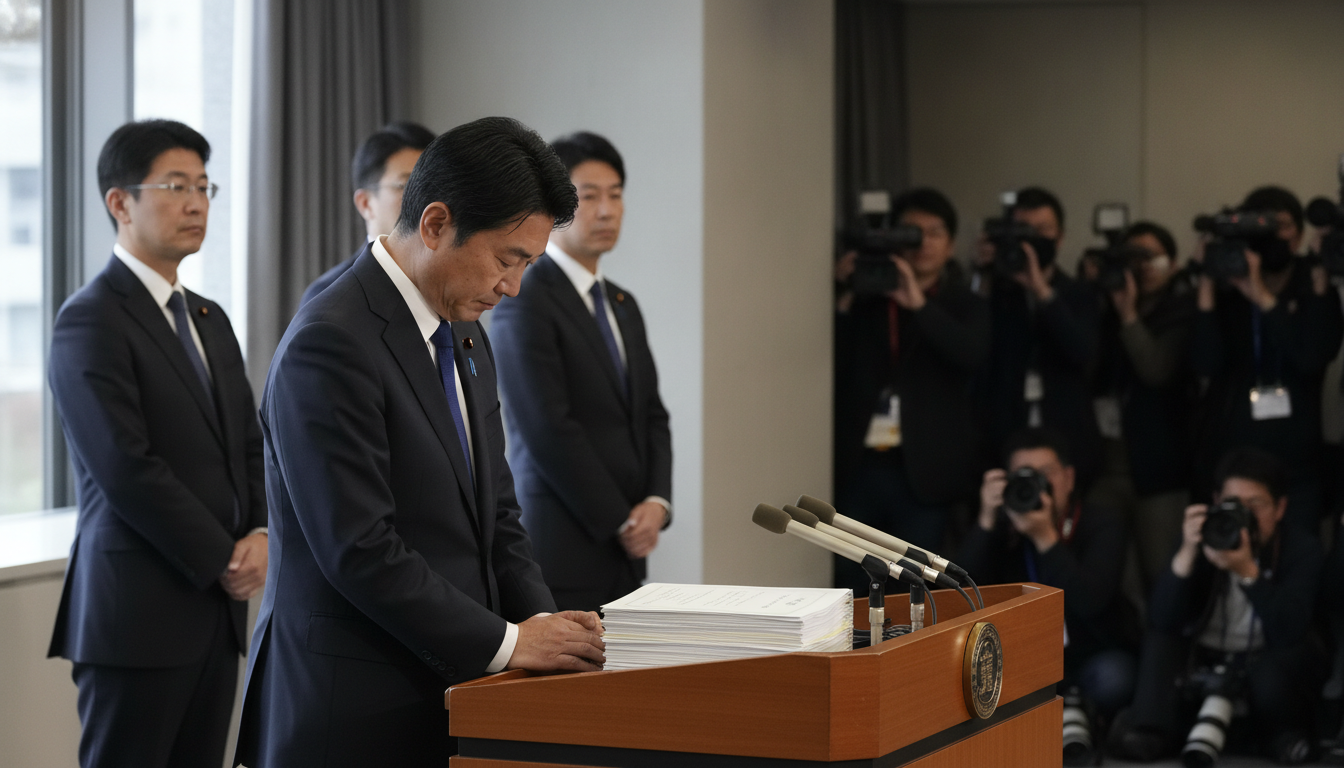
Yokohama mayor power harassment: Yamanaka accepts probe findings, apologizes in council but refuses to resign
Yokohama mayor power harassment: Mayor Takeharu Yamanaka accepted a third-party investigation’s findings and apologized during a council hearing on August 13, 2026, while rejecting calls to step down.
Mayor Accepts Findings and Offers Repeated Apologies
Yokohama Mayor Takeharu Yamanaka opened his first council appearance since the release of the investigation by saying he “accepts all” of the third-party panel’s findings and repeatedly apologized to city staff and the public. His remarks, delivered at a session of the city council’s General Affairs Committee on August 13, 2026, included moments of visible emotion as he addressed questions from council members. Despite acknowledging the report’s conclusions, Yamanaka explicitly rejected calls to resign from office.
Opposition and ruling bloc responses were swift after the hearing, with some council members signaling further action. The exchange marks the most significant public reckoning for the mayor since the investigation’s publication at the end of July.
General Affairs Committee Hearing and the Mayor’s Responses
The hearing took place in the General Affairs Committee, a session whose convening was decided on August 7, 2026, following mounting demands from councilors after the release of the report. During the session, council members pressed Yamanaka on specifics of the panel’s findings, his past conduct toward subordinates, and the steps he would take to prevent future incidents. The mayor acknowledged the panel’s conclusions and apologized multiple times, but he stopped short of offering to resign his post.
Councilors asked for clarity on how the mayor intends to change his behavior and what administrative measures he would endorse to address workplace harassment in city offices. Yamanaka’s answers emphasized acceptance of the report and a pledge to cooperate with reforms, though several opposition members said the responses fell short of detailing concrete, immediate actions.
LDP City Caucus Calls for Resignation
Following the session, Katsunori Seki, leader of the Liberal Democratic Party (LDP) city council group, announced plans to request the mayor’s resignation. Seki said the content of the investigation report left no basis to overturn the findings and that councilors remained uncertain about how the mayor would alter his conduct moving forward. He said he had reached out to other parties, including Komeito and the Constitutional Democratic Party (CDP) caucus, to seek broader support for the resignation request.
The move by the LDP city group increases political pressure on Yamanaka, as the party represents a substantial segment of the council. While some opposition members publicly demanded removal, others signaled a preference for formal council measures such as censure or requests for administrative reforms, indicating debate ahead over the appropriate parliamentary response.
Timeline of Investigation and Council Actions
The third-party investigation report was published on July 30, 2026, concluding that the mayor had engaged in power harassment toward city employees. Councilors immediately called for a formal hearing, and the council decided on August 7 to hold a General Affairs Committee session to question the mayor. The August 13 hearing thus represented the first opportunity for public interrogation of Yamanaka in a council setting since the report’s release.
The report’s publication and the subsequent hearing reflect an accelerated timeline driven by council demands for accountability and transparency. Municipal procedures now require deliberations within the council on any disciplinary or political measures, including potential votes that could affect the mayor’s standing and the city’s governance.
Administrative and Political Implications for Yokohama
The investigation’s findings and the council’s response raise questions about internal city management and the mechanisms available to address misconduct by elected executives. City administration officials face pressure to implement clearer anti-harassment policies, strengthen complaint-handling procedures, and provide safeguards for employees who report misconduct. Council members across party lines have indicated interest in reviewing existing workplace rules and oversight arrangements.
Politically, the episode places the mayor’s leadership under strain at a time when municipal decision-making requires cohesion between the executive and the council. Calls for resignation from the LDP city caucus could lead to formal motions or votes, but such outcomes depend on whether enough councilors join the initiative and on the legal and political thresholds for removal or censure under municipal law. Observers expect continued debate within the council in the days ahead.
Public Reaction and Next Steps
Public reaction to the hearing has been mixed, with civic groups and municipal employees calling for thorough reforms and some residents expressing concern over governance continuity. City officials have said they will review the investigation’s recommendations and outline an action plan, though details remain limited following the August 13 session. Council leaders have indicated plans for follow-up sessions and further inquiries to assess the mayor’s proposed measures and to determine potential parliamentary steps.
The municipal assembly is likely to schedule additional meetings to examine both the substance of the investigation and the administration’s remedial proposals, and political negotiations among party groups will shape whether formal sanctions are pursued.
Yamanaka’s acceptance of the panel’s findings and his repeated apologies underscore the gravity of the investigation’s conclusions, but the decision to remain in office leaves unresolved questions about leadership and accountability that the city council and Yokohama residents will expect to see addressed concretely in the coming weeks.

