
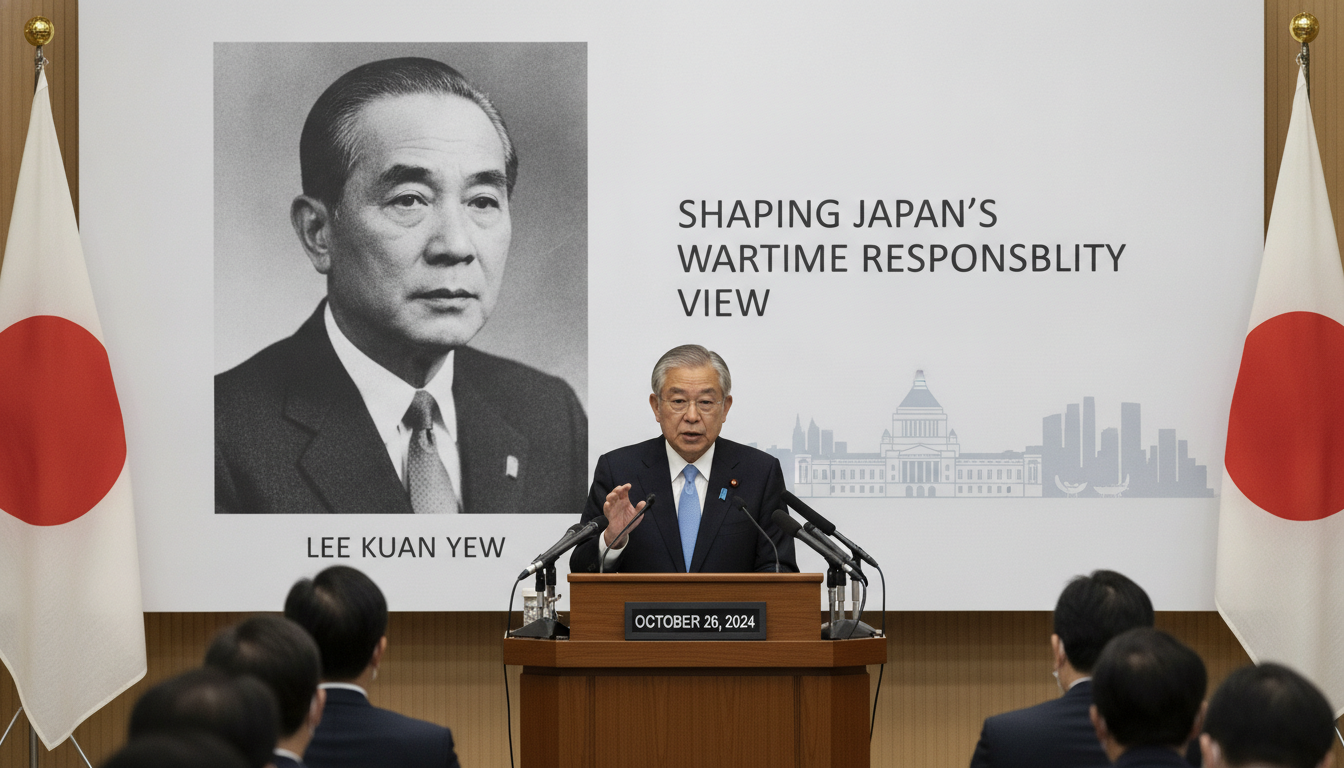
Shigeru Ishiba Urges Japan to Confront Wartime Memory Ahead of Aug. 15 Commemoration
Former prime minister Shigeru Ishiba says Japan must confront its wartime past and shoulder responsibility, influenced by Lee Kuan Yew’s admonishment.
TOKYO — Former prime minister Shigeru Ishiba on Friday called for a forthright national reckoning with Japan’s wartime history as the country approaches the Aug. 15 commemoration of World War II’s end. Ishiba said the annual observance should prompt leaders to acknowledge responsibility and pursue concrete steps to ease tensions with neighbouring countries.
Ishiba’s message before Aug. 15
Ishiba framed his remarks as rooted in a belief that remembrance carries obligations for present policymakers. He described Aug. 15 as both a solemn date for Japan and a liberation anniversary for nations once under Japanese rule, urging sensitivity to these divergent perspectives.
Speaking in his office ahead of this year’s observance, Ishiba stressed that political leaders bear a duty to address historical grievances in ways that reduce diplomatic friction and restore mutual trust. He said symbolic acts must be paired with substantive policy to prevent memory from becoming a recurring obstacle to regional cooperation.
How Lee Kuan Yew shaped Ishiba’s view on responsibility
Ishiba said a personal admonishment from the late Singaporean leader Lee Kuan Yew left a lasting impression on his approach to responsibility. He recalled Lee’s insistence that regional stability depended on honest reflection and pragmatic leadership, lessons Ishiba says remain relevant today.
That influence, Ishiba indicated, informed his view that apologies or acknowledgements are not purely rhetorical but part of a policy toolkit that can open doors for economic and security collaboration. He framed such gestures as investments in long-term regional stability rather than short-term political gestures.
Regional tensions and diplomatic implications
Ishiba linked the handling of wartime memory directly to Japan’s relations with South Korea, China and other neighbours, suggesting that unresolved historical issues continue to complicate cooperation on trade, security and multilateral initiatives. He warned that failure to address past grievances risks entrenching mistrust and undermining shared responses to strategic challenges.
Observers say Ishiba’s remarks come at a sensitive moment as governments in East Asia juggle economic ties and security concerns. His call for a clear-eyed approach to history echoes wider debates in Tokyo about how to reconcile domestic political pressures with the diplomatic need to rebuild trust.
Domestic political context and public sentiment
Ishiba’s intervention also speaks to ongoing domestic debates over education, collective memory and the role of political leadership in shaping historical narratives. He urged Japanese leaders to pursue policies that educate younger generations about the past without fostering denial or defensiveness.
Public opinion in Japan remains mixed, with strong currents both of pride in postwar reconstruction and calls for more forthright engagement with historical responsibility. Ishiba argued that clear political stewardship could bridge these divides by coupling honest reflection with forward-looking policies.
Policy suggestions and practical steps
In the interview, Ishiba advocated for a mix of diplomatic, educational and cultural initiatives designed to ease regional tensions. He suggested expanded exchange programs, joint historical research projects and high-level dialogues to create shared factual bases for discussion.
He also recommended policymakers consider how commemorations are framed publicly, proposing that ceremonies include language recognising suffering across the region while reaffirming commitments to peace and cooperation. Ishiba emphasized that such measures require sustained follow-through rather than one-off statements.
Potential reactions from neighbours and allies
While Ishiba did not predict specific responses, he acknowledged that gestures toward responsibility will be evaluated closely by neighbouring capitals. He advised Japan to coordinate carefully with allies and partners so that symbolic acts are matched by tangible policy moves in areas like trade, climate and security cooperation.
Diplomats note that consistent, credible engagement on historical issues could create political space for deeper collaboration on mutual challenges. Ishiba’s remarks signal a preference for patient diplomacy that treats history as a factor to manage, not a fixed barrier.
Japan confronts August 15 with complex domestic and regional expectations, and Ishiba’s intervention adds a seasoned voice to the debate over how to balance national memory with the demands of present-day diplomacy. His appeal for responsibility and practical measures reflects a view that historical reckoning and regional stability are complementary objectives, and that political leadership will determine whether commemoration becomes a catalyst for reconciliation or renewed division.

