
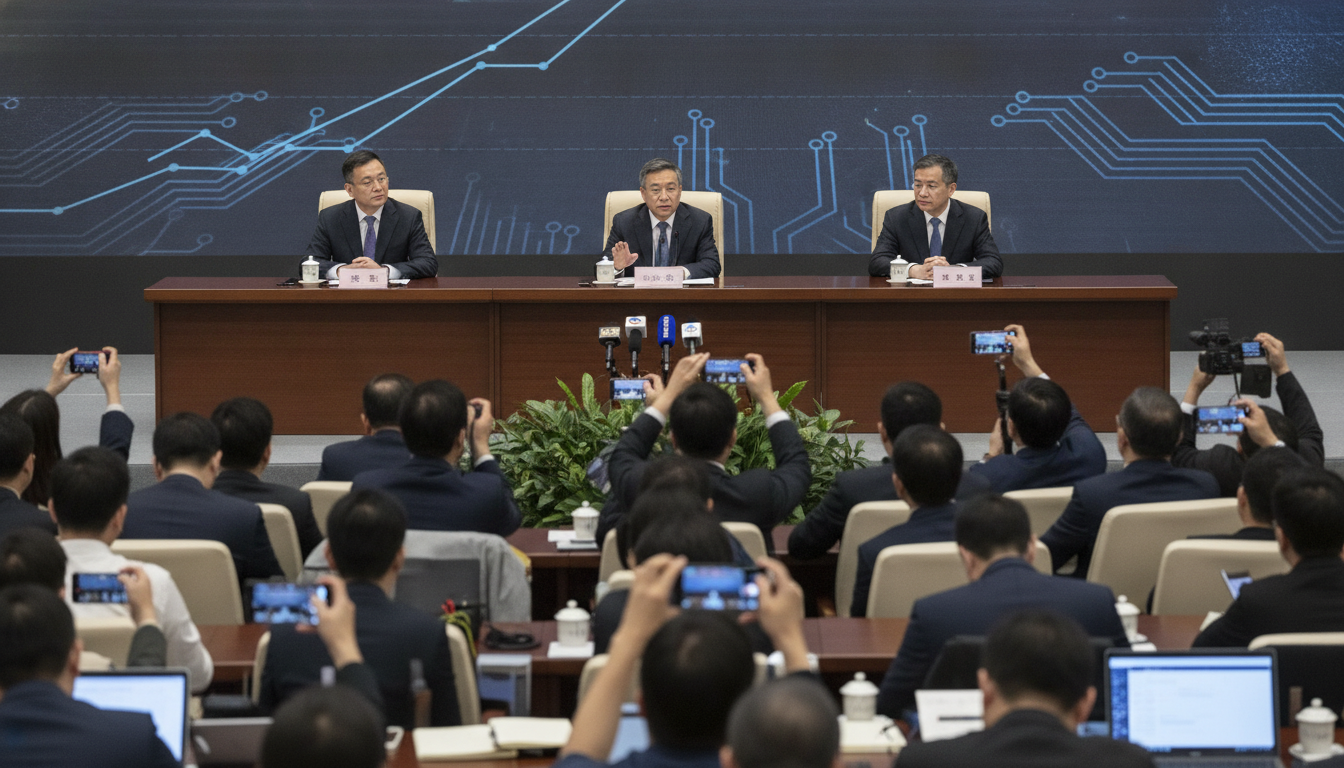
SMIC Refuses Price Cuts as AI Investment Drives Demand for Peripheral AI Chips
SMIC will not lower chip prices despite weak smartphone and auto demand, saying surging AI investment is boosting orders for peripheral AI chips at its plants.
Taiwan — China’s largest contract chipmaker, Semiconductor Manufacturing International Corp. (SMIC), said on August 14, 2026 that it will not reduce prices even as demand from smartphones and the automotive sector softens. The company attributed its pricing stance to a strong surge in AI-related investment, which it said is raising orders for peripheral AI chips needed by data centers and AI hardware manufacturers. The announcement underscores a widening split in the semiconductor market where some application areas are cooling while AI-linked segments expand rapidly.
SMIC reiterates firm pricing policy
SMIC’s leadership framed the decision as a commercial response to shifting demand patterns rather than a defensive move. Company representatives emphasized that the increase in orders for supporting chips linked to artificial intelligence workloads is improving utilization of certain process lines. Management said there is “no chance” it will lower prices, signaling confidence in margin preservation despite headline softness in other segments.
The firm’s stance reflects a broader strategic choice to prioritise revenue stability over market share through aggressive pricing. Keeping prices steady may protect profitability but also risks ceding cost-sensitive business to rivals willing to discount. SMIC’s comments come as foundry customers reassess procurement plans amid mixed demand signals.
AI investment fuels peripheral chip orders
SMIC described a wave of AI investment that is pushing demand for a wide array of peripheral chips, including power management, interface controllers and memory-support devices that surround AI accelerators. These components are critical to building and operating large-scale AI servers and inference systems, where total system cost and performance depend on more than just the accelerator chips themselves. Foundries that can rapidly scale production of these supporting devices are seeing a notable lift in order books.
The surge reflects how AI deployments are changing semiconductor demand profiles: while leading-edge logic chips remain important, many system builders require mature-node peripheral parts in high volumes. That dynamic is prompting some foundries to reallocate capacity and to prioritise customers tied to AI infrastructure projects.
Smartphone and automotive demand remain weak
Despite the uplift from AI, the smartphone and automotive markets continue to show signs of weakness, according to SMIC’s account. Global handset shipments have faced headwinds from softer consumer spending and elongated upgrade cycles, while auto production has struggled with uneven recovery and inventory adjustments. These trends have created pockets of excess supply for certain application-specific chips and sensors.
The contrasting trajectories across end markets complicate capacity planning for foundries and their suppliers. Companies that rely heavily on mobile and automotive orders may need to manage inventories and adjust production schedules to avoid margin erosion, while those with AI-related customers may maintain higher utilisation rates.
Implications for global pricing and competition
SMIC’s refusal to lower prices is likely to influence pricing expectations across Asia’s foundry ecosystem and among global chip suppliers. If major foundries hold rates steady while demand shifts between segments, price dispersion by product type could widen, with AI-supporting parts commanding premiums. Competitors may respond by targeting cost-sensitive clients or by accelerating capacity for AI-adjacent products.
This pricing environment could also affect downstream equipment and materials vendors, whose order flows depend on the mix of wafer starts across nodes and product families. The net impact on end customers will hinge on how quickly the market rebalances and whether alternative suppliers can fill any gaps left by foundries maintaining price discipline.
Market and customer reactions expected to vary
Industry observers say corporate buyers and system integrators will react in different ways depending on their exposure to AI workloads and their bargaining power. Large cloud and hyperscale customers placing volume orders for AI infrastructure may be able to negotiate favourable terms despite SMIC’s stance, while smaller customers could face higher procurement costs. Some manufacturers may accelerate design work to diversify their supplier base to manage risk.
Analysts note that a sustained AI-driven demand cycle could incentivise more investment in specialised capacity for peripheral chips, but also raise barriers for smaller players. The interplay between customer concentration and supplier pricing power will shape margin dynamics across the semiconductor value chain.
Outlook for capacity and longer-term trends
Looking ahead, SMIC’s announcement suggests capacity allocation will become increasingly strategic, with foundries balancing mature-node volumes for peripheral components against leading-edge logic and memory demands. Continued AI investment could keep utilisation high for specific process families even if other end markets are subdued. How quickly smartphone and auto demand recover will determine whether price resilience can be maintained across the board.
Policymakers and industry participants will be watching inventory levels and capital spending plans closely as the year progresses. For now, SMIC’s posture signals that at least one major supplier believes AI-driven volumes are sufficient to support current pricing, setting a tone that could influence contract negotiations and capacity decisions industry-wide.
SMIC’s announcement underlines a pivotal moment in the semiconductor industry: demand is diverging by application, and pricing strategies are following suit as companies decide which markets to prioritise.

