
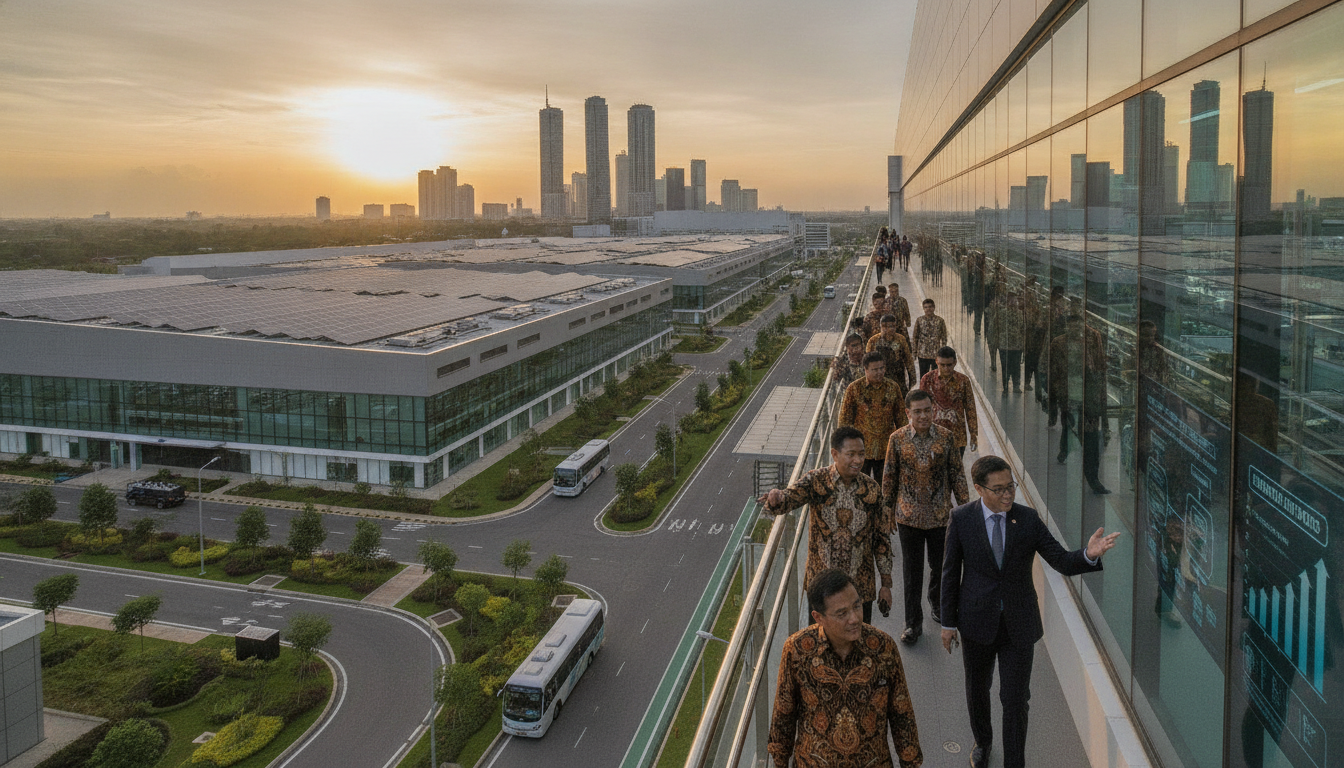
Semiconductor industry surge positions Vietnam and Philippines to climb toward high-income status
Southeast Asia’s semiconductor industry boom reshapes growth prospects, with Vietnam and the Philippines emerging as focal points in a region aiming to escape the middle-income trap.
The semiconductor industry is driving a significant reconfiguration of economic development across Southeast Asia, prompting new investments, supply-chain realignments, and government strategies to raise incomes. Regional officials and industry executives say expanding chip fabrication and assembly capacity could accelerate productivity and export growth in countries that have long sought to leap into high-income status.
Investment wave in manufacturing and fabs
Major global chipmakers and equipment suppliers have announced or accelerated plans for factories and testing facilities in Southeast Asia, prompting a surge of capital into the region. These investments span wafer fabrication, assembly, testing and packaging (ATP), and ancillary activities such as materials and precision tooling.
Governments have matched private capital with incentives, land allocation and infrastructure upgrades to make hosting fabs feasible and competitive. The scale and technical complexity of recent projects mark a departure from past waves of low-value manufacturing that defined early industrialization in the region.
Vietnam and the Philippines draw strategic projects
Vietnam and the Philippines have emerged as primary beneficiaries of the latest round of semiconductor projects, securing commitments for new plants and expanded ATP networks. Investors cite skilled labor pools, improving logistics corridors and targeted policy measures as key attractions.
Both nations face challenges scaling local engineering talent and supplier networks to match ambitious factory timelines. Yet officials argue that the clustering effects of major projects—suppliers, training centers and R&D linkages—will accelerate the development of domestic industrial ecosystems.
Skills gap and workforce development efforts
Industry leaders warn that expanding chip production will only deliver long-term gains if workforce development keeps pace with factory requirements. Semiconductor manufacturing calls for technicians and engineers with specialized training in process control, metrology and cleanroom operations.
To close that gap, universities, vocational institutes and companies are launching joint training programs and apprenticeships. Governments are also increasing funding for STEM education and work-readiness initiatives, aiming to create career pathways that retain talent within the region’s growing high-tech clusters.
Supply-chain resilience and regional integration
Building a resilient local supply chain is central to converting one-off factory projects into sustainable industry growth. Companies are working to shorten logistics routes and develop regional supplier networks for chemicals, substrates, test equipment and packaging services.
ASEAN-level cooperation and national industrial strategies are encouraging cross-border sourcing and harmonized standards, while private firms are hedging geopolitical and logistical risks by diversifying suppliers across nearby markets. Improved connectivity within Southeast Asia is expected to lower costs and strengthen the region’s competitive position in global semiconductor value chains.
Policy tools and fiscal incentives under scrutiny
Governments are deploying a mix of tax breaks, direct subsidies, streamlined permitting and infrastructure investment to attract semiconductor investment. Authorities justify these measures as essential to offset high upfront costs and to capture long-term spillovers in skills and supplier development.
Critics caution that incentives must be carefully designed to ensure value capture and avoid losing revenue without securing sustainable domestic benefits. Analysts say transparent performance conditions, local content targets and clear timeframes can help align public support with industrial outcomes.
Geopolitical risks and market dependence
The rapid expansion of semiconductor capacity in Southeast Asia takes place against a backdrop of global geopolitical tensions and shifting trade policies. Export controls, technology transfer restrictions and competition among major economies could affect investment flows and the availability of critical equipment and intellectual property.
To mitigate exposure, regional policymakers are encouraging diversification of trade relationships and strengthening ties with multiple technology partners. Companies in the region are also investing in compliance capabilities and scenario planning to navigate evolving restrictions and market volatility.
Sustained progress will require careful coordination among governments, industry and educational institutions to maximize job creation, technology transfer and long-term competitiveness.
The entry of higher-complexity semiconductor activities into Southeast Asia signals a potential path out of the middle-income trap for Vietnam and the Philippines, but success will depend on aligning investment, skills and policy to build enduring industrial ecosystems.

