
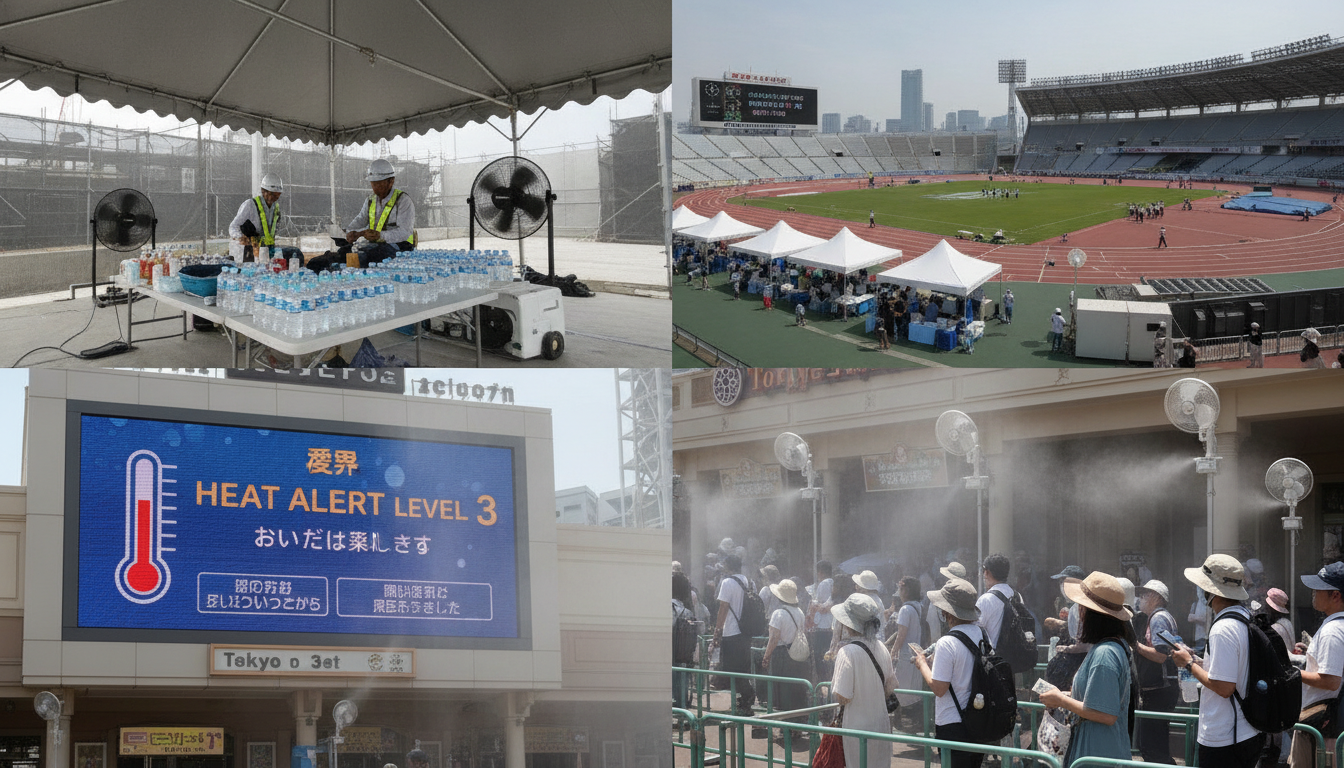
Japan Strengthens Heat-Safety Measures at Theme Parks, Worksites and Sporting Events
Japan ramps up heat-safety measures across theme parks, outdoor workplaces and sporting events as summers frequently hit 40°C and above, aiming to protect visitors, workers and athletes.
Immediate changes at theme parks and visitor venues
Major leisure sites have added physical and operational measures to reduce heat exposure for guests and staff. Operators are installing more misting stations, shaded queueing areas and extra water-supply points, while increasing the number of on-site first-aid stations equipped to treat heat-related illness.
Staff routines now include more frequent breaks, proactive temperature checks and targeted training on recognizing heatstroke symptoms to speed medical response during peak hours.
Outdoor worksites introduce stricter hydration and scheduling controls
Construction firms, delivery companies and other employers with outdoor teams are rolling out stricter heat protocols to lower worker risk. Measures include mandatory hydration breaks tied to wet-bulb globe temperature thresholds, staggered shifts that avoid midday peaks and provision of cooling garments and shaded rest zones.
Labour groups and municipal offices report closer monitoring of compliance, with employers documenting breaks and environmental conditions to reduce incidents and maintain productivity.
Sporting events adjust timing and medical readiness
Organizers of marathons, cricket, tennis and high school competitions are revising start times and contingency plans to limit athlete exposure. Races and matches are increasingly scheduled for early morning or late evening, while contingency policies for suspension or postponement now appear more frequently in event regulations.
Event sites are also expanding medical teams, equipping checkpoints with rapid cooling tools such as ice packs and cold-water immersion tubs, and installing extra hydration stations along courses and in venues.
Local governments expand cooling infrastructure and public advisories
Municipalities across prefectures are opening designated cooling centers and extending hours at public facilities during heat waves to offer relief for vulnerable residents and visitors. Public-health advisories now emphasize actionable steps — limiting outdoor activity during peak heat, seeking shaded spaces and recognizing early signs of heat-related illness.
Digital heat maps, real-time alerts and targeted outreach to outdoor workers and tourist-heavy districts are being deployed more widely to guide on-the-ground decisions during extreme-heat episodes.
Businesses weigh costs, visitor comfort and legal risks
Companies say the investments in cooling infrastructure and revised operations are balanced against potential revenue loss and reputational risk if heat-related incidents occur. Leisure operators report modest additional costs for temporary equipment and staffing, but expect those to be offset by maintained visitor numbers and lower medical incidents.
Employers also face growing pressure from regulators and the public to demonstrate effective heat-safety measures, prompting firms to formalize policies and document adherence to recommended practices.
Public response and tourism sector outlook
Visitors have generally responded positively to visible cooling measures and clearer advisories, citing greater confidence in planning daytime activities despite higher temperatures. Tourism officials note that while extreme heat poses a challenge to summer travel, proactive safety measures help sustain arrivals and reduce cancellations.
Longer-term adjustments being discussed include seasonal event calendars, infrastructure retrofits for shade and ventilation, and public messaging campaigns to normalize heat risk awareness among residents and tourists alike.
As Japan confronts increasingly intense summer heat, the combined actions of park operators, employers, event organizers and local governments represent a coordinated effort to reduce heat-related harm. Continued monitoring, adaptive planning and visible on-site protections are likely to shape how the country manages hotter summers in the years ahead.

