
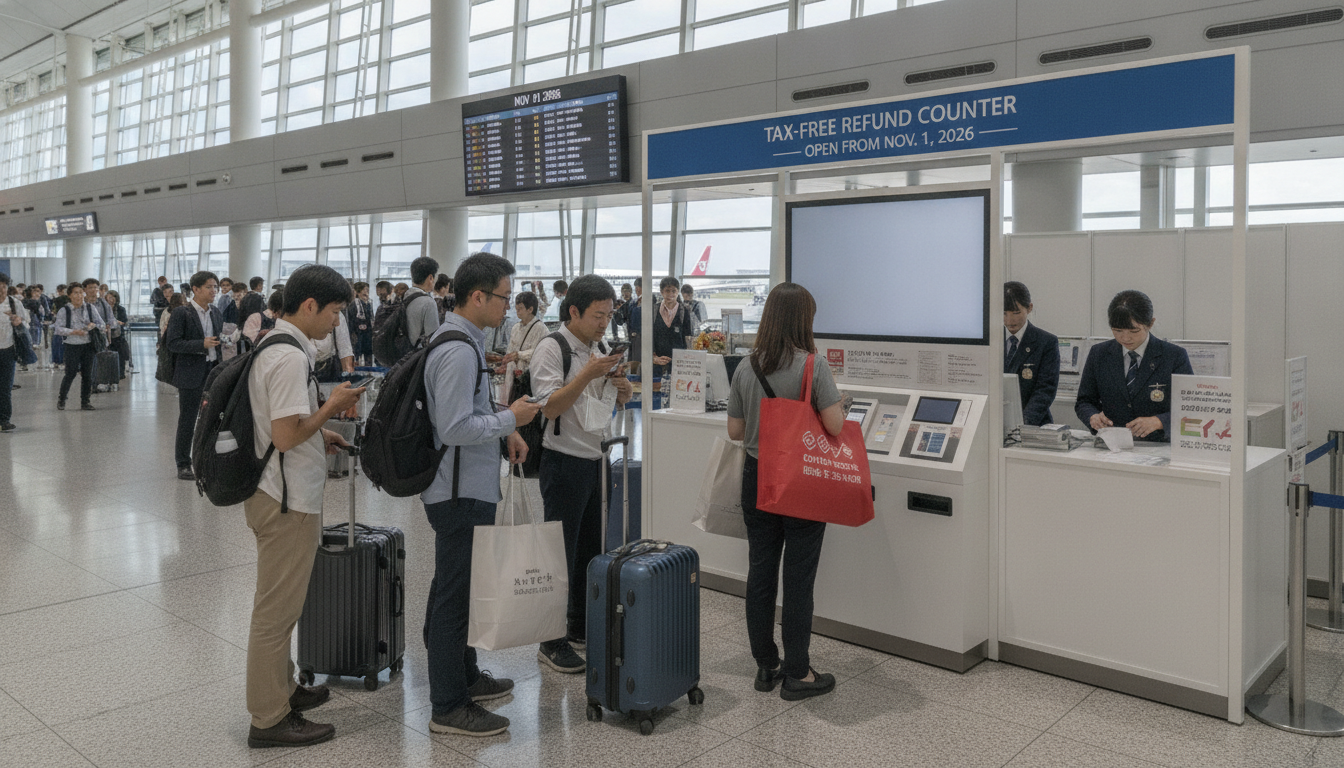
Japan tax-free shopping overhauled: what travelers must know about the November 1, 2026 refund system
Japan tax-free shopping changes on November 1, 2026: shops will charge full prices and refunds are claimed at departure. Key steps and airport tips. Now.
Japan’s tax-free shopping rules will change on November 1, 2026, and visitors should prepare for a new refund method that affects how tax-free purchases are paid for and reclaimed. The keyword tax-free shopping applies both to the current system in place until October 31, 2026 and the replacement process that begins on November 1. This article explains eligibility, the mechanics of both systems, and practical steps travelers should take at stores and at departure points.
The change shifts responsibility for the refund timing from in-store discounts to post-purchase reimbursement at departure, altering the flow for many common purchases. The new approach is intended to tighten controls and reduce fraud, but it also introduces new steps that will affect packing, timing at the airport or port, and potential fees. Read on for a detailed, practical guide to navigating tax-free shopping in Japan before and after the November 1 switch.
What the November 1, 2026 change means for shoppers
From November 1, 2026, most participating retailers will charge the full tax-included price at the point of sale and require shoppers to claim the consumption tax refund at departure. The refund will be processed after customs confirmation, using the method the shopper nominates at purchase—options may include bank transfer, credit-card refund, or cash payout at certain departure locations. This reverses the familiar practice where many shops deduct the tax at the till, and it places new emphasis on airport procedures and documentation.
The reform removes some long-standing elements such as sealed bags for consumables and the separate treatment of consumables versus general goods. However, key requirements remain—minimum purchase thresholds and the need to carry goods out of the country personally are still enforced. Travelers should note that while the law standardizes the refund framework, stores retain discretion on refund fees, payout timing, and whether they will take on the risk of refunding tax up front.
Officials have framed the revision as an anti-fraud measure aimed at preventing tax-free purchases from being resold domestically. For shoppers, the practical consequence is that departing Japan will now include at least one additional administrative step for most tax-free claims, and failure to complete that step can result in the tax being collected and potential penalties.
Eligibility: who can use tax-free shopping in Japan
Tax-free shopping is available to short-term visitors who enter Japan under the temporary visitor status, typically the short-term stay stamp or landing permit issued at arrival. That status must be valid and the visitor should have been in Japan for less than six months at the time of purchase. The system is designed for tourists and others whose residence status is temporary, not for residents who live and work in Japan.
Japanese nationals who have lived overseas for two or more continuous years may also qualify, but they must provide the required consular or family-register documentation to prove their long-term residence abroad. From November 2026, an original My Number Card that records the move abroad will be accepted as proof, but travelers should check requirements carefully and bring original documents rather than photocopies.
Every tax-free purchase requires presentation of the buyer’s passport at the time of sale; a photocopy will not suffice. In some cases, the Visit Japan Web 2D code can be used in lieu of a physical passport, but not all retailers accept the code and Japanese citizens generally need to present the passport itself. Carry your passport whenever you plan to buy tax-free items to avoid disappointment at the till.
How tax-free shopping works until October 31, 2026
Under the current rules valid through October 31, 2026, shops typically apply the consumption tax discount at the point of sale when you show your passport. The minimum qualifying spend is 5,000 yen before tax in the same shop on the same day, and department stores or malls with centralized tax-free counters can combine qualifying purchases made at multiple outlets in the same complex to meet the threshold. This model has made tax-free shopping straightforward in many large stores and discount chains.
Goods are currently split into two categories: consumables and general goods. Consumables—food, non-alcoholic beverages, cosmetics, medicines and similar items—are capped at 500,000 yen per store per day and must be sealed into a special bag or box that shoppers are not permitted to open until they leave Japan. General goods, including electronics, clothing and baggage, have no upper limit, and they can be taken out of the country provided they leave with the purchaser.
Large discount stores and electronics chains are common first stops for tax-free shopping and often deduct the tax at the register when you present your passport. Department stores that use a shared tax-free counter may charge the full price at the till and then process the refund at the counter the same day. The paperwork is typically electronic rather than paper stickers in passports, and records are transmitted to tax authorities for verification at departure.
How the refund method will work from November 1, 2026
Beginning November 1, 2026, the default process will require shoppers to pay the full tax-included price in store and then claim a refund around the time they exit Japan. At purchase you will still need to present your passport or acceptable digital proof and complete the shop’s refund registration. The store or its refund operator will ask how you prefer to receive the refund; common options include a credit-card credit, bank transfer, in-app payment, or cash payout at designated airport or seaport counters after customs confirmation.
At the airport or port, you must perform a customs check of your tax-free purchases in the public, land-side area before checking luggage. This is done by scanning your passport at a tax-free procedures terminal or by completing the process through the Visit Japan Web service at designated facilities in major airports. A successful green result from the terminal means no further inspection is required; a red result will direct you to present the goods and receipts to customs officers for verification.
After customs confirms your goods are being carried out of Japan, the store or refund operator releases your refund by the method you selected at purchase. It is essential to complete the customs step within 90 days of purchase and to ensure you personally carry the items out of Japan. Customs inspects receipts individually, so if one item on a receipt is missing at the time of the check, the refund for that entire receipt can be voided.
Practical preparations and airport procedures for departing shoppers
Travelers should pack tax-free items in carry-on luggage or otherwise position them where they can reach them for customs inspection on the land side of the terminal. Since the customs check happens before bag drop and check-in in many airports, allow extra time at departure to complete the tax-free procedure and any subsequent refund collection. At major airports—Narita, Haneda, Kansai, Chūbu, New Chitose, Fukuoka and Naha—there will be designated areas where you can use the Visit Japan Web service instead of a terminal, but procedures vary by facility.
If you plan to connect domestically before leaving Japan internationally, complete the tax-free customs check at the airport where you will depart Japan on an international flight, not at your first domestic departure. Carry all receipts and the original packaging for recently purchased items, and be ready to show warranties or serial numbers for high-value purchases costing 1,000,000 yen or more before tax, as customs may record identifying information and request supporting documentation.
Keep in mind that some retailers may offer to refund the tax at the till at their own risk, effectively maintaining the old-style discount for customers who prefer immediate relief. Others may provide direct overseas shipping at the point of sale, which can circumvent the airport customs step entirely. Ask each store about their refund policy, any handling fees they apply, and the timing for payout so there are no surprises at departure.
Common questions, complications and warnings for shoppers
Visitors often ask whether the full 10 percent consumption tax will be returned under the new system; the answer is not guaranteed. The law leaves refund fees and payout timing to individual stores and refund operators, so retailers might deduct a handling charge or set different payout schedules. Treat the refund as the consumption tax minus any potential handling fee until the specific store terms are confirmed in writing or at the till.
If you consume or use a purchased consumable item in Japan, it no longer qualifies for a refund under both the current and new rules, so be honest with customs when completing the declaration. Under the new method customs checks receipts one by one, which means losing one item from a receipt can nullify the refund for everything on that receipt. This strict approach makes careful packing and accurate record-keeping more important than ever.
Gold and platinum bullion and coins are excluded from the tax-free scheme. For items with serial numbers or warranties, keep all documentation accessible; customs may require proof of purchase details during inspection. Finally, if customs confirms goods but they are not actually taken out of Japan, the tax will be collected post-facto and penalties may follow, so ensure you complete the export of goods as declared.
How to plan purchases when traveling across the October–November 2026 changeover
If your trip spans the October 31, 2026 cutoff and you purchase items before and after the changeover, the rules that apply depend on the purchase date rather than your date of departure. Anything bought on or before October 31 follows the current system of point-of-sale discounts or same-day counter refunds, even if you exit Japan after that date. Purchases made on or after November 1, 2026 will be subject to the refund-at-departure method and its associated steps.
This split can complicate airport routines; a single trip may involve both old-style discounted refunds and the new refund procedure, possibly at different counters or terminals. Where possible, group purchases that you want treated the same way by timing them on one side of the changeover or by asking retailers whether they will continue to offer in-store refunds after November 1. Above all, arrive earlier than usual on the day of international departure to allow time for any extra procedures related to mixed-rule purchases.
For shoppers aiming to avoid potential refund fees or delays, consider consolidating purchases at stores that publicly commit to handling refunds at the register, or inquire about direct shipping options at the point of sale. These choices can simplify the exit process but require confirmation from the retailer before completing the transaction.
Japan’s tax-free shopping landscape will be more procedural after November 1, 2026, but the system continues to offer meaningful savings for eligible visitors. The requirement to present passports, maintain receipts, and carry goods out of Japan persists, reinforcing the need for travelers to plan their purchases and departure routines carefully. With the likelihood that retailers will vary in how they implement refunds and any handling charges, ask specific questions at the till and keep documentation handy.
As you prepare for shopping in Japan, remember to verify the store’s tax-free participation and refund method before purchase, pack tax-free items so they remain accessible at departure, and allow extra time when leaving the country for customs checks and refund processing. These practical steps will help ensure you receive your entitled refund and avoid unexpected complications during your trip.
Tax-free shopping in Japan remains an attractive perk for international visitors, but the November 1, 2026 change shifts when and how refunds are processed. By understanding eligibility, tracking purchase dates, and following airport procedures, travelers can continue to benefit from tax relief while navigating the new refund process smoothly.

