
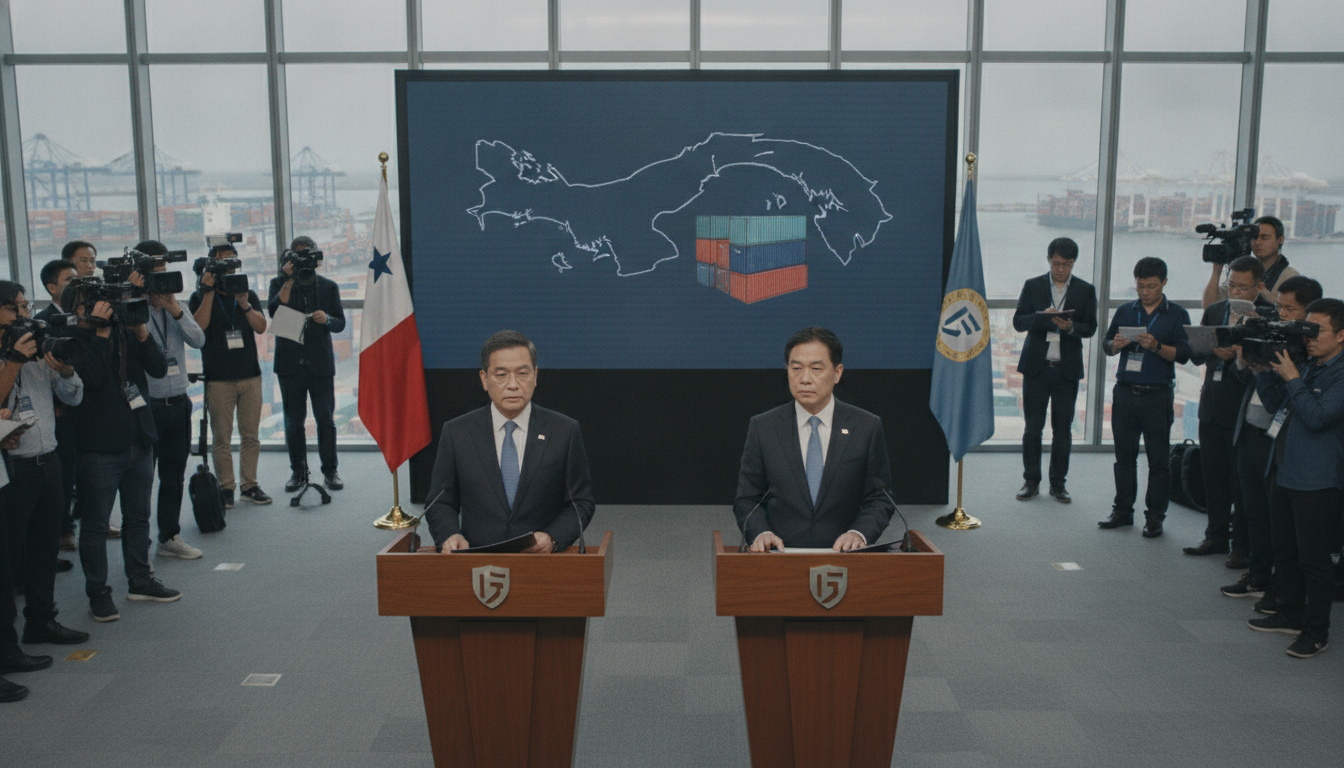
Panama Canal ports seizure: CK Hutchison seeks $1.5 billion from Panama
CK Hutchison seeks $1.5B after Panama Canal ports seizure, alleging revoked concessions that disrupted trade and heightened US‑China tensions and shipping.
TOKYO — CK Hutchison Holdings said Thursday it has filed a claim for $1.5 billion in damages against the Panamanian government over the Panama Canal ports seizure that removed its unit’s rights to operate terminals at both ends of the waterway. The conglomerate said the action followed unilateral steps by Panama to revoke long-standing port concessions, a move CKH described as unlawful and costly. The dispute comes amid heightened geopolitical sensitivities around infrastructure access and foreign investment in strategic trade chokepoints.
Company files $1.5 billion claim
CK Hutchison announced the damages claim on August 20, 2026, stating it will pursue compensation through international legal channels. The group did not disclose detailed legal filings but said the value reflects lost earnings, costs incurred after the revocation, and reputational harm. Company officials emphasized they exhausted local remedies before escalating the dispute to arbitration and other avenues the firm deems available.
The claim marks a rare, large-scale commercial suit tied to port concessions that have been central to global shipping networks. CKH’s port unit had operated terminals that handle millions of tons of cargo annually, and the company argues the revocations were abrupt and lacked due process. Lawyers for CK Hutchison told reporters the firm will seek both compensatory and consequential damages.
Details of the Panama Canal ports seizure
Panama’s government moved to seize operational control of the terminals at both the Pacific and Atlantic entrances to the canal earlier this year, citing national security and contractual breaches. The ports affected are key nodes for container transshipment and for vessels transiting the canal, which remains a core artery of global maritime trade. Local authorities issued statements characterizing the changes as necessary to protect sovereignty and operational continuity.
Industry sources say the takeover included installing state-appointed managers and invoking emergency powers to reassign operational licenses. The takeover has disrupted some commercial schedules while governments and terminal users worked to establish interim arrangements. Shipping companies and logistic operators have been closely watching how long-term management of the terminals will be restructured.
Legal grounds and company response
CK Hutchison’s statement framed the dispute as a breach of investment protections and a violation of concession contracts that had run for decades. The company indicated it will pursue remedies under bilateral investment treaties and international arbitration mechanisms if required. Legal experts say arbitration claims of this size could take years to resolve and often hinge on detailed contract language and evidence of procedural fairness.
CKH also launched an internal review of the operational and financial impact and said it will seek to mitigate losses through insurance and alternate revenue streams. The firm’s port operations division had been one of its major international assets, and executives acknowledged the potential for sustained financial strain if compensation is not secured. The company declined to speculate on whether it would seek diplomatic support from home or host governments.
Panama government’s position and domestic reaction
Panamanian officials defended their actions as lawful and in the national interest, citing alleged contractual noncompliance and threats to port security. Government spokespeople said the revocations were taken after consultations with national security, regulatory, and maritime authorities. The cabinet described the move as part of a broader effort to assert greater sovereign control over critical infrastructure.
Domestically the decision has drawn mixed reactions. Some political figures welcomed the government stance as protective of national assets, while business groups warned that abrupt seizures could deter foreign investment. Labor unions at the ports called for guarantees on employment and operational continuity, and port workers’ representatives sought assurances that existing contracts and safety standards would be maintained during the transition.
Geopolitical implications and US‑China sensitivity
Observers say the Panama Canal ports seizure has broader geopolitical resonance because control of terminal operations at either end of the canal can affect the flow of transoceanic trade. The case arrives against a backdrop of US‑China rivalry over critical infrastructure and overseas investments, where port concessions have repeatedly attracted strategic scrutiny. Washington has in recent years been attentive to foreign control of key maritime facilities, and the Panama case is likely to be debated in that context.
Analysts note that the dispute could complicate diplomatic relations, draw outside scrutiny, and influence multilateral investment discussions. Panama has historically balanced relations with multiple major powers, and handling of the port transition will be watched for signs of how that balance is being managed. The episode may also prompt other countries to review concession frameworks and national security clauses in infrastructure agreements.
Operational and market consequences for shipping
Short-term disruptions at the affected terminals prompted some shipping lines to reroute or adjust schedules, increasing transit costs and transit times for certain routes. Port users reported delays in slot allocations and uncertainty about stevedoring arrangements during the handover process. Freight forwarders cautioned that protracted legal and administrative disputes could raise tariffs and insurance premiums for calls at the canal’s gateway ports.
Trade economists warned that, while the canal itself continues to operate under Panama Canal Authority oversight, instability at major terminals can ripple through global supply chains. Companies reliant on predictable hub-and-spoke transshipment — including manufacturers and retailers — may face higher logistical costs if the situation remains unresolved. Market watchers will track any contractual changes or new operators appointed by Panama for clues on throughput and service reliability.
The coming months are likely to see legal briefs, government statements, and commercial adjustments as the dispute proceeds. Investors and shipping firms will monitor whether Panama and CK Hutchison can reach a negotiated settlement or whether arbitration will determine the outcome.
In the near term, stakeholders from governments to terminal customers are preparing for a period of uncertainty while the legal and political processes play out. The resolution of this case will be closely watched for its implications on how countries manage foreign-operated infrastructure and on the wider geopolitics of maritime trade.

