
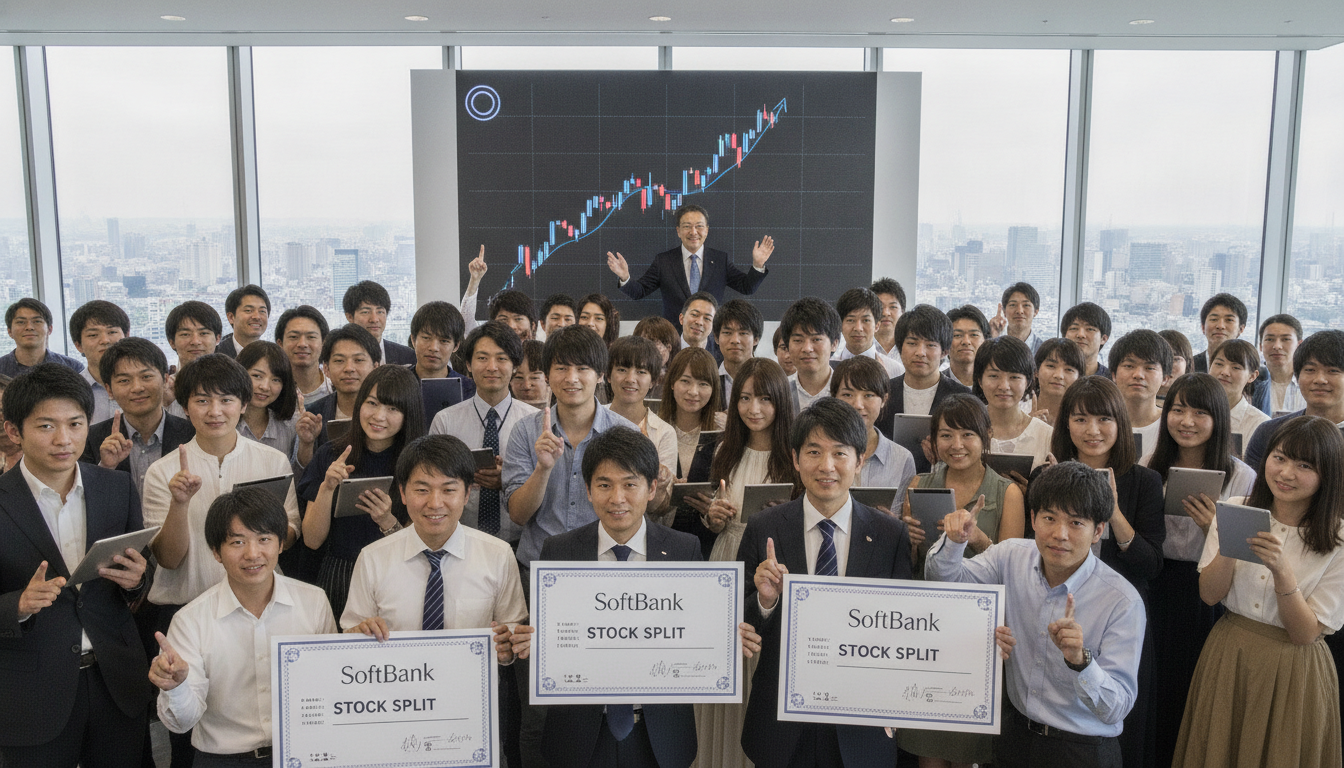
SoftBank Retail Shareholders Surge as Firm Wins Most New Individual Investors in Japan
SoftBank retail shareholders rose sharply in fiscal 2025–26, as the company attracted younger, long-term investors through stock splits, perks and expanded communication channels.
SoftBank Corp. recorded the largest increase in individual shareholders among Japanese firms in the fiscal year ending March 31, 2026, a development market watchers say reflects deliberate efforts to broaden its retail base. The rise in SoftBank retail shareholders was driven by a combination of corporate actions and targeted outreach aimed at younger investors. Company filings and shareholder disclosures indicate the change has been both rapid and significant for a major telecommunications and technology group.
SoftBank Tops Japanese Firms in New Retail Investors
SoftBank’s shareholder registry showed it added more retail accounts than any other listed Japanese company last fiscal year, a performance that stands out amid generally stable ownership patterns. The company’s scale, brand recognition and recent corporate moves helped convert interest into actual holdings. Market analysts note the pace of retail participation at SoftBank exceeds what peers have achieved in the same period.
This surge has drawn attention because it coincides with a broader shift in how Japanese companies engage everyday investors. While institutional ownership remains dominant, SoftBank’s ability to mobilize individual buyers suggests a new playbook for firms seeking more resilient, long-term holders. Observers say the firm’s strategy may be a template for other large-cap issuers.
Stock Splits and Shareholder Perks Attract Young Traders
Corporate actions such as stock splits have played a central role in making shares more accessible to smaller, younger investors who may favor lower per-share prices. SoftBank implemented equity adjustments and other measures that reduced the entry price for individual buyers, increasing the appeal for novice traders and savers. These steps are commonly used internationally to broaden retail participation and were applied with clear intent at SoftBank.
Beyond splits, the company introduced or expanded perks tied to share ownership, including preferential offers and loyalty incentives geared to consumers who are also customers. Such perks can both reward ownership and create a closer link between product use and shareholder identity. The combination of lower price points and tangible benefits has been effective in converting interest into share purchases.
Digital Outreach and Investor Communication Strategy
SoftBank refreshed its investor communications, placing emphasis on digital channels and simplified messaging that resonates with younger demographics. The company increased the frequency of updates, used social and mobile-friendly content, and highlighted long-term strategy in plain language. These tactics lowered barriers for retail investors who often depend on online sources for research and trading.
Investor relations teams also offered webinars, FAQ guides and smartphone-friendly reports to demystify corporate performance and governance. Market participants said the outreach reduced perceived complexity and encouraged first-time shareholders to hold rather than flip their positions. The result has been a clearer pathway from awareness to ownership for individual investors.
Demographics: Nearly Half Under 50 as of March 31, 2026
SoftBank disclosed that nearly half of its individual shareholders were younger than 50 as of March 31, 2026, signaling a substantial shift in the age profile of its retail base. This demographic tilt contrasts with the traditionally older investor cohort that has characterized Japanese equity markets for decades. Younger holders tend to have different trading patterns and time horizons, which could influence liquidity and volatility.
Company reports suggest these shareholders are more likely to be long-term retail investors rather than short-term speculators, although monitoring will continue. The presence of younger, potentially tech-savvy owners may also deepen engagement between SoftBank’s consumer brands and its shareholder community. Analysts caution that demographic changes in ownership can have mixed effects on share price behavior over time.
Implications for Market Stability and Corporate Governance
A larger retail base can contribute to price stability if investors adopt buy-and-hold strategies, a goal many companies explicitly seek to reduce volatility. SoftBank’s approach appears designed to cultivate patient capital by linking shareholder benefits to long-term participation. However, corporate governance experts note that increasing retail ownership does not replace the oversight role played by institutional investors and independent directors.
The company will likely face scrutiny over how incentives are structured and whether they align with minority shareholder interests. Regulators and proxy advisors will watch whether perks or communications cross lines into improper inducements. For now, the immediate effect has been to diversify the owner mix and create a broad constituency with a vested interest in the company’s future.
Broader Trend Among Japanese Corporates
SoftBank’s gains reflect a wider movement among Japanese corporations to court retail investors through accessible equity structures and modernized outreach. Other firms are experimenting with similar tactics, including split-adjusted share classes and customer-linked shareholder programs. The trend is part of a broader effort to deepen domestic capital markets and reduce reliance on short-term foreign flows.
Policymakers and exchanges have encouraged greater retail participation as a way to strengthen market resilience, and companies are responding with practical, consumer-focused measures. Whether this generates lasting increases in household investment remains to be seen, but the early evidence from SoftBank points to meaningful shifts in investor behavior.
SoftBank’s surge in retail ownership underscores a changing landscape for Japanese equity markets, where stock splits, customer perks and clearer digital communication are reshaping who owns shares and why they stay invested.

