
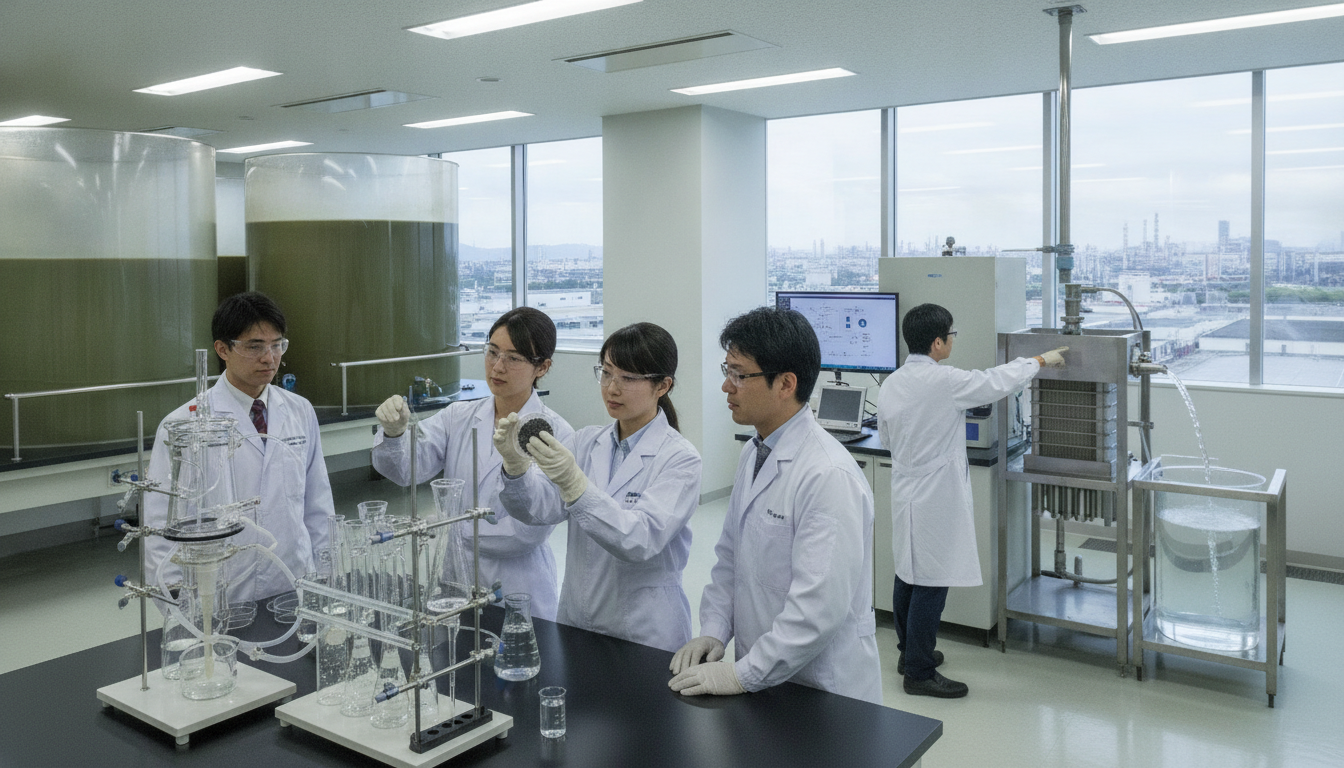
JAEA unveils absorbent to extract rare-earth elements from industrial water and oil
Japan Atomic Energy Agency reveals a chemical absorbent that extracts rare-earth elements from water and oil, opening new routes for industrial recovery and supply resilience.
TOKYO — On August 26, 2026 the Japan Atomic Energy Agency (JAEA) announced the development of a chemical absorbent capable of extracting rare-earth elements from water and oil, a step that could enable recovery of strategic materials from industrial wastewater and process fluids. The new technology is designed to bind rare-earth ions selectively, allowing separation from complex liquid streams and offering an alternative source of supply for materials critical to electronics, renewable energy and advanced manufacturing. Early demonstrations by JAEA researchers show promise, but experts say larger-scale trials and industrial partnerships will be needed to prove economic viability.
New absorbent demonstrated by JAEA
The material, developed by researchers at JAEA with partner institutions, was shown in laboratory tests to remove rare-earth elements from simulated liquid samples and industrial-type fluids. Images and descriptions released by the agency indicate the absorbent can operate in both aqueous and oily media, expanding the range of potential recovery targets within manufacturing and waste treatment systems. JAEA described the work as a proof of concept intended to catalyze pilot projects with private-sector operators.
Design and removal mechanism
According to JAEA, the absorbent removes rare-earth elements through chemical binding rather than simple filtration, which enables selective uptake even when rare earths are present at low concentrations. The material’s affinity for those metal ions allows it to concentrate the elements from dilute solutions, after which they can be eluted and processed into a recoverable form. Researchers emphasize that selectivity and reusability of the absorbent will determine its technical and commercial appeal.
Applications across industrial wastewater and oil streams
Industrial sectors that generate wastewater and oily process liquids — including electronics manufacturing, metal finishing, catalyst regeneration, and lubricant recycling — could become sources of recoverable rare-earth elements. Recovering these materials from effluents would reduce raw-material waste and lower the environmental footprint of critical supply chains. JAEA and potential industry partners envision deploying the absorbent at points where rinse waters or spent process oils concentrate rare earths, enabling localized recovery without long-distance transport.
Strategic implications for supply chains
Rare-earth elements play a central role in permanent magnets, electric motors, catalysts and other high-tech components, and global supply remains concentrated in a handful of producing regions. Domestic recovery from industrial waste could reduce dependence on imports for strategic materials and improve supply resilience for Japan’s manufacturing base. Analysts caution, however, that recovery from waste streams is complementary rather than a wholesale substitute for mined and refined supply, and its ultimate impact will depend on scale, cost and purity of the recovered material.
Scale-up hurdles and commercialization pathway
Moving from laboratory demonstration to plant-scale operation presents technical and economic hurdles. Key challenges include achieving consistent recovery rates under variable process conditions, managing co-contaminants that can foul the absorbent, and ensuring the elution process yields material at sufficient purity for reuse. Industry observers say pilot demonstrations with real industrial effluents and life-cycle assessments of cost and environmental benefit will be necessary before companies commit to rollout. Licensing, manufacturing of the absorbent at scale and integration with existing treatment systems are likely next steps.
Environmental and regulatory considerations
While recovering rare-earth elements from wastewater could reduce landfill and mining-related impacts, the recovery process itself must meet environmental and safety standards. Handling of concentrated eluates, management of secondary wastes, and potential use of chemical solvents in regeneration cycles will be subject to regulatory oversight. Authorities and companies will need to certify that recovery operations do not create new pollution pathways and that recovered materials meet quality specifications for reuse in advanced manufacturing.
The JAEA announcement adds momentum to broader efforts to secure critical materials through recycling and resource efficiency, and it has drawn interest from manufacturers and government agencies focused on supply chain stability. If pilot projects validate the laboratory findings and economic models support deployment, industrial wastewater and oil streams could become meaningful supplementary sources of rare-earth elements for domestic industry. Continued collaboration between research institutions, industrial partners and regulators will determine how rapidly the technology moves from demonstration to widespread application.

