
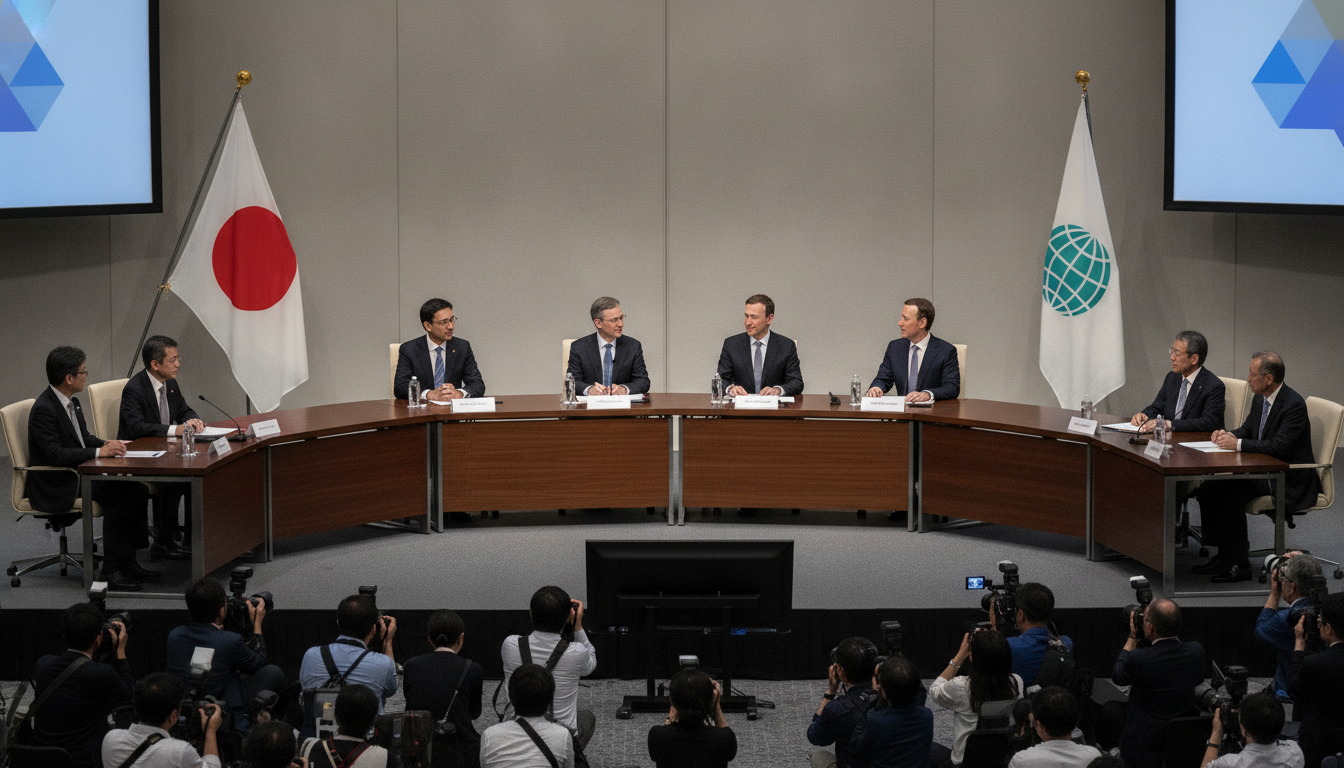
Japan Anti-Scam Alliance launched in Tokyo to counter Southeast Asia-linked online fraud
Japan Anti-Scam Alliance launched in Tokyo on Aug. 26, 2026, as major tech firms and authorities unite to tackle a surge in online scams tied to Southeast Asian hubs.
TOKYO — The Japan Anti-Scam Alliance, a public-private initiative that brings together Google, OpenAI, Meta, TikTok, Japanese authorities and local businesses, was launched in Tokyo on Aug. 26, 2026 to confront a growing wave of online scams. The alliance aims to pool expertise and technology to disrupt criminal networks operating from Cambodia, Myanmar and other regional hubs that have increasingly targeted Japanese residents.
Launch event and participants
The launch ceremony in central Tokyo gathered senior representatives from global technology firms alongside officials from government agencies and several major Japanese companies. Organizers said the coalition responds to a clear rise in sophisticated fraud schemes that exploit digital platforms and new technologies.
Officials at the event emphasized that the Japan Anti-Scam Alliance is intended as a coordinated, ongoing effort rather than a one-off announcement. The gathering highlighted commitments to information sharing, rapid content removal and stronger collaboration with law enforcement domestically and abroad.
Scale and methods of the scams
Japanese authorities and industry observers report that criminal networks have adopted advanced techniques to scale fraud operations, including automated calling systems, social engineering, and synthetic media. Scammers are using these tools to impersonate bank staff, relatives and public officials to pressure victims into making transfers or revealing credentials.
Victims in Japan have reported a range of schemes from investment and romance fraud to business email compromise and impersonation of government services. The alliance identified cross-border call centers and social-media-based recruitment as persistent enablers of these operations.
Technology firms’ responsibilities and tools
Google, OpenAI, Meta and TikTok signaled readiness to deploy platform-level measures including improved detection algorithms, expedited removal processes, and sharing of indicators of abuse. The alliance will explore ways for members to exchange anonymized data on accounts, payment channels and infrastructure used in scam campaigns.
Participants also discussed deploying machine-learning models to flag suspicious patterns and clamp down on coordinated abuse, while balancing privacy and platform policy constraints. Tech firms said they will work with Japanese companies and regulators to refine detection thresholds and notification procedures for potential victims.
Cross-border coordination and legal challenges
A central challenge identified at the launch is the cross-border nature of the criminal networks, many of which operate from countries with uneven law-enforcement cooperation. Organizers noted the need for strengthened bilateral and multilateral mechanisms to pursue takedowns, arrests and asset recovery across jurisdictions.
The alliance plans to deepen ties with regional partners and to press for faster cooperation from foreign authorities where criminal infrastructure is based. Officials acknowledged that legal and diplomatic hurdles will limit some investigations, making preventive and platform-based measures critical.
Support for victims and public outreach
Beyond technical countermeasures, the Japan Anti-Scam Alliance will prioritize victim support and public education campaigns to reduce susceptibility to fraud. Member companies and Japanese businesses committed to expanding user alerts, clearer reporting channels, and materials aimed at older populations who have been disproportionately targeted.
Industry representatives said coordinated media outreach and school programs will form part of a broader strategy to raise public awareness. The alliance also intends to promote best practices among financial institutions and telecommunications providers to detect suspicious transfers and block fraudulent accounts.
Monitoring progress and benchmarks
Organizers outlined plans to publish periodic updates on operational progress, including metrics on takedowns, fraud reports handled and cross-platform disruptions. The alliance will set benchmarks for response times to abuse reports and for the volume of information exchanged among members.
Stakeholders said independent evaluation and transparent reporting will be important to maintain public trust and to demonstrate the initiative’s effectiveness. They indicated that the alliance would adapt its approach as scammers evolve their tactics and exploit new technologies.
The Japan Anti-Scam Alliance launch marks a significant escalation in Japan’s effort to counter online fraud by combining governmental authority with the technical capacity of major platforms. With criminal networks increasingly leveraging sophisticated tools and cross-border operations centered in parts of Southeast Asia, the alliance faces a complex mix of technical, legal and diplomatic challenges.
Sustained cooperation, rapid information sharing and public education will be essential for the alliance to reduce the incidence of scams and protect potential victims across Japan. The coming months will test whether the coalition can translate its commitments into measurable reductions in fraud and stronger safeguards for users.

