
teamLab Planets vs teamLab Borderless: which Tokyo digital art museum should you visit?
Decide between teamLab Planets and teamLab Borderless in Tokyo — a clear guide to tickets, timing, access, family tips, and what to expect for your visit.
teamLab’s two Tokyo venues present contrasting ways to encounter immersive digital art, and choosing between them matters for how you spend a day in the city. teamLab appears in many searches and conversations, and both Planets and Borderless carry the brand’s signature blend of light, motion and interaction. This guide lays out what each museum delivers, how long you should budget, practical ticketing and accessibility details, and the simple decision rules that will help visitors — especially families and first-timers — pick the right option for their schedule and interests.
Planets offers full-body immersion in Toyosu
teamLab Planets is built around physical participation: visitors walk barefoot, store shoes in free lockers, and wade through water in several installations. The layout follows a set sequence, so you move from one immersive environment to the next without backtracking, which makes the visit feel like a single, unfolding experience rather than a series of separate rooms.
The venue includes an expanded Athletics Forest introduced in 2025, with more than 20 interactive works geared toward children and family play, including Future Park and Catching and Collecting Extinct Forest. Those who prefer hands-on exhibits and energetic, tactile encounters will find Planets especially rewarding, although the need to be barefoot and the presence of water make it a different kind of museum visit than the standard gallery experience.
Plan for a slower pace: most visitors spend three to four hours inside, accounting for shoe-and-towel routines, queues for popular rooms, and the longer pathways through garden and water areas. Planets’ opening hours stretch from early morning until late evening, so expect flexibility in arrival times but keep in mind the fixed sequence and the museum’s policy of no re-entry.
Borderless presents a mapless light maze in Azabudai Hills
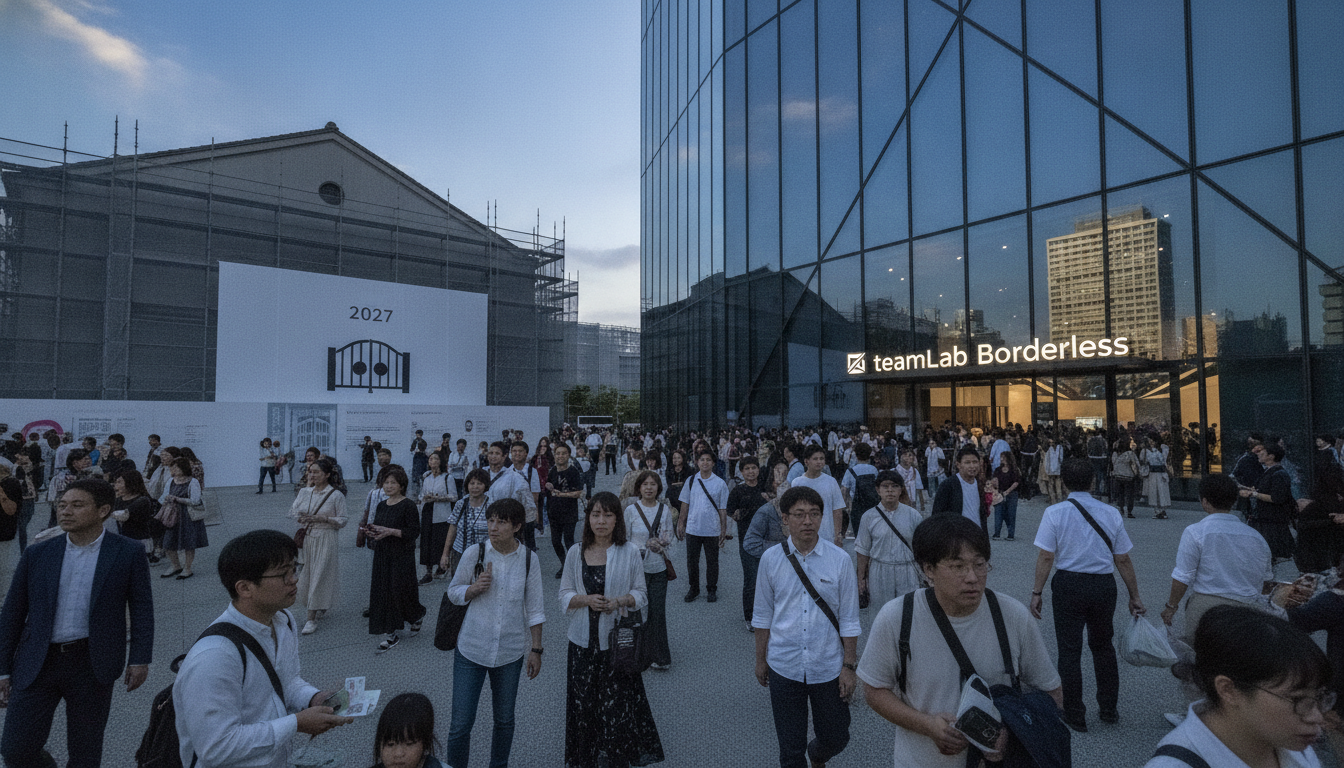
teamLab Borderless trades the bodily emphasis of Planets for an exploratory, non-linear experience in Azabudai Hills. The defining idea is a “museum without a map”: artworks drift from room to room, projections and lights spill across corridors, and visitors can wander freely to discover installations in different orders. It’s an aesthetic, photogenic visit built around drifting and discovery rather than tactile play.
Signature works such as Bubble Universe and Infinite Crystal World use mirrored surfaces and hanging lights to create visual environments you can step into, and the En Tea House serves tea in which digital flowers bloom as you drink. Because Borderless does not require shoes off or water entry, it tends to feel dressier and more accessible for visitors who prefer to move at their own pace.
Expect a shorter visit than Planets: about two hours on average for a typical walk-through, though once inside you can stay as long as you like. Borderless operates long hours and is centrally located in the Roppongi area, making it easier to combine with other afternoon or evening plans in central Tokyo.
How they compare: time, tickets and cost
Both museums use dated, timed-entry tickets with dynamic pricing that starts at about ¥3,600 for adults, though Borderless can rise into higher price bands on busy dates. Weekend and peak-time slots sell out fastest, so booking ahead is the safest option if you have a fixed itinerary. Ticket types include standard timed entries and higher-priced flexible or premium passes that allow more entry freedom on your booked date.
Planets tends to require a larger time commitment — three to four hours — while Borderless is usually a two-hour experience if you move steadily. Entry fees for teens differ slightly in how age is classified: both venues charge roughly ¥2,800 for teenagers, but Planets often treats school-year classifications differently from strict age bands. Discounted disability tickets are available at a base price of about ¥1,800 and generally include one companion; both museums publish guidance for certificate holders.
Premium or flexible passes cost substantially more — roughly ¥12,000 — and are offered by both sites for visitors who want to avoid queues or enter at any time on the chosen date. Note that Planets’ premium pass does not necessarily skip internal queues within the museum, so it reduces entry-line stress but does not guarantee faster access to every popular room.
Accessibility and sensory considerations for visitors
Both teamLab venues warn visitors about strong flashing lights, dark areas, loud sound, and mirrored or uneven floors, so people with photosensitivity, sensory sensitivities, or certain mobility needs should read the museums’ visitor guidance carefully before booking. Pregnant visitors may be restricted from some installations at both sites, so check advisories tied to individual artworks.
teamLab Planets allows wheelchair users but with important caveats: the venue requires transfers to museum wheelchairs in some areas or the fitting of tire covers, some artworks are off-limits, and water rooms require a special water wheelchair with a companion present; staff do not push visitors into water-based artworks. Assistance dogs cannot enter; the museum provides a secure holding cage at the entrance. Where an artwork cannot be accessed directly, staff will usually offer a guided detour so visitors can still experience the exhibition from the sidelines.
teamLab Borderless is generally more step-free and wheelchair-friendly, with elevators and no barefoot or water requirements, but the mapless, deliberately dark environment presents sensory challenges. The museum limits the number of wheelchair admissions at any one time and asks wheelchair users to call ahead to confirm access and artwork availability. Both venues accept Mirailo or other recognized disability IDs in place of paper certificates in many cases.
When to choose Planets: audiences and timing considerations
Choose Planets if you want a physically playful visit where interaction is a central element, particularly with children. The Athletics Forest and family-focused installations make Planets an attractive option for families who want a hands-on experience rather than a purely visual one. The museum’s proximity to Toyosu Fish Market also makes it easy to pair a morning at the market with a mid-day Planets visit for a full Toyosu itinerary.
Planets is a time-limited attraction scheduled to run through the end of 2027, so visitors who are deciding whether to prioritize it over other Tokyo sights should consider seeing it sooner rather than later. The set route and required barefoot entry mean you should dress for comfort, bring quick-dry clothing or use the loaner shorts and towels provided, and expect to spend most of the day if you want to see everything without rush.
If you are visiting Tokyo briefly and want an activity that feels like a day-long attraction, or if you are traveling with children who enjoy tactile play areas, Planets is the more immersive and stamina‑demanding choice.
When to choose Borderless: wandering, photography and central access
Pick Borderless if you prefer to drift through spaces at your own pace, enjoy opportunities for photography, or want a museum visit that’s convenient to central Tokyo neighborhoods. The Azabudai Hills location sits within easy walking distance of Roppongi and Azabu-jūban stations, so it meshes well with other central activities and evening plans.
Borderless rewards repeat visits because artworks migrate through the building, meaning you can have a different experience on each visit. It’s also the drier, more conventional museum format that’s comfortable for visitors who do not want barefoot entry or water-based installations. For those on a tighter schedule looking for a single, well-composed digital-art experience, Borderless typically fits into a two-hour window without the need for much pre-visit preparation.
The museum has welcomed millions of visitors since reopening in its current location, attracting a large international audience, which can affect crowd levels on weekends and holidays. If photography and the visual drama of lights and mirrors are your priorities, Borderless is the more picture-centric option.
Practical tips: getting there, dining and combining visits
Planets sits beside Shin‑Toyosu Station on the Yurikamome Line and is a short walk from Toyosu Station on the Yūrakuchō Line; a paid shuttle from central areas also operates on selected days. Borderless is located in Azabudai Hills, roughly a 15‑minute walk from Roppongi or Azabu‑jūban stations. Long opening hours at both venues make early or late visits possible for travelers who want to avoid peak crowds.
If you plan to pair Planets with other local sights, the nearby Toyosu Fish Market provides an easy morning option before a midday museum visit, and Planets’ on-site Vegan Ramen UZU serves a local‑branch exclusive miso ramen that visitors report can be enjoyed without a museum ticket. Borderless’ central location lends itself to combining the museum with nearby temples, shopping or evening dining in Roppongi.
Avoid attempting both museums in a single day unless you have an unusually flexible schedule and high tolerance for sensory overload. Each visit can be intense and leaves many visitors mentally full; separating them across two days is the practical recommendation for most itineraries.
Booking, queues and last-minute strategies
Buy timed-entry tickets in advance wherever possible, because both museums use dynamic pricing and popular slots sell out early on weekends and holidays. Standard timed tickets start around ¥3,600 for adults, with Borderless occasionally rising into higher price brackets on peak dates. Buying at the venue can incur extra fees for Borderless, so pre-booking is a money‑saving habit.
If you want maximum flexibility, both museums offer premium or flexible passes for a substantially higher price — roughly ¥12,000 — that allow entry at any time on your chosen date and reduce queue time for general admission. These options suit travelers with unpredictable schedules or those willing to pay for a guaranteed, less stressful arrival. For visitors with mobility needs, call ahead to confirm available accommodations and any artwork restrictions to avoid disappointment on arrival.
Final paragraph
Choosing between teamLab Planets and teamLab Borderless comes down to how you want to experience digital art: Planets is a time‑rich, full‑body, family‑friendly immersion in Toyosu with water and play elements, while Borderless is a mapless, visually driven wandering experience in central Tokyo that fits more neatly into a tight schedule. Consider the time you have, the ages and mobility of your party, and whether you prefer tactile interaction or visual discovery; book tickets in advance, plan arrival times around the museums’ timetables, and allow enough time to leave the exhibition feeling inspired rather than rushed.

