
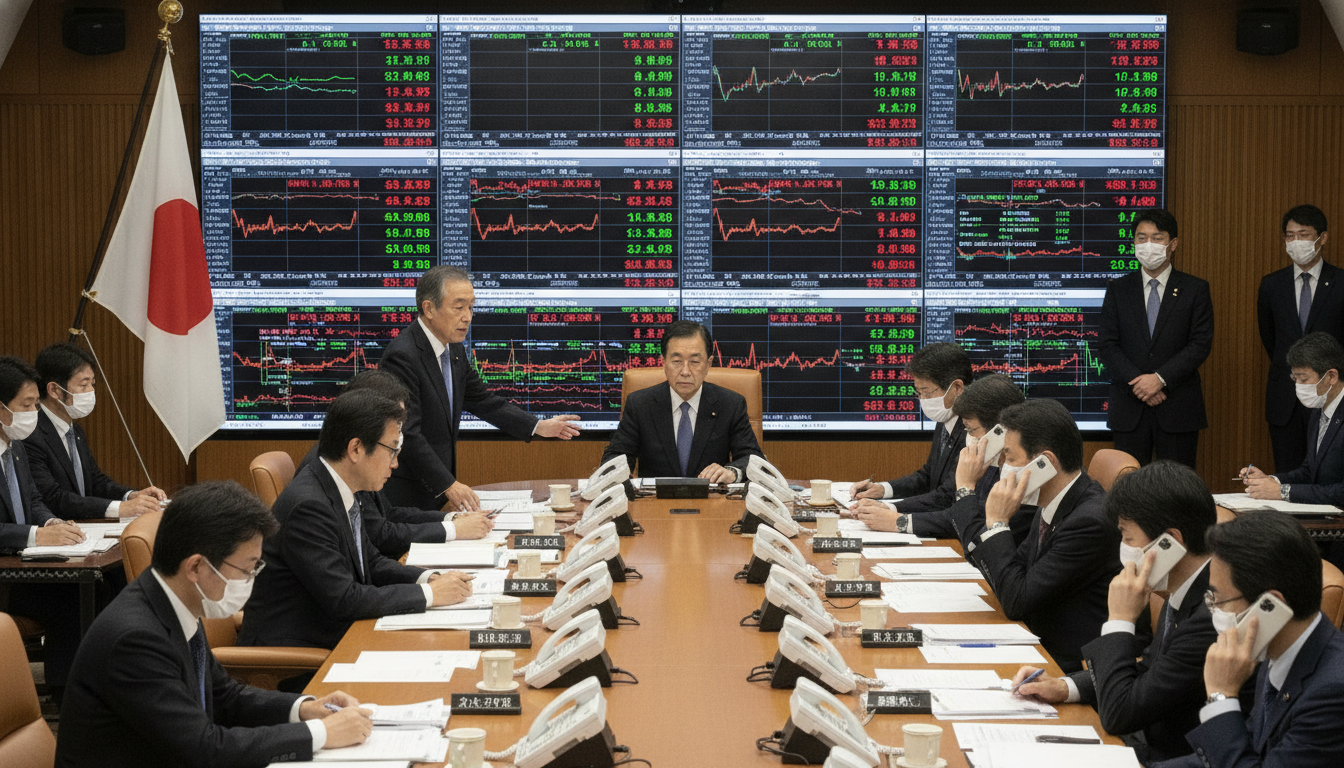
Japan’s Finance Ministry Spends Record ¥15.39 Trillion in Latest Yen Intervention
Japan’s Finance Ministry spent a record ¥15.39 trillion ($96.5bn) between July 30 and Aug. 26 in a yen intervention, marking an unprecedented single-round currency support effort. The yen intervention, disclosed in Ministry of Finance data released Aug. 28, 2026, is the largest such outlay on record and comes amid broader efforts to stabilise the currency. Officials say this move is the most substantial step yet in a year that has seen exceptional market intervention activity.
Record Single-Intervention Outlay
The Ministry of Finance reported that ¥15.39 trillion was deployed over the four-week window ending Aug. 26, making it the biggest amount spent in a single intervention round. The ministry presented the figures on Aug. 28, 2026, underlining the scale and rapidity of the policy response. The dollar equivalent cited with the release was approximately $96.5 billion.
Two Rounds Bring Total Support to $170bn
This latest round follows an earlier, large-scale operation earlier in the year, bringing total official support to roughly $170 billion across two intervention rounds. That cumulative total marks a record annual outlay in Japan’s recent history and highlights the intensity of authorities’ efforts to influence exchange rate moves. Policymakers have acknowledged the extraordinary nature of the response without specifying a ceiling on future actions.
Market Forces Behind the Yen’s Slide
Analysts point to persistent cross-border capital flows and interest-rate differentials as key drivers of yen weakness that prompted intervention. Global investors reallocating assets in response to shifting yield dynamics have increased pressure on the currency, complicating domestic monetary conditions. Traders also cite heightened volatility in foreign-exchange markets, which can accelerate moves away from fundamentals over short periods.
Ministry of Finance Timing and Data Release
The ministry’s data, published on Aug. 28, 2026, covered transactions carried out from July 30 through Aug. 26 and explicitly identified the payments as part of official currency support measures. The disclosure follows standard practice for transparency but also signals to markets the seriousness with which Tokyo is treating recent exchange-rate developments. Officials emphasize that intervention decisions are taken to prevent disorderly market conditions rather than to target a specific exchange-rate level.
Implications for Foreign Exchange Policy and Reserves
Deploying such a large sum in a short period raises questions about reserve usage and the sustainability of repeated interventions. While Japan holds significant foreign-exchange reserves, large-scale operations can influence market expectations and central-bank balance sheets. Economists say interventions can succeed in stabilising short-term disorder but may face limits if underlying global drivers remain in place.
International Reaction and Coordination Prospects
Currency interventions of this scale tend to draw attention from global counterparts and market participants watching for signs of coordinated action. Historically, major interventions have sometimes been accompanied by diplomatic consultations or joint statements among economies seeking to calm markets. Observers will be watching for any public or private discussions between Tokyo and other finance ministries in the coming days.
The Ministry of Finance’s declaration that it deployed ¥15.39 trillion in late-July to late-August underscores the intensifying challenge of managing exchange rates amid large capital flows. As markets assess the impact of the latest yen intervention, policymakers face the delicate task of restoring orderly conditions while guarding long-term policy flexibility and reserve adequacy.

