
Cambodian scam sites: Government says 624 locations shut as rights groups and analysts question claim
Cambodian government says 624 scam sites closed and nearly 30,000 people detained after inspections; rights groups and analysts remain deeply skeptical.
The Cambodian government announced on Aug. 27, 2026, that it has inspected close to 800 locations tied to online fraud and closed 624 sites, declaring that no large-scale Cambodian scam sites remain in operation. The administration also reported nearly 30,000 detentions connected to the crackdown, presenting the results to foreign diplomats in Phnom Penh. Rights groups and independent analysts have questioned the completeness of the government’s operation and urged independent verification of the claims.
Government Presents Inspection Results
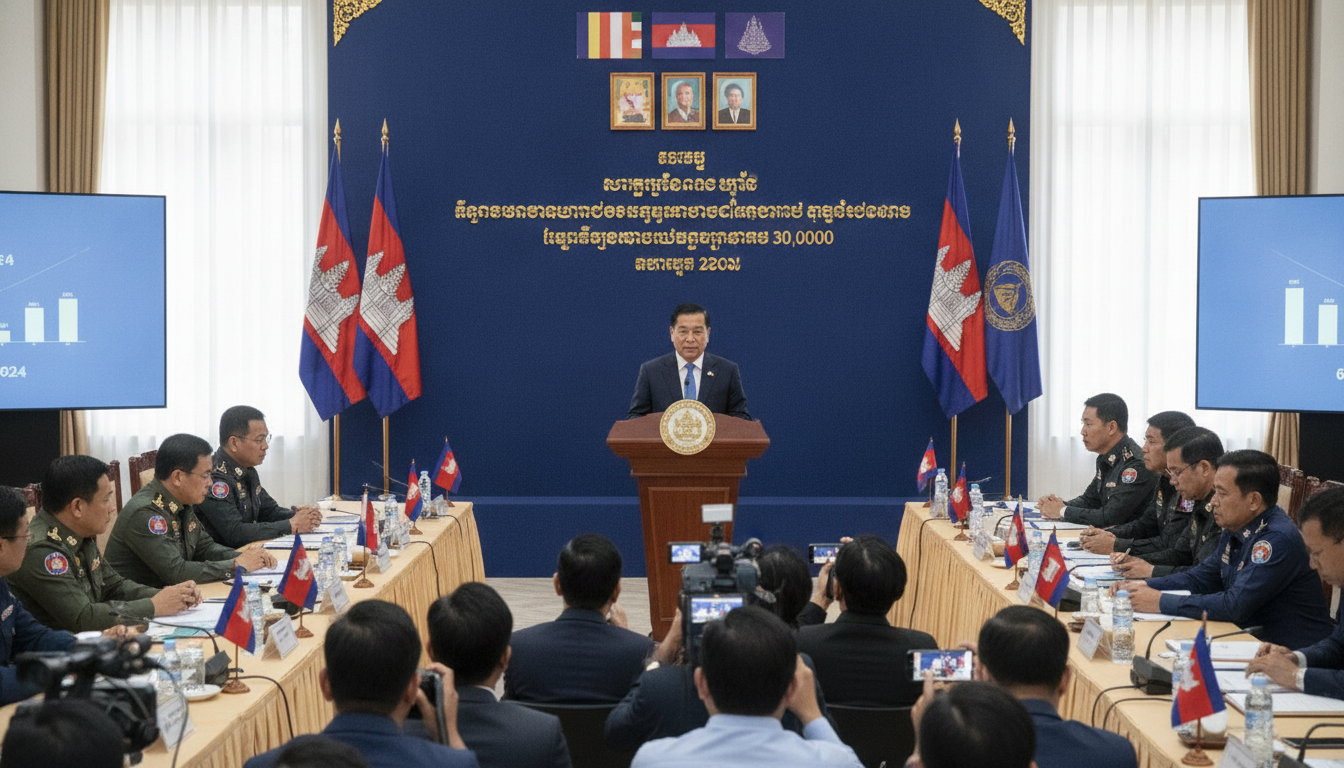
The Ministry of Information and other officials told foreign diplomatic missions that inspections of alleged fraud compounds had been completed and that more than 600 illicit operations were shuttered. Officials framed the inspections as a decisive response to mounting international pressure to stamp out organised online fraud based on Cambodian soil. The briefings included photographic material and summary figures intended to show the scale of the campaign against scam operations.
Numbers and Detentions
Authorities said roughly 800 sites were inspected and 624 were confirmed closed, while nearly 30,000 individuals were detained during the sweep. The government described those detained as suspects, witnesses and people affected by criminal activity, but provided limited public detail on charging processes or legal outcomes. Human rights groups have raised concerns about mass detentions and the lack of transparent public records documenting arrests, prosecutions and any due-process protections.
Diplomatic Briefings and International Pressure
Foreign diplomats received the government’s update on Aug. 27, when officials emphasised cooperation with international partners in addressing online crime. The announcement comes amid sustained pressure from regional governments and law enforcement agencies seeking stronger action against transnational fraud networks. While some partners welcomed signs of enforcement, many diplomats and overseas investigators have pressed for independent verification and evidence that criminal networks have been dismantled rather than dispersed.
Rights Groups and Analysts Voice Skepticism
Several rights organisations and analysts cautioned that reported closures do not necessarily equate to a permanent end to large-scale scam operations. They pointed to historical patterns in which fraud networks relocate, change names or recombine under different structures following official crackdowns. Observers also urged authorities to publish detailed case records, allow independent inspections and ensure that those detained receive legal counsel and fair treatment.
Operational Challenges in Dismantling Fraud Networks
Experts say that shutting physical compounds is only one step in curbing online scams, which rely on digital infrastructure, cross-border money flows and recruitment channels. Analysts warn that without tackling financial networks, online payment rails and recruitment pipelines, criminal groups can reconstitute operations more quickly than authorities can close them. Additional challenges include detecting encrypted communications, tracing cryptocurrency transactions and pursuing perpetrators who operate from outside the country.
Calls for Transparency, Victim Support and Oversight
Human rights organisations and foreign partners have called for greater transparency in the government’s reporting and for independent monitoring of detention conditions. They have also emphasised the need for comprehensive victim support, including repatriation, counselling and restitution for those coerced into working at scam sites. Prosecutors and investigators were urged to publish prosecution statistics and to pursue both the operators and the financial enablers of the schemes.
The government’s claim that no large-scale Cambodian scam sites remain will be judged by subsequent actions, including prosecutions, financial investigations and on-the-ground verification by independent monitors. International authorities and rights groups say they will watch for durable changes in enforcement, clearer public records and improved protections for those detained as the benchmark of genuine progress.

