
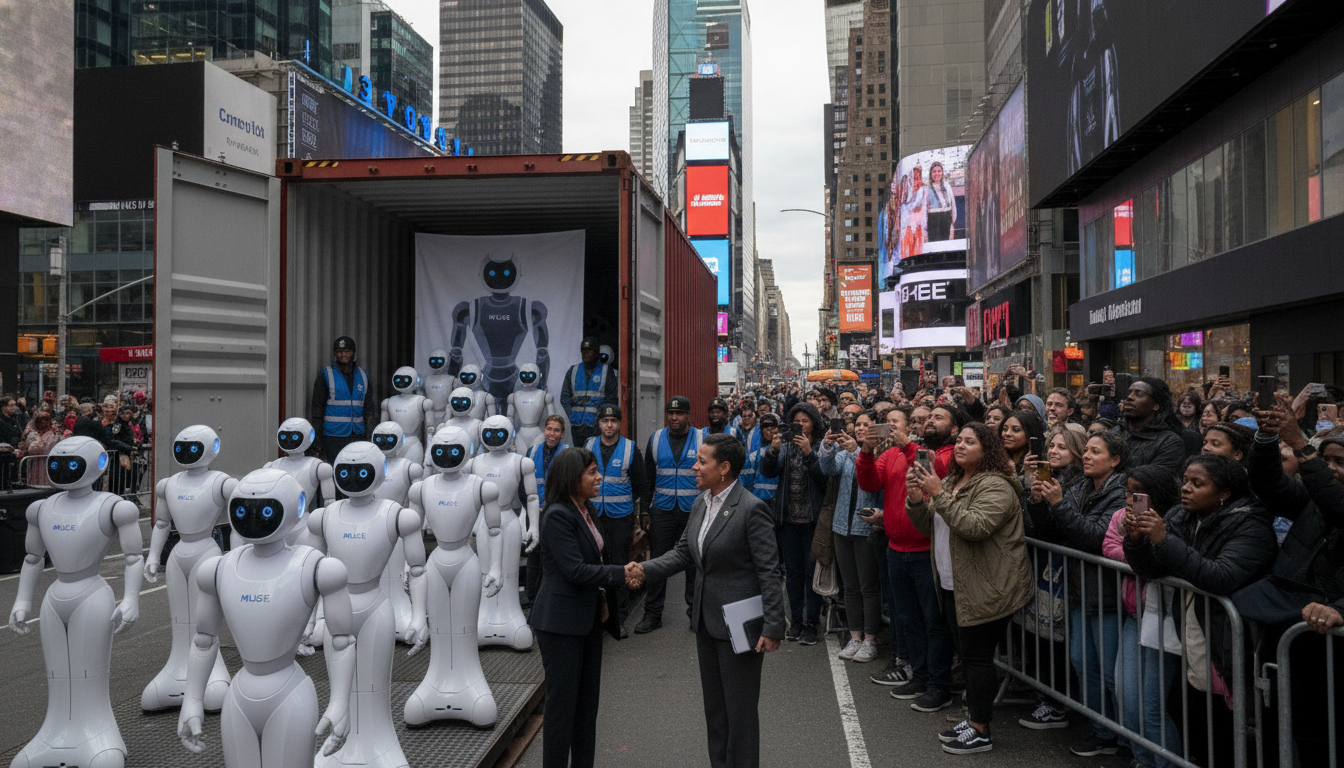
Muse retail robot debuts in New York grocery as Japanese startup targets U.S. physical AI market
Japanese startup Muse has deployed a retail robot in a New York grocery on Aug. 28, 2026, aiming to tap huge U.S. demand for labor-saving physical AI solutions.
The deployment in a busy Manhattan store marks the first public U.S. pilot for a Muse retail robot, which the company describes as designed to assist shop staff with routine in-store tasks. The rollout reflects a broader push by Japanese robotics firms to commercialize “physical AI” — autonomous machines that operate in the real world — in the service sector. The in-store robot was photographed working alongside employees as they stocked shelves, illustrating the company’s human-robot cooperation approach.
Muse launches retail robot pilot at New York grocery
Muse sent a fleet unit to the grocery as part of a trial intended to test the system in a high-traffic urban environment. Store staff were observed collaborating with the device to handle stocking and inventory-related activities, according to on-site accounts.
The company framed the U.S. pilot as a learning deployment to collect real-world data on navigation, safety and interaction with customers. Muse has emphasized iterative updates to both hardware and software based on these in-store trials.
How the retail robot operates in-store
Muse’s system combines on-board sensors, cameras and machine learning algorithms that allow the retail robot to move through aisles and identify tasks flagged by store teams. The hardware is designed to work around shoppers and employees rather than replace them, the company says.
During the New York trial the robot assisted with repetitive, time-consuming duties such as scanning shelf inventory and transporting items across the floor. Muse’s goal is to reduce manual labor for routine tasks and free human staff for customer service and value-added work.
Why the U.S. market is central to Muse’s strategy
Executives at Muse view the United States as a critical market because of its large service economy and chronic staffing challenges in retail. High turnover and rising labor costs make automation an attractive option for grocers and convenience stores, industry analysts say.
By demonstrating a functioning retail robot in a major U.S. city, Muse seeks to validate demand and accelerate sales and pilot agreements with national chains. The company’s entry follows growing interest from investors and retailers in robotics that can operate reliably in crowded, unstructured retail settings.
Commercial model and expansion plans
Muse is pursuing a mix of pilots, leasing arrangements and software subscriptions as it scales deployments, industry observers say. The company aims to combine unit sales with recurring revenue from software updates and operational support.
Initial U.S. activity will focus on urban grocery stores and convenience outlets where labor intensity and narrow aisles present high potential for efficiency gains. Muse has not disclosed detailed commercial terms publicly but is engaging with several regional chains for broader trials.
Retailer response and early operational feedback
Store employees at the New York location reported fewer repetitive trips to restock shelves while working with the retail robot, though managers described the trial as an early-stage experiment. Supermarkets said the device lowered the immediate burden of inventory checks during peak hours.
Retailers remain cautious about long-term integration, citing costs, maintenance requirements and the need to adapt back-end systems. Many partners are treating the pilots as proof-of-concept steps before contemplating fleet-level commitments.
Regulatory, safety and labour considerations
Regulatory bodies and labor groups are watching the spread of in-store robotics closely, urging clear safety standards and guidance on workforce impacts. Muse has emphasized compliance with local safety rules and the inclusion of emergency stop functions and human override systems.
Privacy and data management are also front-of-mind for retailers and shoppers, as in-store robots collect visual and logistical information while operating. Muse has indicated it will follow prevailing privacy frameworks and work with clients to align data use with store policies.
Muse’s New York pilot illustrates the commercial trajectory for physical AI in retail: incremental field testing, close collaboration with store staff, and a gradual move toward broader deployments if early results justify investment. The trial will inform whether Muse can translate engineering advances into reliable, scalable services that meet the complex demands of U.S. grocery operations.
The deployment photographed in Manhattan on Aug. 28, 2026, underlines the evolving role of robotics in everyday retail settings and sets the stage for further trials as Muse seeks partnerships across the U.S. market.

