
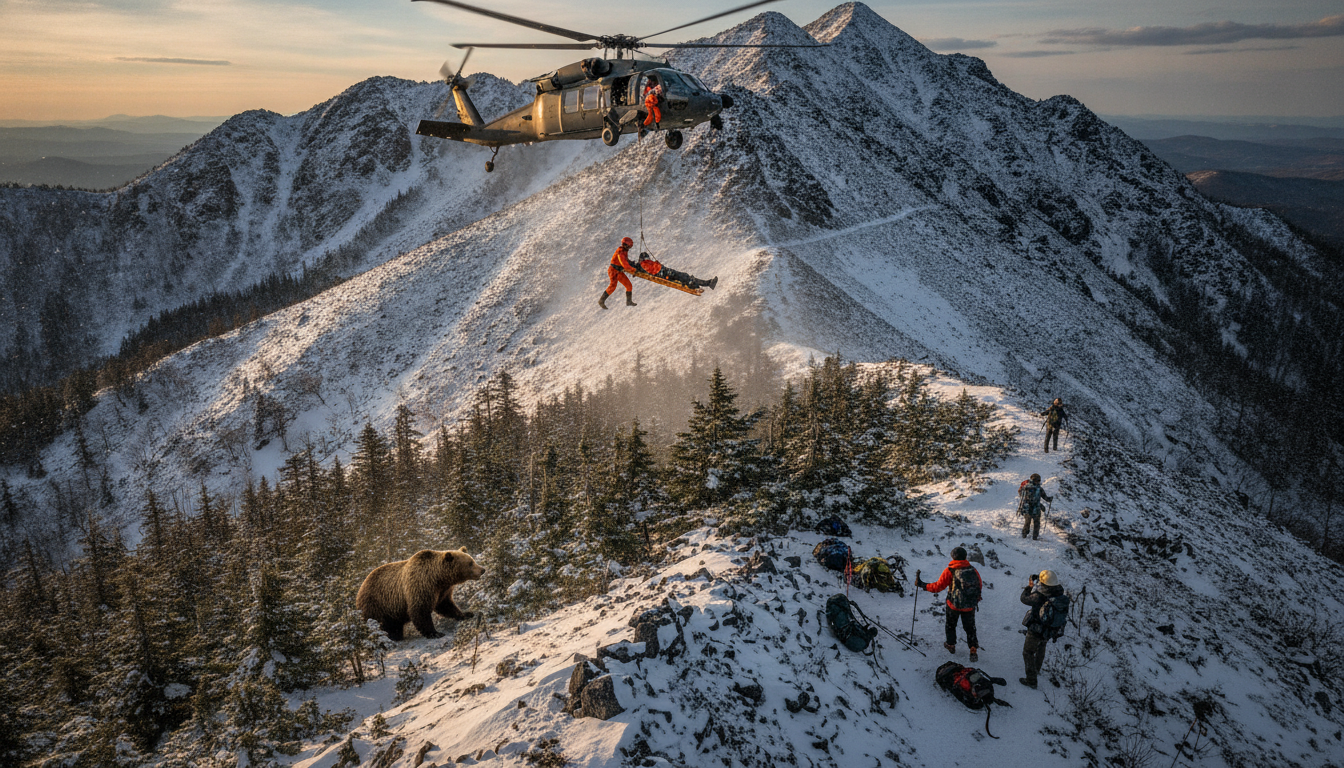
Tomuraushi bear sighting forces helicopter rescue as hikers urged to carry deterrents
Tomuraushi bear sighting left a solo hiker stranded and prompted a police helicopter rescue on July 4; local mountaineers urge hikers to also carry deterrents.
A bear sighting on Mount Tomuraushi this summer left a lone climber temporarily trapped on the trail and led to a helicopter extraction by Hokkaido police, authorities said. The Tomuraushi bear sighting, reported on July 4 in an area known locally as Mae-Tomupira at about 1,740 meters, renewed concerns among local mountaineering groups about preparedness and safety. No injuries were reported, but the incident highlighted gaps in equipment and the challenges of managing human-wildlife encounters in high alpine terrain.
Bear Sighting on Mount Tomuraushi
According to Hokkaido Prefectural Police, a man in his 60s encountered an estimated 1.5‑meter brown bear on July 4 at about 2:30 p.m. while descending a trail near Mae-Tomupira. The bear was observed roughly 50–60 meters ahead and then disappeared from view; its subsequent direction could not be determined. The hiker hesitated and remained in place until he was joined by a three-person party later that afternoon.
Emergency Call and Helicopter Rescue
Members of the three-person party contacted emergency services, and one member placed a 110 call shortly after 4 p.m., reporting that a climber had frozen in place after seeing a bear. Hokkaido police dispatched a helicopter and by around 6 p.m. had rescued all four people from the mountain. The prefectural police said there were no injuries and the rescue operation was completed without incident, but the deployment drew attention to the operational demands of mountain rescues in remote terrain.
Equipment Carried by Climbers
Shintoku Police Station, which handled the case, reported that the four climbers were carrying bells and whistles but did not have bear‑repellent spray. Those tools can help alert wildlife to human presence, but authorities and local experts note that bear spray is the single most effective non-lethal deterrent when used properly. The absence of spray in this incident has prompted renewed discussion among guides and volunteer wardens about standard equipment for traversing known bear habitat.
Local Mountaineers Express Concern
Shinji Higuchi, 65, chairman of the Shintoku Mountaineering Association, said he and colleagues were at a designated campsite at about 1,950 meters when the police alerted them by phone around 7:30 p.m. Higuchi, who leads seasonal trail maintenance and facilities work on Tomuraushi, expressed relief that everyone was safe while stressing unease that such encounters are occurring within established routes. He and his group spend more than ten days each season repairing ropes, maintaining toilet booths and tending trails to reduce the risk of accidents and confusion that can compound dangerous wildlife encounters.
Implications for Mountain Safety Policy
The incident has prompted local authorities and mountaineering organizations to review signage, trail advisories and guidance for hikers entering bear habitat. Officials say that while avoidable confrontations are not always preventable, clearer pre‑departure information, encouragement to travel in groups, and wider availability of deterrent spray at trailheads could reduce rescues. Emergency responders also noted the operational cost and risk of helicopter deployments in evening conditions and emphasized that timely reporting of sightings helps concentrate limited resources.
This event underscores the tension between outdoor recreation and coexistence with wildlife in Hokkaido’s high country, where both long‑established trails and growing visitor numbers increase the likelihood of encounters. Mount Tomuraushi, part of the Daisetsuzan range and listed among Japan’s “Hyakumeizan,” attracts hikers for its rugged alpine environment, and community groups say maintaining access while protecting both people and bears requires ongoing coordination.
As the season progresses, officials and volunteer groups will likely step up public advisories and patrols along popular approaches to Tomuraushi. Climbers are being reminded to plan routes, carry effective deterrents such as bear spray, keep noise to a level that alerts animals to human presence without provoking them, and report sightings promptly so that authorities can assess risks and post timely warnings for others.

