
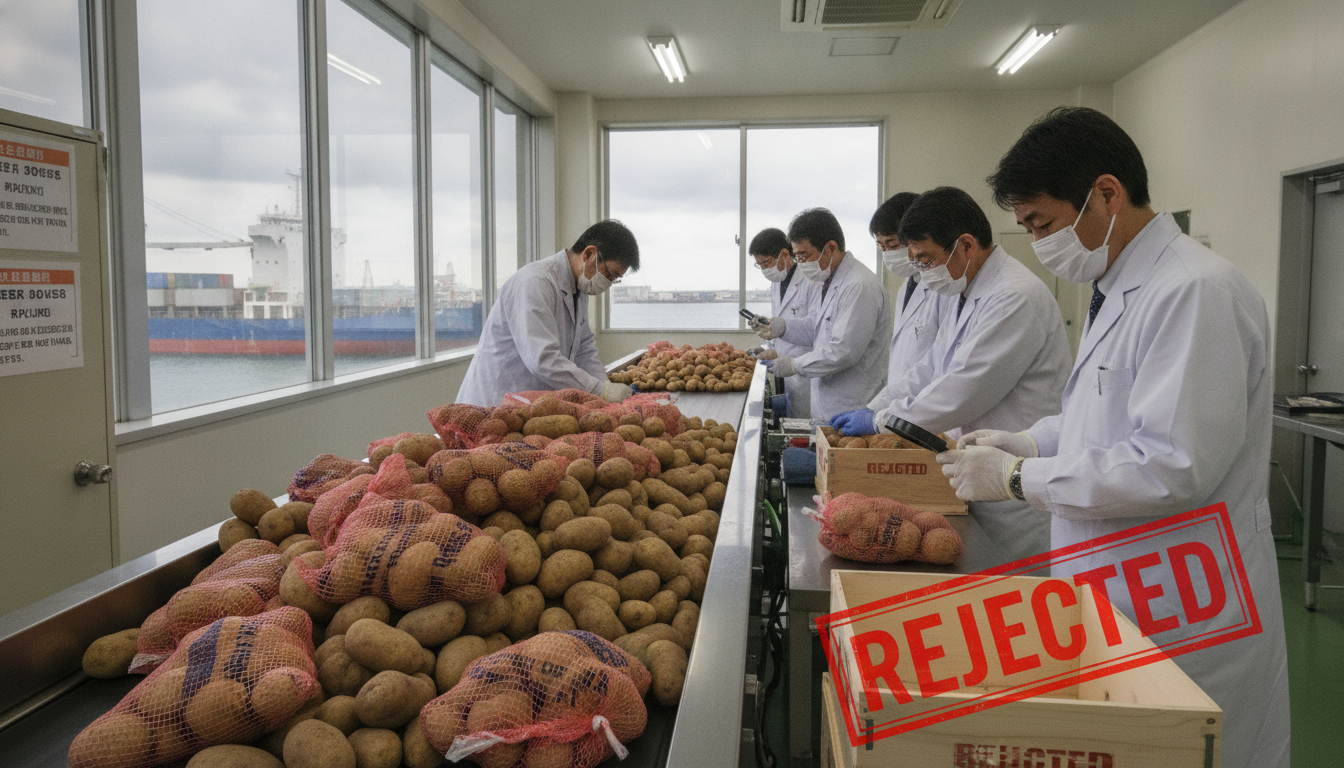
Japan potato import ban: Government cites 21 pests and schedules hearings in September
Japan announces a potato import ban citing 21 pests and microbes. Hearings with farmers and officials start September 2026 to define scope and safeguards.
Japan announced a sweeping potato import ban on most fresh potato shipments from the United States after officials warned the country would face risks from 21 pests and diseases if unrestricted imports were allowed. The Japan potato import ban was disclosed by government agricultural authorities on August 29, 2026, and will be the subject of public hearings next month. Officials said the measure is aimed at protecting domestic crops and preventing the introduction of harmful insects and microbial threats.
Government cites 21 pests and diseases
The agriculture ministry presented an assessment that identified 21 specific pests and pathogens that could enter with fresh potatoes and threaten local production. Officials emphasized risks range from soil-borne microbes to insects that could be difficult to control once established. The ministry framed the ban as a precautionary move to safeguard Japan’s potato supply chain and agricultural biodiversity.
Scope of the import restrictions
The current announcement covers most categories of fresh table potatoes coming from the United States, while processed potato products and certain controlled consignments may be treated under separate rules. Details on permitted exceptions, quarantine procedures, and certification requirements will be clarified during the consultation process. The government has said final regulations will balance plant health protection with trade and supply considerations.
Hearings with farmers and government officials to begin in September
Formal hearings involving farmers, industry groups and government officials are scheduled to begin in September 2026 and will inform the final regulatory framework. The sessions are expected to gather testimony on economic impacts, feasibility of testing regimes, and practical measures for growers and importers. Officials indicated they will use the hearings to refine risk assessments and to set timelines for implementation.
Domestic agricultural reaction and market implications
Japanese farmers’ associations welcomed the announcement as a protective step for domestic producers who have long cited biosecurity as a priority. Farm groups argued that newly introduced pests could raise production costs and threaten yields, particularly in regions where potatoes are a staple crop. At the same time, traders and some food processors caution that tighter controls may reduce import volumes and affect supply chains that rely on foreign potatoes for processing and year-round availability.
Trade and diplomatic considerations
The move is likely to prompt dialogue with U.S. exporters and could lead to consultations under bilateral trade agreements or international sanitary and phytosanitary frameworks. Trade officials must balance plant-health obligations with commitments to free trade and dispute-resolution mechanisms. Observers say careful diplomacy and transparent technical exchange will be important to prevent escalation and to find mutually acceptable inspection or mitigation measures.
Next steps for testing, surveillance and enforcement
Authorities have signaled plans to strengthen border inspections, expand surveillance of domestic production areas, and establish testing protocols for suspect consignments. The public hearings are expected to address laboratory capacity, quarantine logistics and the criteria for allowing any conditional imports. Implementation of the final measures will depend on the outcomes of the consultations and the time needed to set up effective inspection systems.
The government’s announcement marks a significant shift in Japan’s approach to importing fresh potatoes and sets in motion a process that will test regulatory, commercial and diplomatic channels. Stakeholders across agriculture and trade sectors will be watching the September hearings closely for clarity on timing, exceptions and the technical standards that will determine how the Japan potato import ban is applied in practice.

