
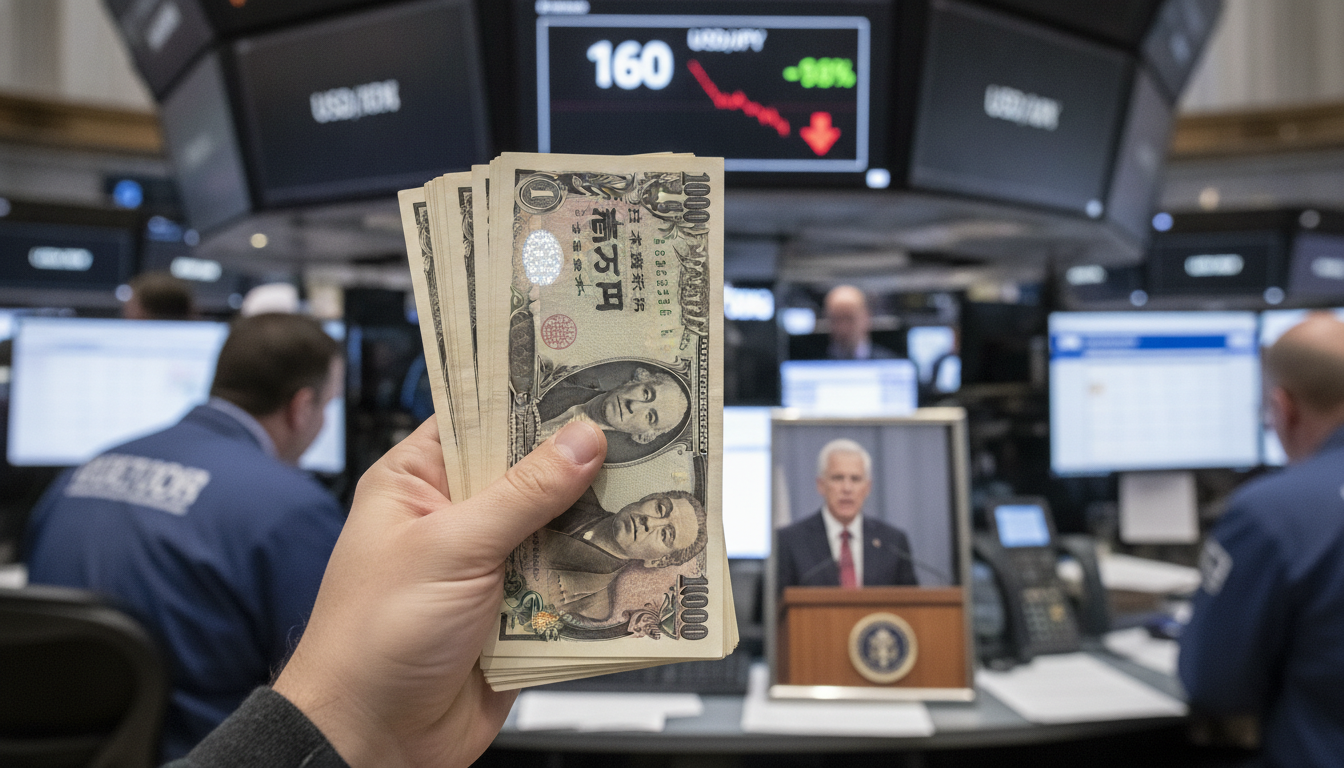
Yen Falls Past 160 as Warsh’s Jackson Hole Remarks Spur Dollar Strength
Japan’s yen tumbled past the 160-per-dollar mark after Federal Reserve chair Kevin Warsh signaled openness to further rate hikes at the Jackson Hole symposium, stoking expectations of additional U.S. tightening. The move came as U.S. Treasury yields climbed, lifting demand for dollars and reversing some of the calm that followed late-July coordinated intervention by Tokyo and Washington.
Yen Drops Past 160 After Warsh Remarks
The yen weakened beyond 160 per U.S. dollar on Friday, August 28, 2026, marking the first breach of that level since coordinated currency action by Japan and the United States in late July. Traders said remarks from Fed Chair Kevin Warsh at Jackson Hole shifted market expectations toward more aggressive Fed policy, prompting a rally in the dollar.
Market participants noted the speed of the move heightened sensitivity to past intervention, with many describing the break above 160 as a test of whether authorities will act again. The break underscores how quickly sentiment can swing when central-bank signals and bond-market moves align.
U.S. Treasury Yields and Dollar Demand
Investors cited rising U.S. Treasury yields as a primary driver of dollar strength, with higher yields increasing the currency’s attractiveness relative to yen-denominated assets. As yields climbed, global fixed-income and currency desks reweighted portfolios toward dollar duration.
Traders also pointed to technical flows and option expiries that amplified the move near the 160 threshold. The combination of higher yields and positioning created a self-reinforcing rally in the dollar through the Asian trading session.
Late-July Intervention and Market Memory
Japan and the United States carried out a coordinated currency intervention in late July to support the yen, a step that briefly stabilized the market and underscored Tokyo’s readiness to act. The intervention remains fresh in traders’ memories and continues to shape expectations about future policy responses.
Despite that recent action, analysts say intervention alone may not permanently alter a trend driven by divergent monetary policies. Market observers expect the memory of July’s intervention to influence both speculative positioning and the timing of any further official response.
Divergence Between Fed and BOJ Policies
The exchange-rate move highlights the policy divergence between the Federal Reserve and the Bank of Japan, with the Fed signaling potential additional tightening while the BOJ maintains a more accommodative stance. That gap in monetary trajectory has sustained pressure on the yen across multiple sessions.
Economists warn that persistent divergence could keep upward pressure on the dollar until either yields retreat or the BOJ shifts policy. Investors will closely watch future Fed communications and any signs of change from Tokyo that could narrow the spread.
Market Impact on Japanese Firms and Consumers
A weaker yen raises import costs for Japan, where energy and many commodities are priced in dollars, potentially adding near-term inflationary pressure for households and businesses. Exporters may see improved competitiveness overseas, but corporate earnings effects will vary by sector and hedging practices.
FX-sensitive companies and institutional investors are likely to reassess hedging strategies in response to renewed volatility. Market participants also expect heightened activity in currency options and forward markets as firms seek to manage risk.
Investor Positioning and Short-Term Outlook
Dealers reported a sharp increase in speculative long-dollar positions after Warsh’s comments, with hedge funds and trading desks initiating trades that benefitted from higher U.S. yields. Short-term flows are now a key determinant of exchange-rate direction, leaving the yen vulnerable to any further rate-sensitive shocks.
Looking ahead, analysts say the immediate outlook hinges on U.S. bond-market moves and whether Fed guidance sustains the view of additional hikes. Tokyo’s next public comments and any discreet intervention actions will also be watched closely by markets.
The yen’s move past 160 underscores how sensitive currency markets remain to central-bank rhetoric and bond-market dynamics, and it places renewed emphasis on the interplay between policy signals and market positioning.

