
Super Garuda Shield Begins in Bandung as Indonesia Seeks to Avoid Provoking Beijing
Super Garuda Shield, a 12-day military exercise hosted in Bandung, began Aug. 31 as Indonesia balances defence cooperation with the United States while seeking not to provoke China.
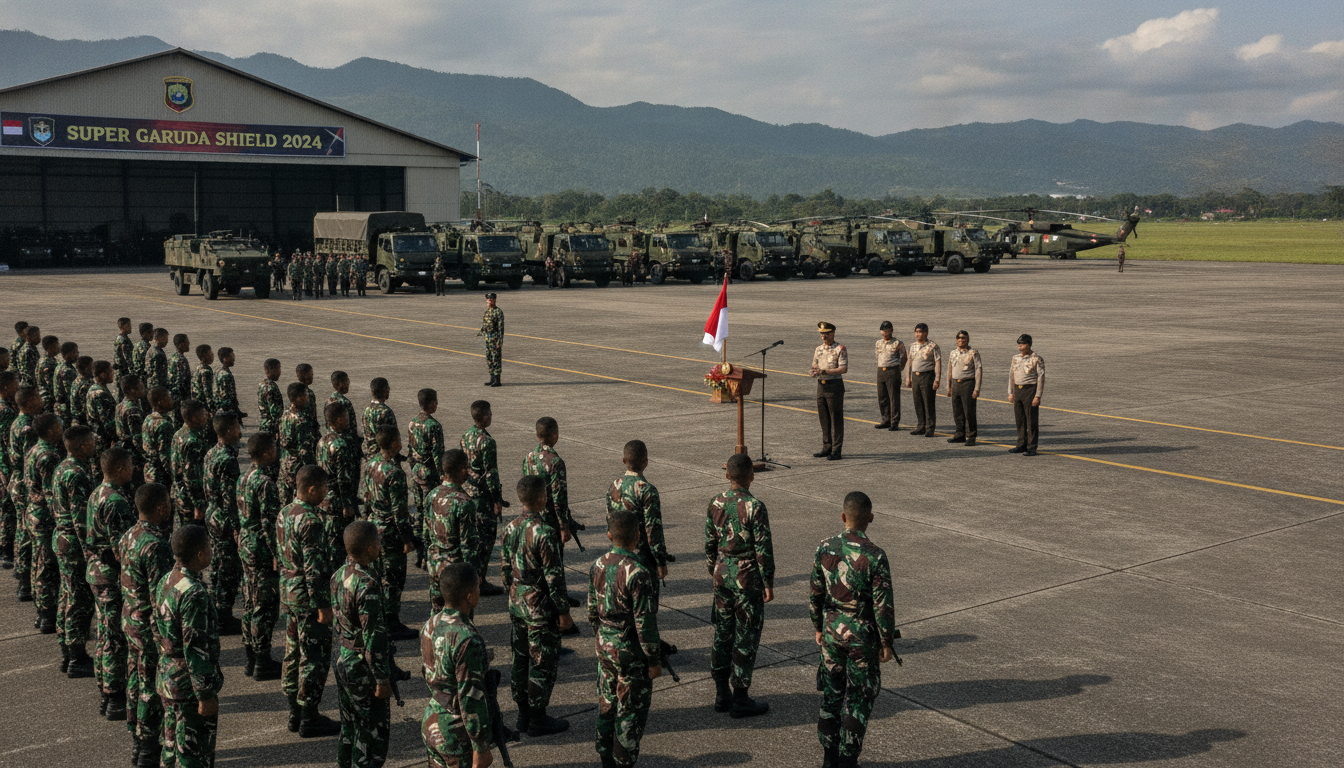
BANDUNG — Super Garuda Shield, one of Southeast Asia’s largest joint military exercises with the United States, officially opened in Bandung on Aug. 31, testing Jakarta’s diplomatic balance amid heightened global tensions. The 12-day exercise, organisers said, brings together U.S. forces and multiple international partners for training designed to enhance interoperability and readiness. A foreign official attending the opening ceremony said Indonesia aims to “avoid provoking” Beijing while maintaining defence ties with Washington and other partners.
Exercise opens in Bandung
The opening ceremony, held at a military training complex outside Bandung, drew defence delegations and senior officers from participating nations. Local officials described the event as a signal of Indonesia’s continued commitment to professional military cooperation and capacity-building.
Organisers said the exercise will run through Sept. 11, 2026, and will be conducted at multiple sites across West Java to test command-and-control, logistics and combined operations. Officials emphasised the training’s stated focus on improving coordination rather than serving as a platform for power projection.
Indonesia’s diplomatic tightrope
Jakarta has long positioned itself as a non-aligned actor pursuing pragmatic relationships with major powers. Super Garuda Shield this year comes as Indonesia navigates the fallout from the U.S.-Iran conflict and the broader strategic competition between the United States and China. A foreign ministry official present at the opening reiterated the government’s intent to pursue defence cooperation while minimising regional friction.
The official’s comment that the host wishes to “avoid provoking” Beijing reflects a familiar theme in Jakarta’s policy: sustaining security partnerships without antagonising its largest trading partner. Analysts say that balancing act is becoming more complex as external conflicts and great-power rivalry reverberate across Southeast Asia.
Participants and stated objectives
Organisers described Super Garuda Shield as an exercise aimed at enhancing interoperability, crisis response and multinational coordination. U.S. military personnel are a central component, working alongside Indonesian forces and other partners to practice joint planning and execution. The exercise is scheduled to include a mix of command-post activities, live manoeuvres and logistics drills, officials said.
While exact troop levels and participant lists were not disclosed in full by organisers, the exercise’s scale and duration mark it as one of the more significant regional drills this year. Military planners said the timetable and range of activities are intended to improve readiness for complex contingencies and humanitarian operations.
U.S. objectives and messaging
For the United States, participation in Super Garuda Shield reinforces long-standing security ties with Indonesia and demonstrates continued engagement in Southeast Asia. U.S. defence officials have framed such exercises as tools to strengthen partner capacity, interoperability and regional stability. In public statements ahead of the opening, American representatives emphasised training, professional development and support for maritime security.
At the same time, U.S. officials are mindful of regional sensitivities and Jakarta’s public desire to limit geopolitical fallout. Washington has sought to reassure partners that its bilateral engagements are not intended to single out any third country but to address shared security challenges through cooperation and transparency.
Regional reactions and diplomatic posture
Regional capitals are watching Super Garuda Shield for how military cooperation will be balanced with diplomatic outreach. Some Southeast Asian governments view large multinational exercises as useful for bolstering deterrence and crisis management, while others are cautious about escalating tensions. Jakarta’s explicit messaging about avoiding provocation reflects an effort to calibrate domestic and regional perceptions.
Beijing’s official response to the exercise was not immediately available, and spokespeople at Chinese diplomatic missions did not issue detailed comments at the time of the opening. Analysts say Beijing typically monitors such drills closely and may respond through diplomatic channels or by emphasising its own military activities in the region.
Implications for security dynamics in Southeast Asia
Super Garuda Shield’s timing and scope add another dimension to an increasingly crowded security environment in Southeast Asia. The exercise underscores how middle powers like Indonesia seek to maintain operational ties with the United States while managing relations with China and Russia. Observers say the event highlights the practical challenges of balancing defence cooperation with geopolitical restraint.
Military exercises of this scale also serve as a forum for learning and institutional development, helping participating forces refine logistics, command relationships and interoperability. The longer-term effect may be improved crisis response capacity across the region, even as political leaders navigate the competing pressures of alliance building and regional diplomacy.
The 12-day Super Garuda Shield runs through Sept. 11, 2026, and will remain a focal point for analysts monitoring how Indonesia balances its strategic partnerships and diplomatic ties in a volatile international environment.

