
Japan Proposes Record 143 Trillion Yen Budget for Fiscal Year Through March 2028
Japan prepares a record 143 trillion yen budget for fiscal year through March 2028, expanding crisis and growth spending while lifting previous caps.
The government is set to submit a proposed 143 trillion yen budget for the fiscal year through March 2028, the largest in the country’s history, officials said on August 31, 2026. The 143 trillion yen budget proposal aims to lift caps on crisis spending and growth investment while allocating substantial sums to debt servicing and social programs. The announcement underscores a shift toward larger fiscal intervention under Prime Minister Sanae Takaichi’s administration and signals intensified debate over Japan’s long-term debt trajectory.
Planned scale and headline figures
The draft budget totals roughly 143 trillion yen and represents an all-time high for a single fiscal package in Japan. Included in the figures is a record allocation for bond servicing and other fixed expenditures that will consume a significant share of the plan.
Officials working on the proposal told ministry sources that the Finance Ministry will seek roughly 36 trillion yen for bond service expenses, equivalent to about $229 billion at recent exchange rates. Additional funds are earmarked for defense, public works, and social safety-net measures aimed at protecting households from inflationary pressures.
Policy shift: caps on crisis and growth spending removed
The new plan abandons previous constraints on temporary crisis spending and targeted growth investments that had limited outlays in prior years. Cabinet advisers said the move is intended to give the government more flexibility to respond to economic shocks and to accelerate strategic investments.
Prime Minister Sanae Takaichi’s administration has framed the relaxation of caps as a pragmatic response to persistent global uncertainty and domestic structural needs. Critics warn that removing fiscal guardrails raises the risk of higher borrowing, while proponents argue that well-directed investment can boost productivity and support recovery.
Debt servicing and fiscal sustainability concerns
A large portion of the 143 trillion yen budget will go toward servicing outstanding government debt, reflecting Japan’s prolonged reliance on bond financing. Analysts note that rising interest costs, even from modest yield increases, can quickly swell annual bond-service requirements.
Fiscal watchdogs and private economists have warned that sustained high allocations for debt servicing will constrain future fiscal space for discretionary policy. Some experts call for stronger medium-term plans to stabilize the debt-to-GDP ratio, while others emphasize the need to balance consolidation with investments that support growth.
Political reaction and party stances
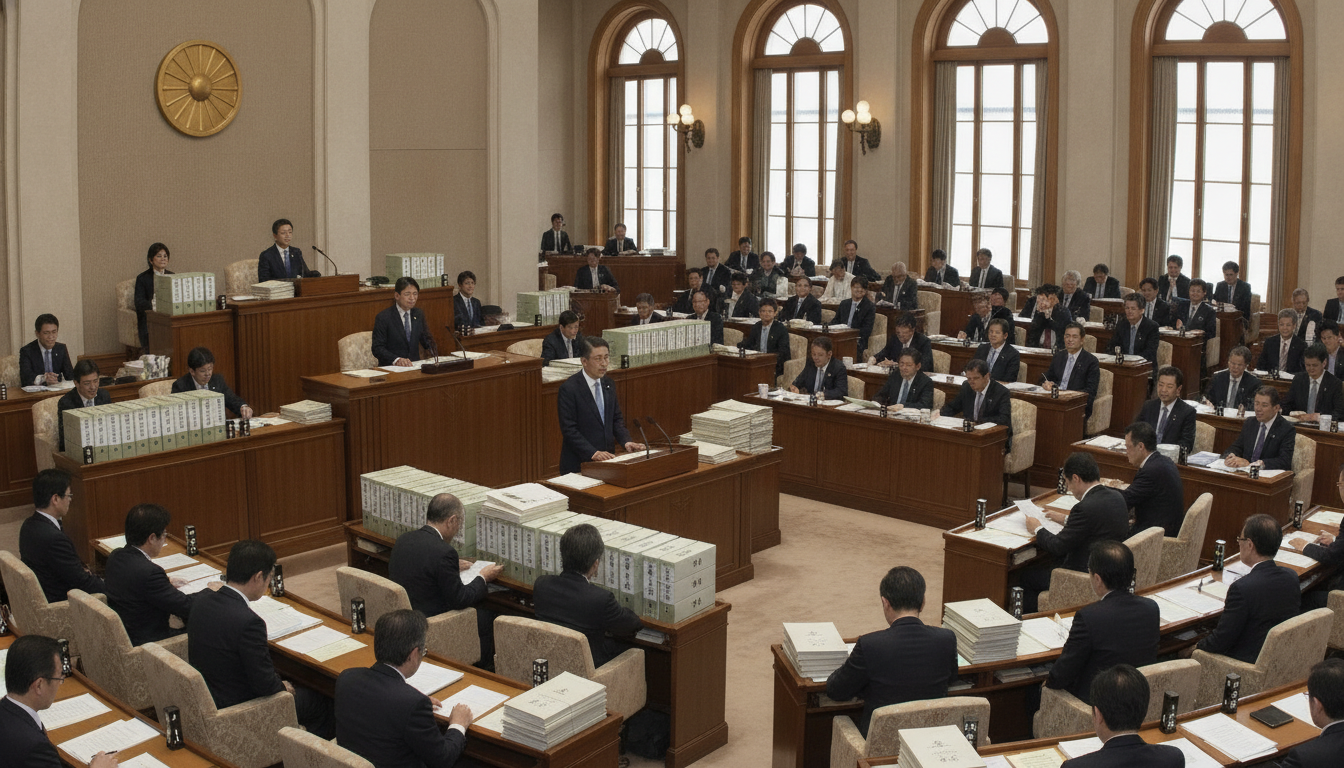
The budget proposal has already become a focal point in parliament, with opposition parties criticizing the scale of borrowing and questioning the administration’s long-term fiscal strategy. Lawmakers have signaled close scrutiny of the removal of spending caps and the administration’s plans for revenue measures.
Ruling coalition figures defended the approach as necessary to secure resilience and competitiveness in an uncertain global environment. Debates are expected to center on whether to pair the larger spending plan with tax adjustments, efficiency reforms, or a renewed medium-term fiscal consolidation framework.
Sectoral priorities and growth ambitions
Beyond debt servicing, the 143 trillion yen budget sets aside increased funding for technology, infrastructure, and measures aimed at boosting labor force participation. The administration has prioritized investments in semiconductors, renewable energy, and digital transformation as pillars of its growth agenda.
Social programs — including health care and support for the elderly — remain prominent in the allocation, reflecting demographic pressures that continue to shape fiscal choices. Officials say targeted subsidies and incentives in strategic sectors are intended to generate returns that will mitigate medium-term fiscal costs.
Budget timetable and next steps
The government plans to formally submit the budget request ahead of the usual autumn deliberations in the Diet, with detailed line items to be debated in committee. Lawmakers will scrutinize both the overall scale and the composition of expenditures during the legislative review that typically runs through the winter months.
Ministry negotiators are expected to refine allocations in response to parliamentary questions and to update economic assumptions if global or domestic conditions change before final passage. If enacted largely as proposed, the 143 trillion yen budget would mark a sustained era of elevated public spending.
The government’s proposal for the coming fiscal year reflects a strategic choice to prioritize immediate economic stability and targeted growth even as long-standing fiscal challenges persist.

