
Hiroshi Ogushi Quits Centrist Reform Union, Will Continue Politics as Independent
Former seven-term lawmaker Hiroshi Ogushi left the Centrist Reform Union on Aug. 31, saying he will serve as an independent and seek broader centrist cooperation.
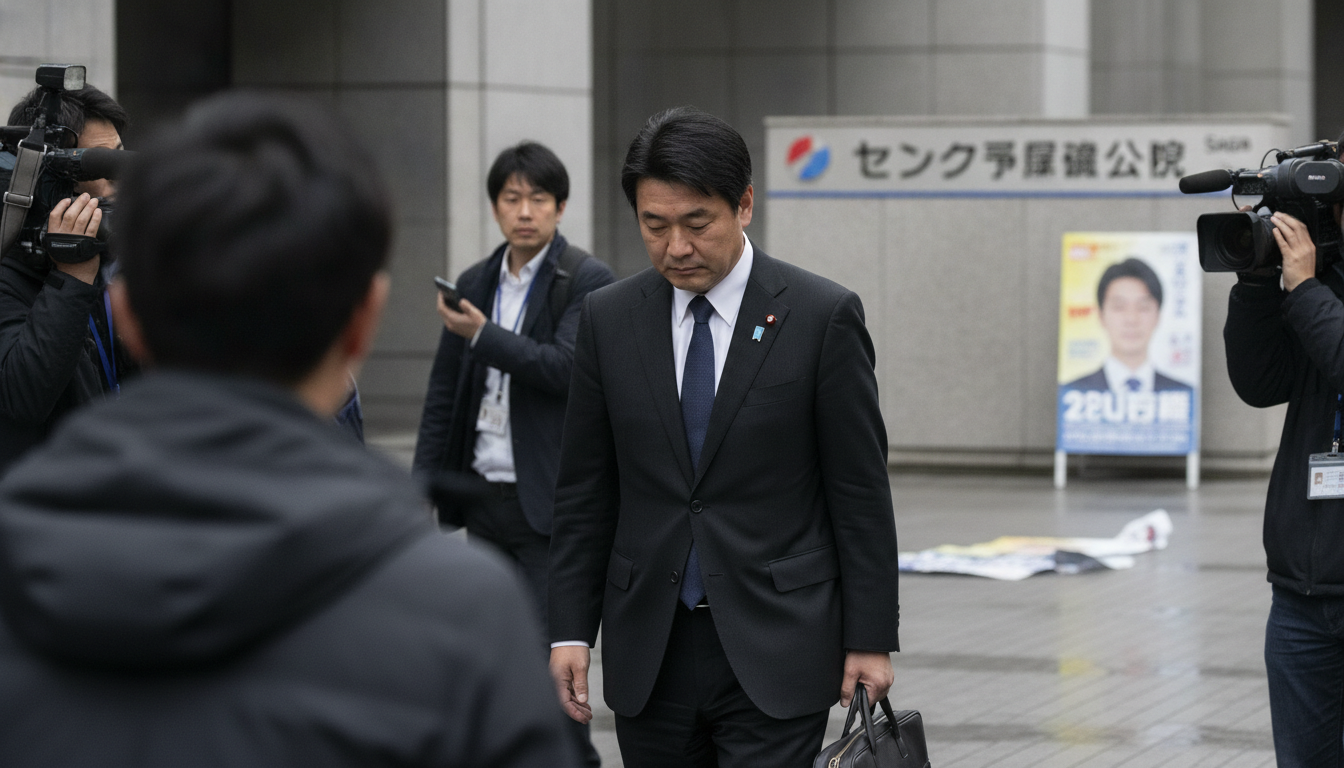
Ogushi announces resignation at Saga prefectural office
Hiroshi Ogushi (61) held a press conference at Saga Prefectural Government offices on Aug. 31 to announce his departure from the Centrist Reform Union. He told reporters he had submitted a formal resignation and would "step away from the party for the time being" to strengthen his position as an independent politician.
Ogushi said he planned to use the period outside party structures to "train his legs and core" politically, signaling a desire to rebuild local support after his defeat in the February general election. The announcement marked a visible end to his formal role within the newly formed centrist grouping.
Seven-term lawmaker defeated in Saga 2nd district
Ogushi, a seven-time member of the House of Representatives, ran in the February general election as the Centrist Reform Union candidate in Saga’s 2nd district. He was defeated by Liberal Democratic Party candidate Yasushi Furukawa by approximately 21,000 votes, according to figures Ogushi cited at the conference.
Prior to the February campaign, Ogushi had served in senior roles within the Constitutional Democratic Party, including as deputy leader, and later helped lead the centrist coalition effort. His loss in Saga was one of several setbacks for centrist forces in the recent election cycle.
Failed three-party merger influenced decision to leave
Ogushi framed his departure as a response to the collapse of merger talks among the Centrist Reform Union, the Constitutional Democratic Party, and Komeito. He said the decision to abandon plans for a full-scale integration left the centrist grouping without a clear institutional future, prompting him to reassess his own political alignment.
"With the conclusion that the Centrist Reform Union would no longer exist in its current form, I felt it necessary to clarify my position publicly," Ogushi said. He delivered his resignation to party offices dated Aug. 31 and emphasized that the move followed internal discussions about the coalition’s trajectory.
Plans as an independent and centrist outreach
Although he has left the Centrist Reform Union, Ogushi said he will continue political activities as an independent lawmaker and local organizer. He stressed that a centrist position encompassing voices from liberal to moderate conservative perspectives remains essential in national politics.
Ogushi outlined an approach focused on building wider cooperation rather than rejoining a single party immediately. He indicated he would pursue ties with local supporters and seek alliances that can form a larger centrist bloc across regions, rather than limiting himself to one ideological strand.
Local role and continuation of constituency work
Despite the electoral defeat, Ogushi has remained active as the Centrist Reform Union’s Saga 2nd district representative on the ground until this week. He told reporters he intends to maintain grassroots engagement in the prefecture and to rehabilitate his electoral prospects from an independent platform.
Ogushi’s retention of local ties has included meetings with supporters and public events in Saga, where he hopes to translate his national-level experience into renewed local backing. He also said he would continue to dialogue with constituencies that span from liberal voters to moderate conservatives.
Implications for centrist cooperation and opposition strategy
Ogushi’s exit highlights the fragility of recent attempts to consolidate centrist opposition forces following the February election. The failure to finalize a three-party alignment, which Ogushi cited as decisive, leaves questions about how centrist actors will coordinate policy and electoral strategy going forward.
Analysts say Ogushi’s move may prompt other local figures to reassess their positions as party structures realign. His stated aim of broadening centrist cooperation — rather than joining an established party immediately — could become a model for other politicians seeking flexibility in a volatile political landscape.
The resignation also raises tactical considerations for both national and regional campaigns ahead of upcoming local and national contests, as independents and small groupings can alter vote dynamics in tightly contested districts.
Ogushi emphasized that his decision was pragmatic and focused on rebuilding trust with voters, not a retreat from public life. He said he hopes to contribute to a centrist force that can bridge policy differences and present a stable alternative in future elections.
In the coming weeks Ogushi plans to outline more concrete steps for his independent activities, including meetings with local supporters and discussions with potential partners who share a centrist agenda. He maintained that a wide-ranging centrist coalition remains necessary to represent diverse voter preferences across Japan.

