
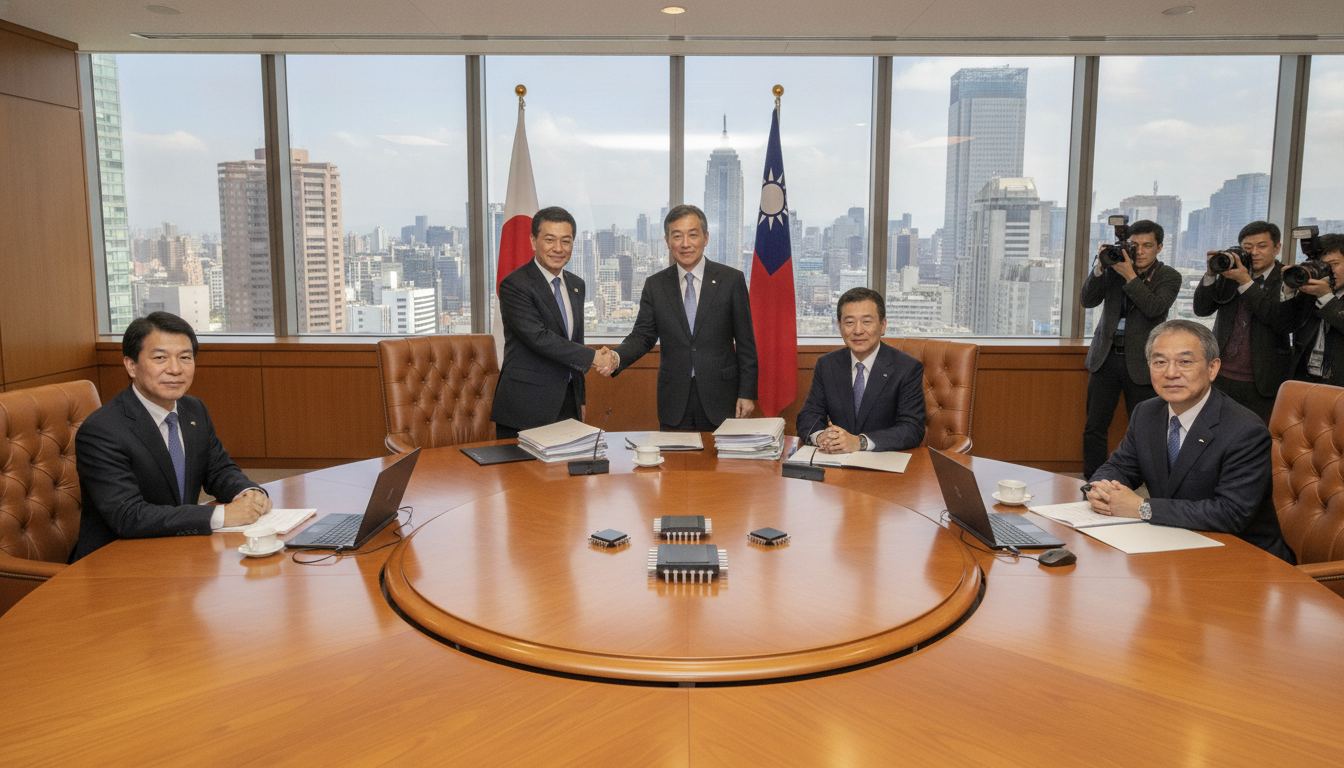
Japanese Suppliers Move Closer to Taiwan AI Supply Chain with Ajinomoto and Daikin Expansions
Ajinomoto and Daikin are expanding operations in Taiwan to serve the island’s booming Taiwan AI supply chain, prompting wider interest among Japanese chip-material suppliers.
Japanese firms move production footprint to Taiwan
Ajinomoto and Daikin have begun steps to deepen their presence in Taiwan, according to industry sources, aligning closer with local foundries and chip-packaging firms that are scaling up for artificial intelligence workloads. The moves are part of a broader trend in which suppliers of specialty chemicals, deposition materials and high-purity gases position themselves nearer to wafer fabs and advanced packaging lines. Company representatives did not publicly confirm detailed plans, but people familiar with the matter said the expansions are aimed at shortening lead times and tightening quality control for AI chip production.
These initiatives come as demand for AI accelerators has led Taiwan-based fabs to expand capacity and diversify vendors for critical inputs. Suppliers argue that proximity to customers on the island reduces logistics risk and enables faster process development when new materials or process gases are required for next-generation nodes.
Ajinomoto targets advanced materials for AI chips
Ajinomoto is reportedly increasing its local capacity for photoresists and ancillary process chemicals commonly used in advanced lithography and packaging steps. Sources describe the strategy as a focused response to rising orders from Taiwanese customers building AI accelerators and high-bandwidth memory stacks. By locating production and technical support closer to those customers, Ajinomoto aims to offer rapid formulation adjustments and on-site troubleshooting during ramp-ups.
The company’s expertise in precision organic chemicals and specialized polymers could make it a sought-after partner as chipmakers optimize materials for extreme ultraviolet lithography and advanced interconnect processes. Market participants said Ajinomoto’s expansion may also be intended to capture opportunities in substrate and packaging material supply chains that are growing alongside wafer fabrication.
Daikin expands specialty gases and deposition materials
Daikin’s expansion in Taiwan is reported to focus on high-purity process gases and equipment consumables used in thin-film deposition, etching and cleaning steps essential to AI-chip manufacturing. Industry executives noted that securing a stable, local supply of gases and related services is critical when fabs run at higher utilization to meet AI demand spikes. Daikin’s presence closer to customers would enable faster service response and customized gas blends for novel process recipes.
Increased local capacity for gas supply also helps chipmakers manage safety regulations and reduce transportation lead times for critical consumables. Observers said Daikin’s move mirrors a practical shift: the most valuable suppliers are those that can combine material quality with immediate, on-site technical support during aggressive production ramps.
Taiwan’s role as a hub for AI chip production
Taiwan hosts many of the world’s leading foundries and advanced packaging facilities, which are central to the development and manufacture of AI accelerators. The island’s concentration of wafer fabs, packaging houses and equipment suppliers creates an ecosystem where materials and services are in continuous, high-volume demand. That clustering effect has intensified as global cloud and chip-design companies push for larger-scale AI deployments.
Proximity matters when customers iterate process recipes rapidly or when yields must be improved under tight schedules. Suppliers establishing operations in Taiwan can participate directly in joint development cycles, giving them a technical edge and more predictable revenue streams tied to the AI market’s growth.
Other Japanese suppliers follow suit
Ajinomoto and Daikin are not alone; several Japanese suppliers have been reported to pursue closer ties with the Taiwan AI supply chain. Companies such as AGC, JSR, Merck and Entegris have similarly announced initiatives or investments aimed at the island’s semiconductor ecosystem. Industry analysts said these moves reflect a recognition that being geographically and operationally close to Taiwan fabs offers both commercial and strategic advantages.
The broader shift also reflects the competitive dynamics of supply security. With global attention on semiconductor resilience, suppliers that can offer localized production, consistent quality and rapid technical support stand to win larger, long-term contracts from foundries and advanced packaging players.
Implications for Taiwan fabs and global customers
For Taiwanese fabs, the entrance or expansion of Japanese suppliers promises shorter lead times and tighter collaboration on process integration, which can translate into faster ramp schedules for AI chips. Local availability of critical materials and gases may reduce inventory costs and supply-chain friction during peak production periods. International cloud and AI design companies may benefit indirectly through improved wafer yields and accelerated time-to-market for new accelerator designs.
However, the dynamic also raises questions about market concentration for certain inputs and the potential for pricing pressure as more suppliers compete for business on the island. Fabs and system integrators will weigh the benefits of localized sourcing against cost, technical compatibility and diversification objectives.
Challenges and strategic risks for suppliers
Despite clear commercial incentives, expanding in Taiwan entails operational and geopolitical risks. Suppliers must navigate complex regulatory frameworks, local workforce constraints and the technical demands of serving high-mix, high-intensity semiconductor customers. There are also geopolitical considerations tied to regional tensions and export controls that can complicate long-term investments and cross-border supply architectures.
Additionally, building local technical teams and achieving the stringent quality standards required by advanced fabs takes time and capital. Companies that underestimate integration complexity or customer expectations may face costly setbacks during initial ramps.
As Ajinomoto and Daikin step up their Taiwan footprints, the moves underscore a broader reorientation of Japanese chip suppliers toward onshore support for AI chip production. The shift is likely to intensify competition for local market share while offering fabs enhanced supply-line resilience and closer material collaboration. The evolution of these supplier–customer relationships will be a key factor shaping capacity ramps and yield improvements for AI accelerators built in Taiwan.

