
India urges farmers to cut urea use as Middle East war raises supply worries
Indian government pushes reduction of urea use amid supply concerns after the U.S.-Israeli war on Iran, while promoting natural farming and approving anhydrous ammonia before trials.
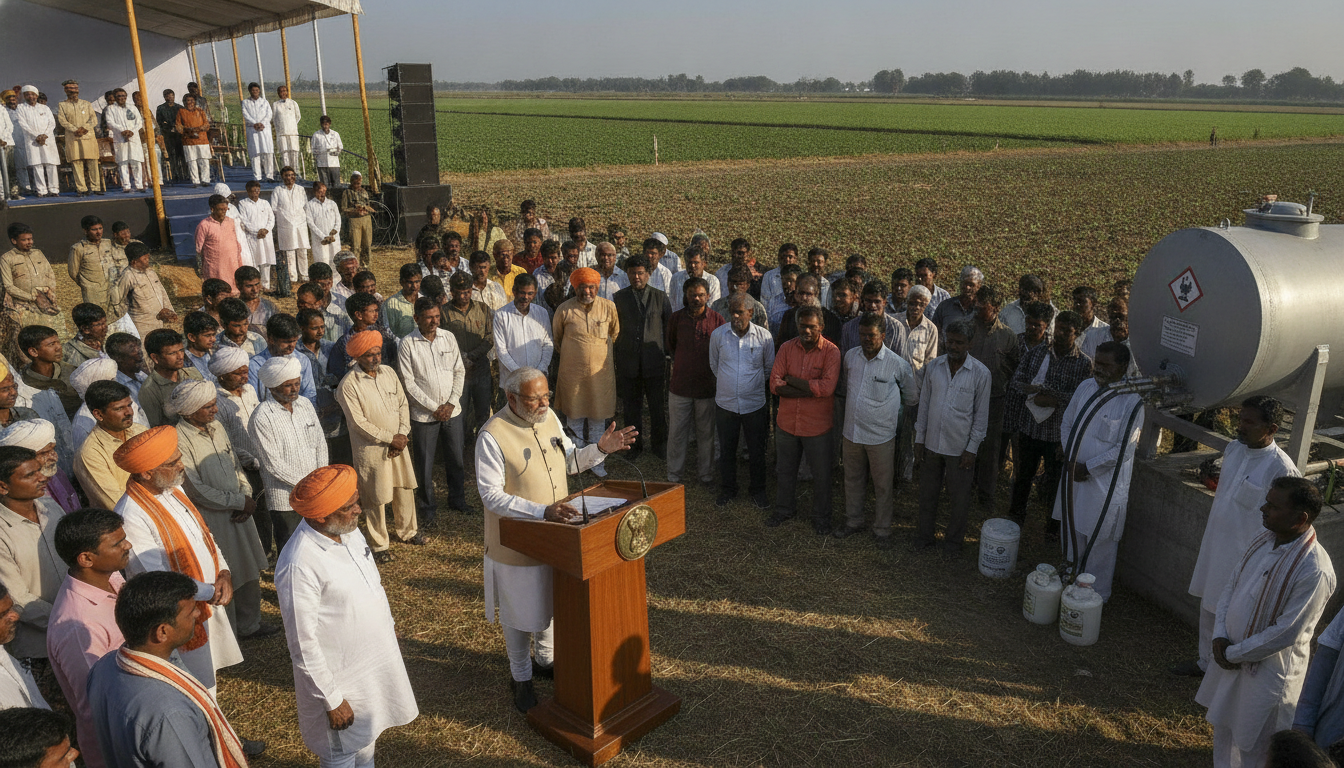
RAJASTHAN, India — The Indian government has launched a high-profile push to reduce farmers’ reliance on urea, citing mounting concerns over supply and price disruptions after the U.S.-Israeli war on Iran. Officials are urging wider adoption of natural farming techniques and have authorized the use of anhydrous ammonia even as domestic field trials remain incomplete. The announcement has sparked debate among policymakers, agronomists and farmers over feasibility, safety and potential impacts on crop yields.
Government directive and policy measures
The central government has signalled a policy shift aimed at cutting urea consumption through a mix of incentives and regulatory steps. Authorities are encouraging farmers to adopt low-input practices, increase use of organic alternatives and diversify nitrogen sources. At the same time, regulators have fast-tracked approval for anhydrous ammonia as an alternative nitrogen fertilizer, a move described by officials as necessary to shore up supplies.
Geopolitical shock to fertilizer supply chains
Officials framed the push in the context of heightened geopolitical risk after the conflict in the Middle East disrupted global fertilizer markets. India is one of the world’s largest consumers of nitrogen fertilizer, and policymakers said the shocks exposed vulnerabilities in import-dependent supply lines. The government’s measures are intended to mitigate the risk of acute shortages and to reduce the fiscal burden of subsidising imported urea.
Anhydrous ammonia approval sparks safety and logistics concerns
The decision to approve anhydrous ammonia prior to completion of domestic trials has drawn scrutiny from safety experts and agricultural engineers. Anhydrous ammonia requires specialised storage, handling and application equipment, and it can pose risks if not managed with strict protocols. Local authorities and farm co-operatives will need to mobilise training, storage facilities and emergency procedures before widespread deployment can be considered safe.
Farmers confront practical and financial barriers
On the ground, many farmers say practical hurdles make rapid change difficult. Converting fields and operations away from urea often requires new inputs, machinery or shifts in cropping patterns that carry upfront costs and learning curves. Smallholders in states such as Rajasthan and Haryana, where intensive rice and wheat production relies on conventional nitrogen fertilisers, have said they are wary of yield declines during transition periods unless financial support and extension services are provided.
Natural farming promotion and incentive design
The government is pairing its reduction drive with stronger promotion of natural farming techniques, including zero-budget natural farming and organic practices that emphasise soil health. Officials expect these methods to lower demand for synthetic nitrogen over time and to build resilience against price shocks. Successful uptake will depend on clearly designed incentives, accessible training programs and channels for farmers to market any premium from sustainable produce.
Market and seasonal implications for crops
Analysts warn that any disruption to fertiliser supply or abrupt changes in application could affect upcoming cropping cycles, particularly during the monsoon-dependent sowing windows. Rice and wheat, which account for substantial fertiliser use, could be vulnerable if alternatives are not scaled up in time. Traders and input suppliers are monitoring developments closely, as shifts in demand could ripple through domestic fertiliser markets and influence subsidy calculations.
India’s policy move reflects an attempt to balance short-term contingency planning with longer-term sustainability goals. The choice to approve anhydrous ammonia ahead of completed trials underscores the urgency felt by policymakers, but it also raises questions about implementation capacity at the district and village levels. How quickly farmers adopt new practices will hinge on training, access to equipment and the strength of on-the-ground extension systems.
Transitioning away from heavy urea use is technically feasible but politically and economically complex, particularly for small-scale producers. The government faces a tight timeline to align safety standards, logistical arrangements and incentive schemes before critical cropping seasons begin. For many farmers, the calculus will be straightforward: any change must protect yields and livelihoods while offering tangible support during the switch.
The coming months will test whether central directives can translate into practical, safe alternatives in fields from Rajasthan to Haryana, and whether India’s agricultural sector can absorb both the immediate supply shock and the longer-term structural shift away from synthetic nitrogen.

