
Pacific islands urge urgent global climate action as UN warns 1.5°C breach imminent
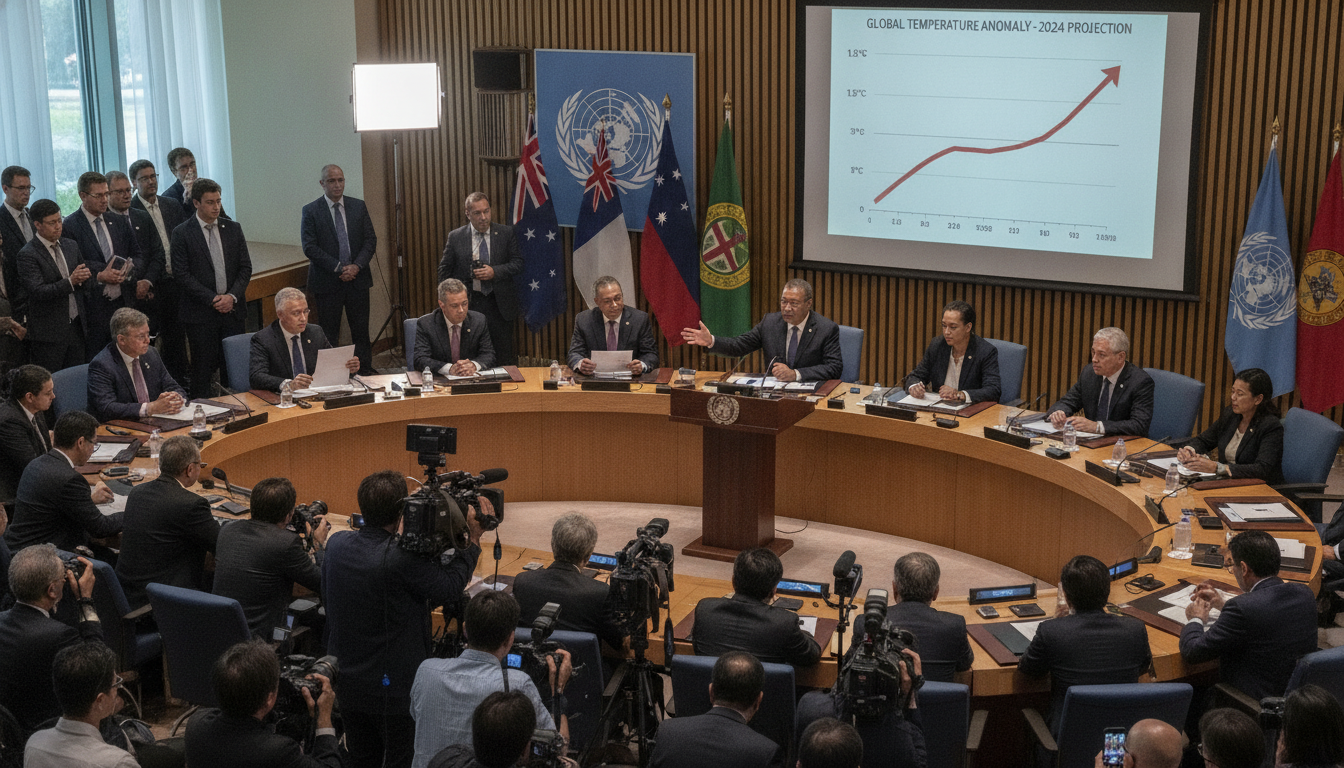
Pacific islands demand urgent climate action after a UN report warned global temperatures could cross 1.5°C within years, threatening lives, homes and economies.
The leaders of Pacific island nations convening in Koror, Palau, on Sept. 2 pressed for stronger global climate action after a United Nations report forecast that average global temperatures are likely to exceed 1.5 degrees Celsius above pre‑industrial levels within the next few years. Pacific islands, already facing recurrent storms, sea‑level rise and coastal erosion, called the findings a clarion call for accelerated emissions cuts and increased financial support. Delegations at the Pacific Islands Forum Leaders Meeting emphasized that the report intensifies the urgency of international commitments to protect vulnerable populations.
UN report projects 1.5°C threshold within years
A UN analysis released Wednesday projects that, given current emissions trends and climate variability, the long‑feared 1.5°C threshold could be crossed in the near term. Scientists warn that even a temporary or sustained breach would increase the frequency and intensity of extreme weather events globally. Pacific islands argue the threshold is not an abstract metric but a determinant of survival for low‑lying states dependent on coastal ecosystems and subsistence agriculture.
The report’s timing coincided with regional leaders gathered in Koror, amplifying demands that major emitters adopt more ambitious targets. Forum participants cited the scientific projection to press for immediate action at upcoming international climate negotiations. Officials stressed that delaying deeper emissions reductions will compound adaptation and recovery costs for the region.
Pacific leaders press for accelerated emissions cuts
At the meeting, presidents and prime ministers from across the Pacific urged wealthier nations to submit more stringent nationally determined contributions and to rapidly phase down fossil fuels. Leaders described the current pace of global mitigation as insufficient to avert escalating disasters that disproportionately affect small island states. While the Forum reiterated a commitment to multilateral diplomacy, officials also signaled readiness to pursue regional partnerships and legal avenues to safeguard their populations.
Delegates underscored that ambitious mitigation by high‑emitting countries remains the most effective means to reduce long‑term existential risks. They urged industrialized states to implement near‑term policies that translate pledges into measurable emissions declines before the next major climate conference.
Vulnerabilities for low‑lying states and communities
Pacific islands face an array of climate impacts that threaten infrastructure, freshwater supplies and cultural heritage. Rising seas are accelerating coastal erosion, salinizing groundwater and shrinking arable land, while stronger cyclones and storm surges increase damage to housing and transport links. Forum participants relayed accounts from communities already undertaking managed retreat and island‑to‑island relocations as last‑resort measures.
Beyond immediate physical impacts, leaders highlighted economic and social stresses: tourism disruptions, fisheries declines, and mounting costs of rebuilding after repeated disasters. They warned that incremental responses will not suffice if global warming progresses as projected, and that the human and cultural toll for small island populations would be profound.
Calls for scaled finance, loss and damage mechanisms
Finance emerged as a central demand at the Koror gathering, with leaders calling for scaled and predictable funding for adaptation, resilience and loss‑and‑damage compensation. Forum statements pressed wealthy nations and multilateral banks to operationalize funding commitments and simplify access for small states. Delegates also stressed the need for grants rather than loans for climate recovery to avoid deepening debt burdens.
Officials asked for targeted support for early warning systems, climate‑resilient infrastructure, and community‑led adaptation projects. They argued that international mechanisms must reflect the unequal contributions to global warming and the disproportionate cost borne by countries with the least historical emissions.
Regional resilience measures and local adaptation efforts
Pacific governments and communities are already implementing a range of adaptation measures, from coastal defenses to agroforestry and diversified livelihoods. At the Forum, leaders showcased initiatives aimed at strengthening food security, rehabilitating mangroves and improving water management. They emphasized that local knowledge and community participation are critical to designing effective, culturally appropriate responses.
Nevertheless, delegates acknowledged that local measures will only delay, not eliminate, the fundamental threats posed by rising temperatures and sea levels. The region’s climate resilience strategy therefore hinges on a two‑track approach: accelerating domestic preparedness while securing stronger international mitigation and finance commitments.
Diplomatic strategy ahead of global climate negotiations
Forum members said they will press the UN climate process for concrete outcomes that reflect the urgency of the UN report, including clearer timetables for deeper emissions reductions and operational loss‑and‑damage funding. Pacific leaders signaled coordinated diplomatic efforts in multilateral forums and with key partners, seeking binding commitments that translate into tangible supports for vulnerable states. The Koror meeting aimed to unify regional positions ahead of the next round of global talks.
As delegates depart Palau, they face a narrow diplomatic window to influence policy at major climate summits later this year and into 2027. Success, they argue, will depend on whether high‑emitting countries heed the scientific findings and act with the speed and scale the report demands.
The UN projection that global warming may cross 1.5°C within years has reframed the Pacific agenda from long‑term risk management to immediate crisis prevention. Pacific islands are urging the international community to treat the forecast not as a forecast alone but as a mandate for rapid, equitable action to avert the worst impacts on their peoples and future generations.

