
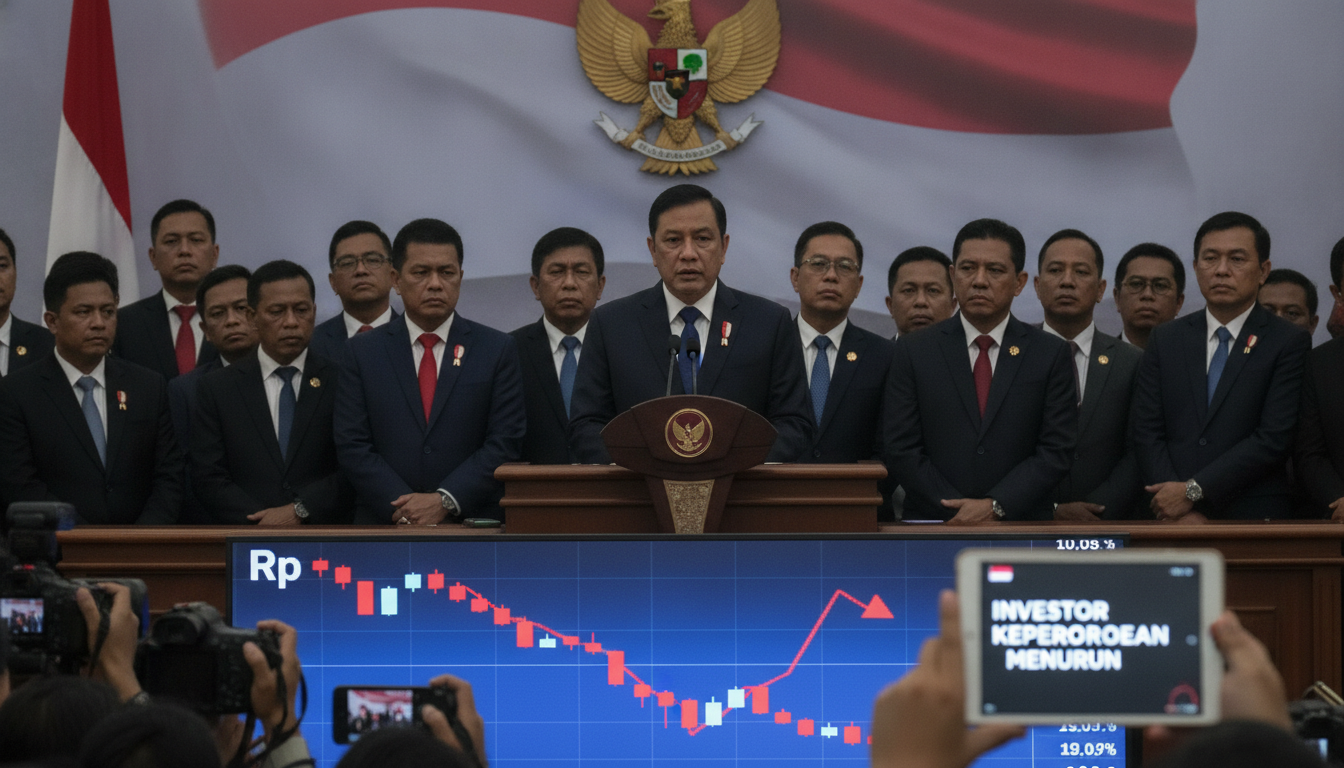
Indonesia’s rupiah weakens as sidelining of technocrats shakes investor confidence
Disregard for technocrats and uncertainty over central bank leadership have pressured the rupiah and rattled markets, highlighting risks to Indonesia’s growth ambitions.
Indonesia’s currency, the rupiah, has come under renewed pressure as investor concern grows over the sidelining of veteran technocrats and a surprise change at the central bank, undermining confidence in policy stability. Market moves accelerated after the unexpected resignation of Bank Indonesia’s governor and amid perceptions that political priorities are crowding out technocratic influence. (investing.com)
Presidential Signals and Market Sensitivity
President Prabowo Subianto has been promoting an ambitious growth agenda and a slate of transformational policies in recent speeches, but markets are watching whether those goals will be supported by predictable, technocratic policymaking. His state address and subsequent policy announcements emphasized rapid economic expansion and tighter oversight of key commodity exports, which some investors view as shifting the balance between growth targets and market-friendly governance. (apnews.com)
Analysts say that when political messaging appears to diminish the role of independent experts, currency markets quickly price in higher uncertainty and risk premia. For the rupiah, which is sensitive to capital flows and perceptions of institutional stability, that dynamic has translated into bouts of volatility and a weaker exchange rate versus the dollar. (investing.com)
Central Bank Leadership Change Raises Questions
The abrupt departure of Bank Indonesia’s governor in late July created a focal point for investor unease about the autonomy of monetary policy. Officials have sought to reassure markets that the transition will follow legal procedures, but observers note that the identity of the next governor will be closely scrutinized for evidence of commitment to price stability and financial sector oversight. (setkab.go.id)
Market participants stressed that a credible, technically skilled central banker is essential to anchor expectations, especially while the government pursues major fiscal and regulatory reforms. Any hint that monetary policy might be subordinated to short-term political objectives could prompt further rupiah depreciation and capital flight. (investing.com)
Recent Monetary Moves and Exchange Rate Trends
Bank Indonesia has adjusted policy rates in recent months as it seeks to balance inflation control and support for growth, but the currency has nonetheless been one of the weakest in the region this year. Officials have pointed to coordinated fiscal-monetary efforts to stabilize the exchange rate, while acknowledging that external shocks and domestic policy uncertainty complicate the task. (bi.go.id)
Data through mid-August showed portfolio flows into government securities and other instruments, but those inflows can reverse quickly if confidence deteriorates. The rupiah’s decline in 2026—exceeding several percentage points by summer—reflects both global market shifts and domestic political developments that investors interpret as raising policy risk. (bi.go.id)
Investor Flows and the Role of Fiscal Signals
Foreign portfolio investment delivered intermittent support to the currency this year, buoyed by government bond issuances and Bank Indonesia securities. However, capital inflows are highly responsive to policy clarity; when technocratic stewardship is perceived to be weakening, yield differentials and perceived sovereign risk can move swiftly against emerging-market assets. (bi.go.id)
Fiscal signals—such as changes in budget priorities, larger state involvement in commodity exports, or rapid shifts in regulatory frameworks—are particularly potent because they affect future revenue streams and debt sustainability. Market observers say transparent communication and sustained fiscal discipline are necessary to reassure investors and reduce pressure on the rupiah. (apnews.com)
Political Decisions, Technocratic Expertise and Economic Goals
The government’s push to control exports of commodities and to accelerate state-led transformation has been framed as a way to capture greater value from Indonesia’s resources. But critics argue that sidelining experienced technocrats from key economic roles risks undermining the institutional checks that help maintain investor trust and macroeconomic stability. (apnews.com)
Policymakers face a test: reconcile ambitious industrial and social goals with the market-friendly frameworks that sustain foreign capital and a stable currency. The challenge is heightened by global uncertainties that demand credible, expert-led responses rather than abrupt political interventions. (apnews.com)
Implications for Short-Term Markets and Policy Choices
In the near term, financial markets are likely to remain sensitive to announcements about the central bank leadership, fiscal plans, and any further moves that signal diminishing technocratic input. A clear succession plan for the central bank, explicit commitments to independence, and transparent coordination between fiscal and monetary authorities would be the most direct ways to calm markets and support the rupiah. (setkab.go.id)
Absent those reassurances, analysts warn that the currency may face renewed depreciation amid bouts of risk aversion, pushing up the cost of imports and complicating inflation management. That outcome would make it harder to achieve growth targets without financial stress. (investing.com)
Indonesia’s economic trajectory now hinges on whether political leadership can embed its transformative agenda in predictable, rule-based institutions and restore confidence among international and domestic investors. Only with clear signals that technocratic expertise will be respected and that the central bank’s independence is intact can the rupiah find firmer footing and support the country’s broader growth ambitions.

