
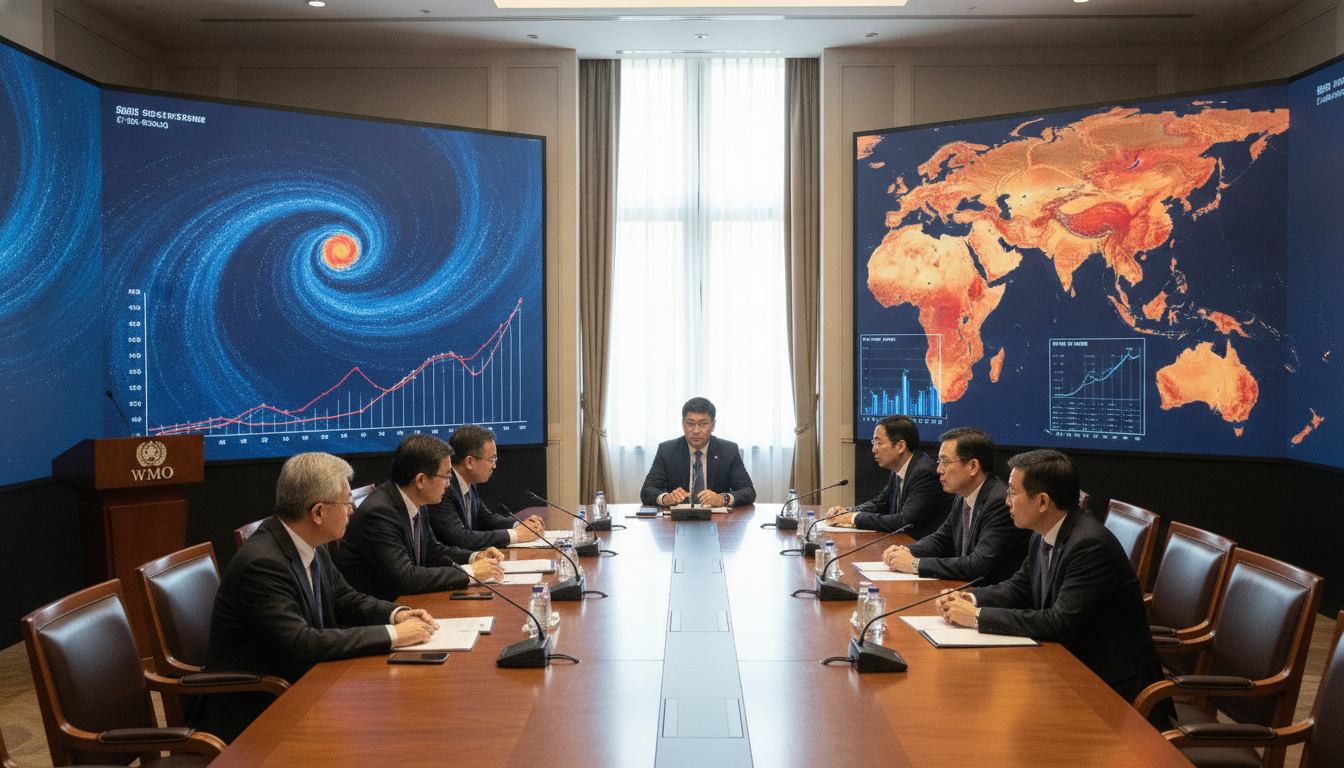
WMO Says El Nino Almost Certain Through February 2027, Raising Heat and Drought Risks Across Asia
WMO warns El Nino is nearly certain through Feb 2027, raising risks of drought and record heat across Asia, pressuring water, agriculture and power systems.
WMO issues high-confidence forecast on El Nino
The World Meteorological Organization said on September 3, 2026 that the current El Nino event is almost certain to persist through February 2027. The agency issued the forecast with an unprecedented level of confidence, signaling widespread deviations from typical seasonal conditions across large parts of Asia.
The statement underscores an elevated probability of sustained higher-than-average temperatures and reduced rainfall in many areas. Officials warned that these conditions will interact with existing climate trends to compound risks to water supplies and crop yields.
Forecasted temperature and precipitation shifts
The WMO forecast indicates substantially above-normal temperatures for much of the region during the remainder of 2026 and into early 2027. Forecasters expect that the El Nino pattern will shift atmospheric circulation, reducing monsoon rainfall in several South and Southeast Asian basins while boosting heat in East Asia.
Drought risk is heightened where seasonal rains are already marginal, and heat extremes are projected to become more frequent and intense. Meteorologists caution that episodic heavy rainfall may still occur locally, but overall seasonal averages are expected to trend drier and hotter.
Expected impacts on agriculture and water resources
Agricultural planners and water managers face a season of heightened strain if the El Nino persists as forecast. Reduced monsoon precipitation can lower reservoir levels, curtail irrigation supplies and pressure staple crop production across vulnerable regions.
Livestock and smallholder farmers are likely to be particularly affected, as feed crops and grazing lands respond quickly to moisture deficits. Longer-term concerns include the potential for increased food prices and disrupted supply chains if multiple cropping cycles are impaired.
Urban heat, health and energy system pressures
Cities across Asia are likely to confront intensified heatwaves and prolonged warm spells that increase health risks and place new demands on energy systems. Higher temperatures drive greater use of cooling, which can stress electricity grids and raise the likelihood of outages during peak demand.
Public health authorities are alert to the elevated risk of heat-related illness, especially among elderly and outdoor workers. Emergency services and hospitals may need to scale up preparedness measures, while municipalities could expand cooling centers and public advisories to protect vulnerable populations.
Japan’s experience and preparedness measures
Japan experienced notable heat extremes during the summer of 2026, which public agencies cited as evidence of growing risk in urban centers. Local governments and utilities have already mobilized heat-health communications and contingency plans to manage grid demand and protect at-risk communities.
Authorities in Tokyo and other major cities are monitoring reservoir levels and coordinating with national weather services to adjust water allocations if rainfall deficits emerge. The expected persistence of El Nino has prompted calls for early action to conserve water, manage irrigation schedules and support farmers facing reduced supplies.
Scientific context and level of confidence
Forecasters emphasized that the WMO’s high confidence reflects strong observational and model agreement on oceanic and atmospheric patterns linked to El Nino. Sea surface temperature anomalies and consistent atmospheric responses over recent months contributed to the near-certain forecast through February 2027.
Climate scientists also note that El Nino episodes interact with long-term global warming, often amplifying heat extremes and influencing regional precipitation in ways that exacerbate human and ecological vulnerabilities. While season-to-season variability remains, the current outlook is unusually definitive and asks policy makers to treat the risk as acute.
The WMO urged governments, utilities and agricultural agencies to accelerate contingency planning, including drought-response actions, load management for electricity networks and public health preparedness. Early and coordinated measures, officials said, will reduce the likelihood of severe disruptions and protect the most exposed communities.
International agencies and regional partners are expected to monitor the situation closely and provide technical support where needed. Continued surveillance of ocean conditions and periodic updates from meteorological services will be essential for refining seasonal outlooks as the region moves into the winter months.
Communities, businesses and authorities now face months of above-normal heat and elevated drought risk as El Nino is projected to remain in force through February 2027.

