
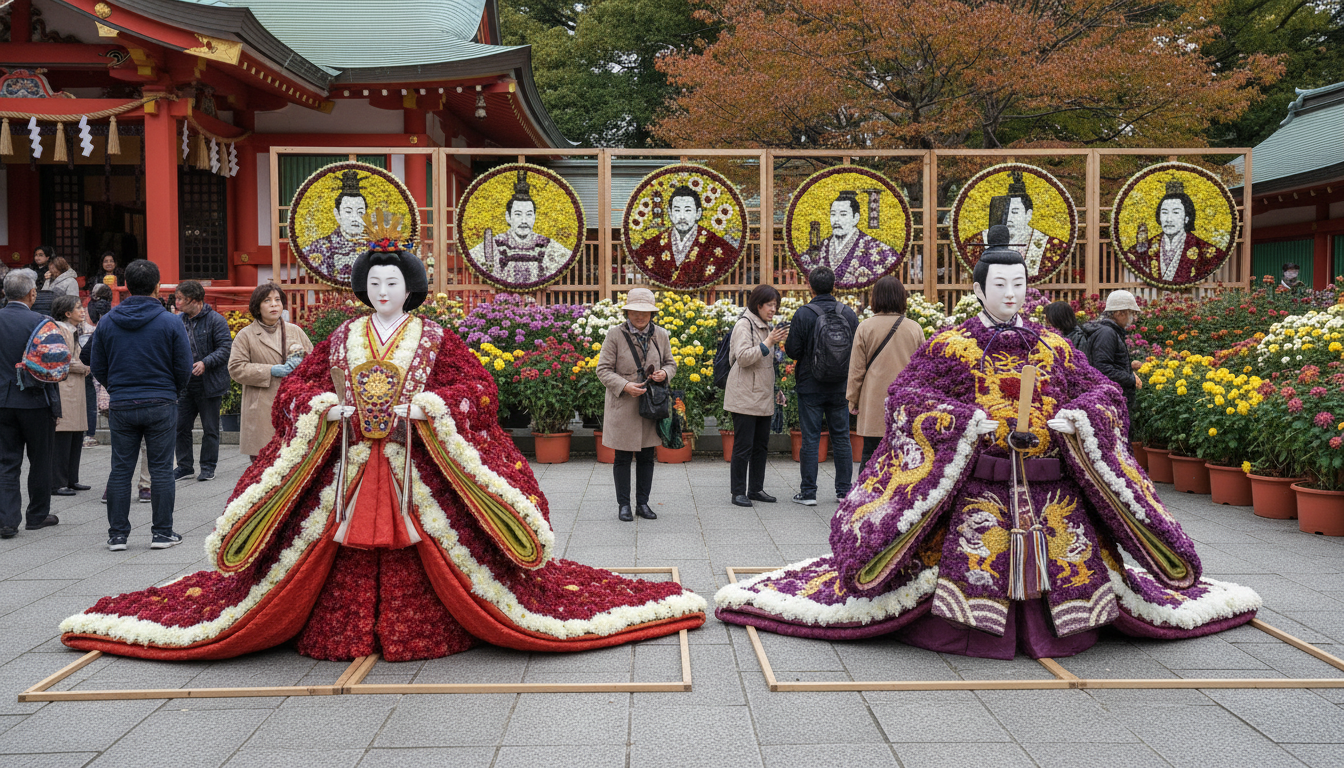
Bunkyo Kiku Matsuri at Yushima Tenjin Shrine Showcases Chrysanthemum Dolls and Plotted Blossoms
Bunkyo Kiku Matsuri at Yushima Tenjin Shrine highlights Japan’s chrysanthemum artistry with elaborate floral dolls and plotted displays, drawing visitors to celebrate royal symbolism and craftsmanship.
The Bunkyo Kiku Matsuri at Yushima Tenjin Shrine presents an exhibition of chrysanthemums that blends horticulture and traditional craft, drawing visitors to admire elaborate flower arrangements and chrysanthemum dolls. The festival, centered on the symbolic flower long associated with Japanese royalty, stages carefully plotted blossoms and sculpted figures made entirely from chrysanthemum blooms. Visitors encounter a range of displays that emphasize both botanical skill and aesthetic tradition.
Festival Opens at Yushima Tenjin Shrine
The festival takes place within the precincts of Yushima Tenjin Shrine in Bunkyo Ward, where pathways and shrine grounds are lined with pots and framed compositions of chrysanthemums. Organizers arrange displays to complement the shrine’s historic architecture, creating a seasonal spectacle for residents and tourists alike. Attendance typically includes local families, horticulture enthusiasts, and cultural visitors seeking a seasonal experience.
The festival setting supports both close viewing and photography, with many exhibits designed to be appreciated from a short distance. Volunteers and staff manage crowd flow and provide explanatory signage beside major arrangements. The atmosphere combines the quiet reverence of a shrine visit with the conviviality of a neighborhood festival.
Chrysanthemum Dolls and Plotted Blossoms on Display
A distinctive feature of the Bunkyo Kiku Matsuri is the chrysanthemum doll, a life-size or smaller figure covered in blooms to create clothing, hair, and facial contours. Craftspeople mount thousands of stems on armatures to fashion characters ranging from historical figures to seasonal motifs, demonstrating meticulous planning and patience. Plotted blossoms—plants trained and displayed in geometric frames—showcase horticultural techniques that control plant shape and flower position.
Displays vary each year, with competing exhibitors introducing new themes and intricate constructions. Judges and visitors often note the precision of petal placement and the visual impact of color gradients. The result is both an artistic tableau and a living demonstration of plant care.
Cultural Significance of Chrysanthemums in Japan
Chrysanthemums have a deep cultural resonance in Japan, historically used as an imperial emblem and a symbol of longevity and refinement. The flower’s association with the Imperial Household is reflected in ceremonial uses and in the chrysanthemum crest that appears on official objects. Festivals such as the Bunkyo Kiku Matsuri keep these traditions visible in community life and provide a setting for cultural education.
Local historians and shrine officials frequently use festival programming to explain the flower’s symbolism to visitors. Exhibitions are accompanied by interpretive panels that outline chrysanthemum lore, cultivation history, and the plant’s role in seasonal observances. This contextual material helps frame the displays as part of a living cultural practice rather than as mere decoration.
Exhibitors, Craftsmanship and Floral Techniques
Exhibitors at the Bunkyo Kiku Matsuri include professional horticulturists, amateur growers, and community groups who demonstrate a range of techniques from bonsai-style training to frame-based plotting. Many chrysanthemum artists begin work months in advance, pruning and wiring stems to encourage the precise blooms required for doll-making and framed displays. The festival also highlights the hand skills needed to secure each stem and maintain floral health under public exhibition conditions.
Workshops and demonstrations sometimes accompany the displays, allowing visitors to observe wiring and stem-placement techniques up close. These sessions underscore the combination of botanical knowledge and artisanal skill essential to producing the festival’s most striking pieces. The collaborative nature of the work—often involving teams of growers and volunteers—reflects the community investment in the event.
Visitor Information and Practical Details
The festival is located at Yushima Tenjin Shrine, accessible by public transport and within walking distance of major cultural districts in central Tokyo. Attendees are advised to check local signage and shrine announcements for exact exhibit locations within the grounds and for any seasonal schedule changes. Basic amenities and wayfinding are typically provided on site, and the shrine precincts offer several vantage points for viewing the displays.
Photography is generally welcomed, though visitors should remain mindful of shrine etiquette and any posted restrictions around sensitive exhibits. Local businesses near the shrine often see increased foot traffic during the festival period, providing opportunities to combine a festival visit with dining or shopping in the neighborhood.
Community Response and Educational Outreach
Residents and neighborhood associations view the Bunkyo Kiku Matsuri as a cultural anchor that brings people together across generations. Schools and local groups sometimes participate in educational programs linked to the festival, using chrysanthemum cultivation as a teaching tool for botany and traditional arts. Feedback from community organizers emphasizes the festival’s role in sustaining horticultural knowledge and fostering civic pride.
The festival’s volunteer base plays a crucial part in setup, maintenance, and visitor services, and local donors and sponsors often support prize categories and youth participation. As a recurring cultural event, the Bunkyo Kiku Matsuri functions both as a seasonal attraction and as a mechanism for passing down specialized skills.
The Bunkyo Kiku Matsuri at Yushima Tenjin Shrine offers a concentrated view of Japan’s chrysanthemum traditions, combining floral science, artisan craftsmanship, and cultural history in a shrine setting that invites both quiet appreciation and communal celebration. Whether seen as botanical exhibition or living heritage, the festival remains a distinctive expression of seasonal artistry in the city.

