
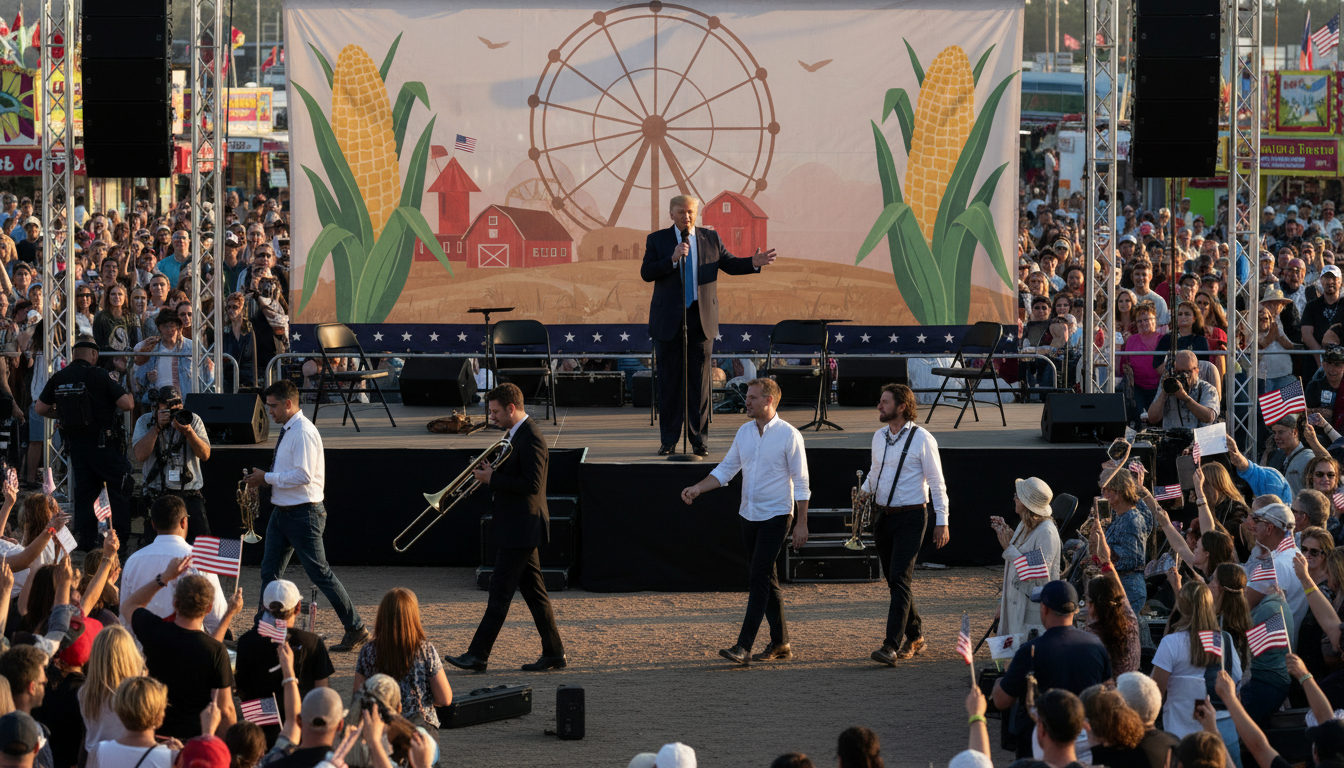
Trump Vows to Fill In After Musicians Withdraw from Great American State Fair
Thousands expected for National Mall events as artists cite political concerns over Freedom250-backed Great American State Fair.
The Trump administration-backed celebration of the United States’ 250th anniversary, branded the Great American State Fair, has been shaken by a wave of performer withdrawals. Several headline musicians pulled out in recent days, citing concerns the Freedom250-organized series would be politicized, prompting President Donald Trump to say he will step in if necessary.
Performers Withdraw Amid Political Concerns
Several artists who had been announced for the Great American State Fair declined to appear after being named in the lineup, according to organizers and reports. At least five of nine initially listed acts notified organizers they would not perform, citing unease about appearing at an event closely tied to the current administration.
The withdrawals have intensified scrutiny of the event’s presentation and raised questions about whether private celebrations backed by the White House can remain apolitical. Organizers have said they still intend to hold the scheduled slate of programming on the National Mall between June 25 and July 10.
Freedom250 Organizers Outline Schedule and Venue
Freedom250, the private group supported by the administration, announced plans for a multi-day series of concerts and exhibits on the National Mall aimed at marking the country’s 250th anniversary. Organizers describe the Great American State Fair as a mix of live music, historical displays and family-oriented programming designed to run from late June into early July.
The National Mall location, a symbolic and highly visible public space in downtown Washington, was selected to accommodate large crowds and fireworks displays associated with Independence Day observances. Officials said logistical preparations, including security and permitting, remain underway despite the lineup changes.
President’s Remarks and Offer to Appear
President Trump publicly expressed frustration after the performer withdrawals, framing the cancellations as politically motivated and vowing to ensure the event proceeds. In remarks to supporters, he characterized himself as the country’s leading entertainer and suggested he could appear in place of departing artists.
White House aides have described the celebrations as a national tribute rather than a campaign event, but critics say the president’s intervention risks blurring the line between state-sponsored commemoration and partisan spectacle. Legal and ethical advisers in past administrations have warned that events at public spaces associated with the presidency can carry political optics.
Industry Leaders and Unions Voice Reservations
Music industry representatives and some performers have said they were uncomfortable with appearing at an event linked to a sitting president known for a polarizing style. A number of artists weighed potential backlash from fans and professional associations before formally declining, sources familiar with discussions said.
Performers who declined cited concerns about being perceived as endorsing a political agenda and about potential disruptions at large outdoor events. Talent agents have also raised contractual and insurance questions related to appearing at a high-profile event where security or crowd issues could create liabilities.
Political Repercussions and Congressional Reactions
Lawmakers from both parties watched the controversy closely, with some Democrats criticizing the administration for turning a national milestone into a partisan showcase. Several Republican lawmakers defended the planned celebrations as a legitimate expression of national pride and urged the public to attend.
The events could become a focal point in broader debates over use of public spaces, presidential conduct at ceremonial events, and the role of private organizations in staging national commemorations. Congressional committees that oversee public lands and federal expenditures may seek briefings on the Mall permits and logistical coordination.
What Organizers Say About Remaining Programming
Freedom250 officials insisted the Great American State Fair will feature a range of performers and educational exhibits and that final lineups are still being confirmed. Organizers said they are reaching out to alternate artists and community groups to fill gaps left by high-profile withdrawals.
Event planners emphasized that the schedule includes daytime cultural programming and family activities that are not centered on headline concerts, and that many endeavors will proceed regardless of changes to the musical roster. Officials also noted contingency plans for security and crowd management during peak dates around July 4.
Public interest in the Great American State Fair has remained high, with officials predicting large attendance for the stretch of events on the National Mall. Whether the celebrations will achieve the intended broad-based national appeal, or instead become primarily associated with the president’s political brand, will hinge on how organizers, performers and elected officials navigate the coming weeks.
As preparations continue toward the June 25 start, organizers and lawmakers face mounting pressure to clarify the event’s nonpartisan character, finalize lineups, and ensure safety and accessibility for the thousands expected to attend on the National Mall.

