
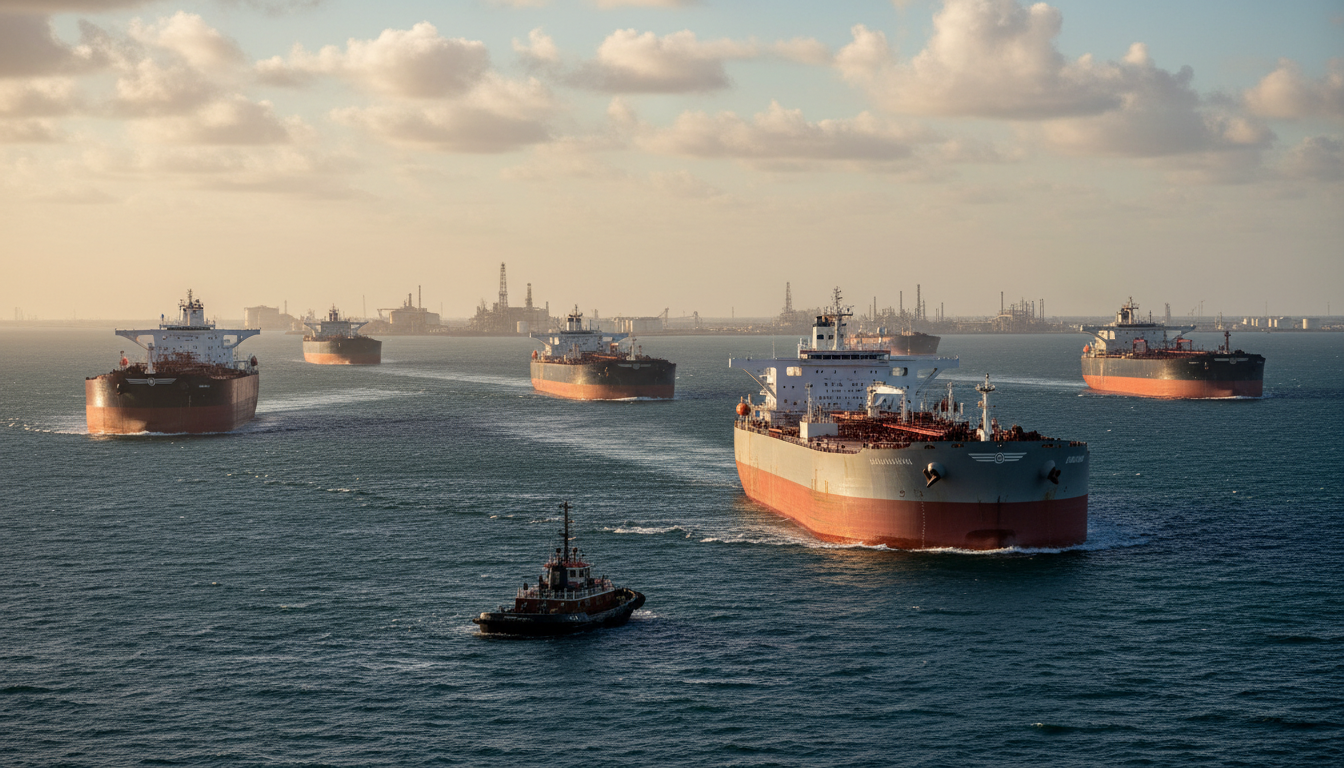
Rush for U.S. crude sends 70 VLCC supertankers toward Gulf Coast amid Iran conflict
70 VLCC supertankers are sailing from Asia to the U.S. Gulf Coast as Middle East supply disruptions tied to the U.S.-Israel–Iran conflict spark a rush for U.S. crude.
The disruption of Middle Eastern oil flows linked to the U.S.-Israel–Iran conflict has triggered a rush for U.S. crude, with shipping-tracking data showing roughly 70 VLCC (very large crude carrier) vessels now bound for the U.S. Gulf Coast. These empty or ballast-laden tankers, mostly repositioning from Asian load centers, have formed lengthy lines stretching from the Cape of Good Hope to American ports. The current tally is more than double last year’s routine presence of about 27 supertankers on comparable routes, signaling a dramatic reshaping of global tanker movements.
Tankers Converge on U.S. Gulf Coast
Data from maritime trackers indicate a concentration of VLCCs funneling toward the U.S. Gulf Coast, creating an unprecedented queue of large crude carriers off U.S. waters. The ships, many previously engaged in Asian exports, are either on long ballast voyages or carrying crude purchased earlier, arriving to offset Middle Eastern shortfalls. Port planners and traders say the scale of the buildup reflects both a hedging response by refiners and a tactical rush to secure supplies amid volatile regional geopolitics.
Ship Movements and Route Adjustments
A significant number of VLCCs are avoiding traditional Suez and Red Sea passages because of heightened security risks, opting instead for the longer Cape of Good Hope transit around southern Africa. That rerouting adds weeks to voyage times and increases bunker fuel consumption, complicating scheduling and lifting costs. Analysts note the extended sailing distances have left many tankers effectively in transit lines, visible on vessel-tracking maps as long chains between Africa and the U.S. Gulf.
Market Reaction and Pricing Effects
The rush for U.S. crude has begun to influence price spreads and trading flows, tightening domestic availability even as global benchmarks remain sensitive to Middle Eastern disruptions. Traders report increased interest in U.S. grades and a narrowing of discounts that previously made American barrels attractive for exports to Asia. Freight rates for VLCC voyages have also climbed, reflecting both longer distances and greater demand for secure, assured delivery from regions less exposed to immediate geopolitical risk.
Port Capacity and Storage Pressure
U.S. Gulf Coast terminals and storage hubs are feeling the pressure from a surge in inbound tonnage, raising short-term logistical concerns for crude receipt and tankage. Operators warn that a continued wave of VLCC arrivals could strain berth schedules, increase demurrage costs and force temporary measures to prioritize cargoes for refining or storage. Federal and regional authorities are monitoring flows to ensure critical infrastructure can handle a larger, more irregular pattern of imports without disrupting domestic fuel supply chains.
Insurance and Freight Rate Shifts
Insurers and charterers are recalibrating risk assessments and premiums as the altered trade lanes and heightened political tensions raise war-risk and kidnap-and-ransom exposures for vessels in or near Middle Eastern waters. The industry has seen upwards pressure on insurance costs for voyages that traverse riskier corridors, prompting a market-wide shift toward longer but safer routes even when they carry a price premium. These adjustments feed back into freight costs, ultimately affecting the landed price of crude at Gulf Coast refineries.
Iran Conflict Sparks Strategic Sourcing Decisions
Refiners and oil traders are increasingly treating U.S. crude as a contingency source while Middle Eastern output faces uncertainty, prompting longer-term contracts and opportunistic spot purchases. The shift underscores how geopolitical shocks can rapidly alter supplier relationships and rewrite shipping patterns, as importers prioritize secure delivery over price advantage. Policymakers and energy firms are now weighing options to diversify routes and storage, with contingency planning focused on maintaining refinery run rates through volatile import windows.
The current repositioning of about 70 VLCCs toward the U.S. Gulf Coast reflects a market-wide scramble to shore up supplies as disruptions in Middle Eastern crude flows persist. Shipping lanes, insurance pricing and port operations have all adjusted in response, and observers say the situation will remain fluid while the regional conflict affects production and export corridors.

