
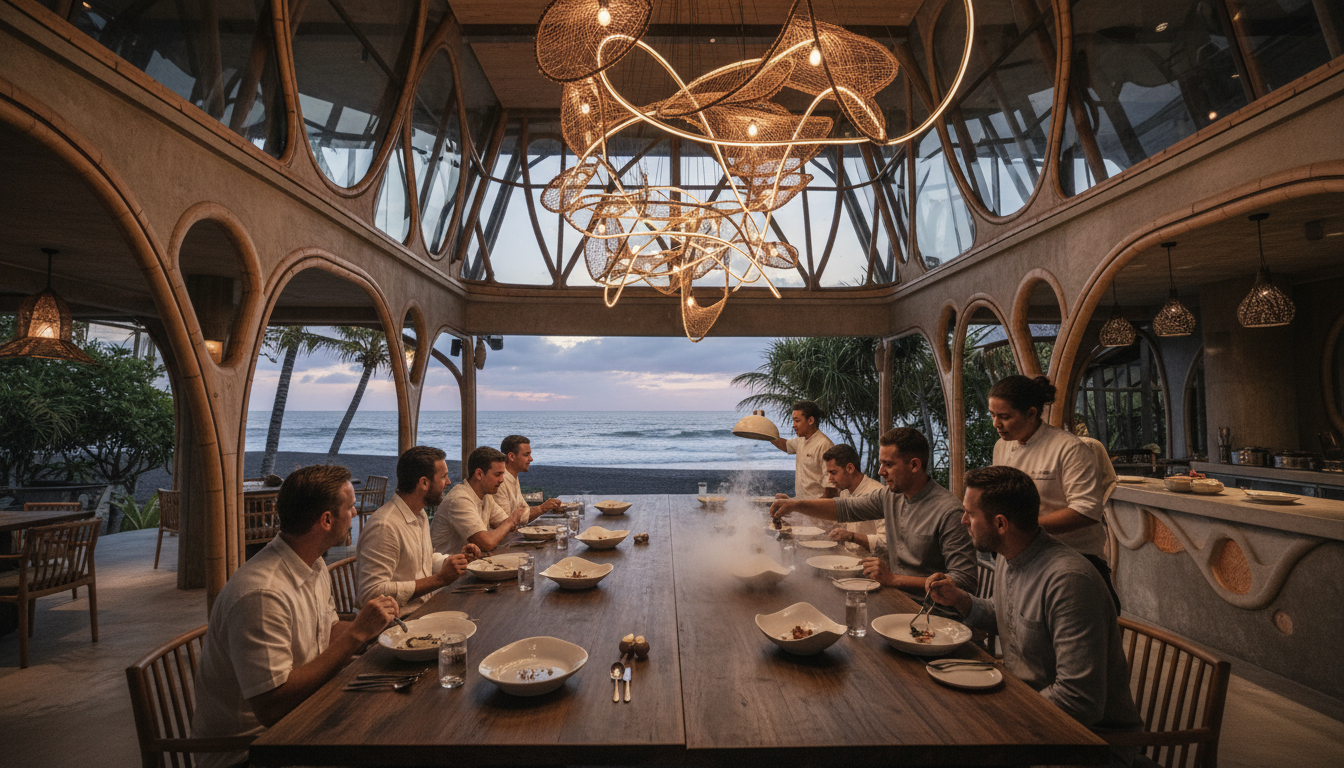
Ade Living Bali brings experimental dining and bold design to Seseh beachfront
Spanish founders Marco Moraleda and partners open Ade Living Bali, a boutique hotel and restaurant that blends fashion-led design with experimental cuisine on Seseh’s quiet shore.
Set on the western fringe of Canggu, Ade Living Bali introduces a compact boutique hotel and restaurant that pairs provocative design with a restrained, beachside setting. The project is led by Spanish fashion designer-turned-hotelier Marco Moraleda and collaborators who aim to rethink hospitality through curated interiors and a menu that favors experimentation. Located between the rice terraces and the surf breaks of Seseh and Cemagi, the property seeks to offer an alternative to Canggu’s busier tourist hubs while emphasizing craft and local context.
Design philosophy led by Marco Moraleda
Moraleda, known for a background in fashion, has translated his aesthetic sensibility into layered interiors and bespoke fittings. The design intentionally rejects standard hotel formulas, favoring small-batch furniture, tactile materials and a palette that responds to the coastal landscape. Public spaces are conceived to feel intimate yet theatrical, with artful lighting and sculptural elements that invite guests to engage rather than simply pass through.
Staff describe the approach as “rethinking everything,” with each room treated as a distinct vignette rather than a replicated product. The result is a compact inventory of accommodations that trade scale for singularity, aiming to deliver memorable visual moments alongside functional comfort.
Site choice: Seseh and Cemagi’s quieter appeal
Ade Living Bali is sited in Seseh, a low-key stretch west of central Canggu that has attracted designers and creatives seeking quieter surroundings. Developers point to the area’s proximity to surf breaks, rice fields and small-scale artisan communities as a key rationale for the location. The site offers a contrast to the dense cafés and nightlife of central Canggu, positioning the hotel as a retreat for travelers who prioritize atmosphere and craft.
Local planning and community voices played a part in shaping the project’s scale, with an emphasis on keeping the complex modest so as not to overwhelm the neighborhood fabric. The founders emphasize a light-touch footprint, with landscaping and orientation meant to preserve sightlines to the sea and adjacent agricultural land.
Experimental dining at the heart of the project
The restaurant program is intentionally experimental, blending seasonal Indonesian ingredients with techniques and presentations drawn from European kitchens. Menus change frequently and are framed as a sequence of small, carefully composed dishes rather than conventional a la carte offerings. The culinary team works closely with local foragers and smallhold farmers to secure produce that supports the tasting-menu ethos.
Service is arranged to feel like a progressive meal paired with considered beverage selections, and the dining room is designed to shift between intimate tables and a communal counter. Founders say the intent is to challenge expectations while maintaining respect for the rhythms of Balinese produce and traditions.
Architecture and local craftsmanship
Architectural interventions at Ade Living Bali emphasize craft and material honesty, with timber, woven elements and locally fired ceramics prominent throughout. The project commissioned Balinese artisans for joinery and decorative work, blending contemporary forms with regional techniques. Exterior volumes are kept low and dispersed, creating shaded courtyards and sheltered outdoor rooms that read more like a village cluster than a single monolithic resort.
Sustainable touches include passive shading, cross-ventilation strategies and a landscaping plan centered on native plantings intended to reduce irrigation needs. Founders state that these measures are part of a broader intention to create a meaningful connection between the property and its environment.
Guest experience, bookings and community engagement
Ade Living Bali markets itself to travelers seeking a design-forward, culinary-led stay rather than mass-market amenities. Bookings prioritize longer stays and meal inclusions to encourage deeper engagement with the hotel’s program. The site hosts occasional workshops and pop-up events aimed at drawing both international guests and local residents into curated exchanges around food, design and craft.
The management says they will maintain limited room inventory to preserve privacy and coherence of the guest experience, while also opening specific evenings for local dining to foster ties with the surrounding communities.
The combination of a fashion-influenced design language, an experimental restaurant, and a site that values restraint positions Ade Living Bali as a distinctive addition to Seseh and Cemagi’s evolving hospitality scene. Visitors can expect a short, focused stay that privileges aesthetic detail and culinary exploration over conventional resort trappings.

