
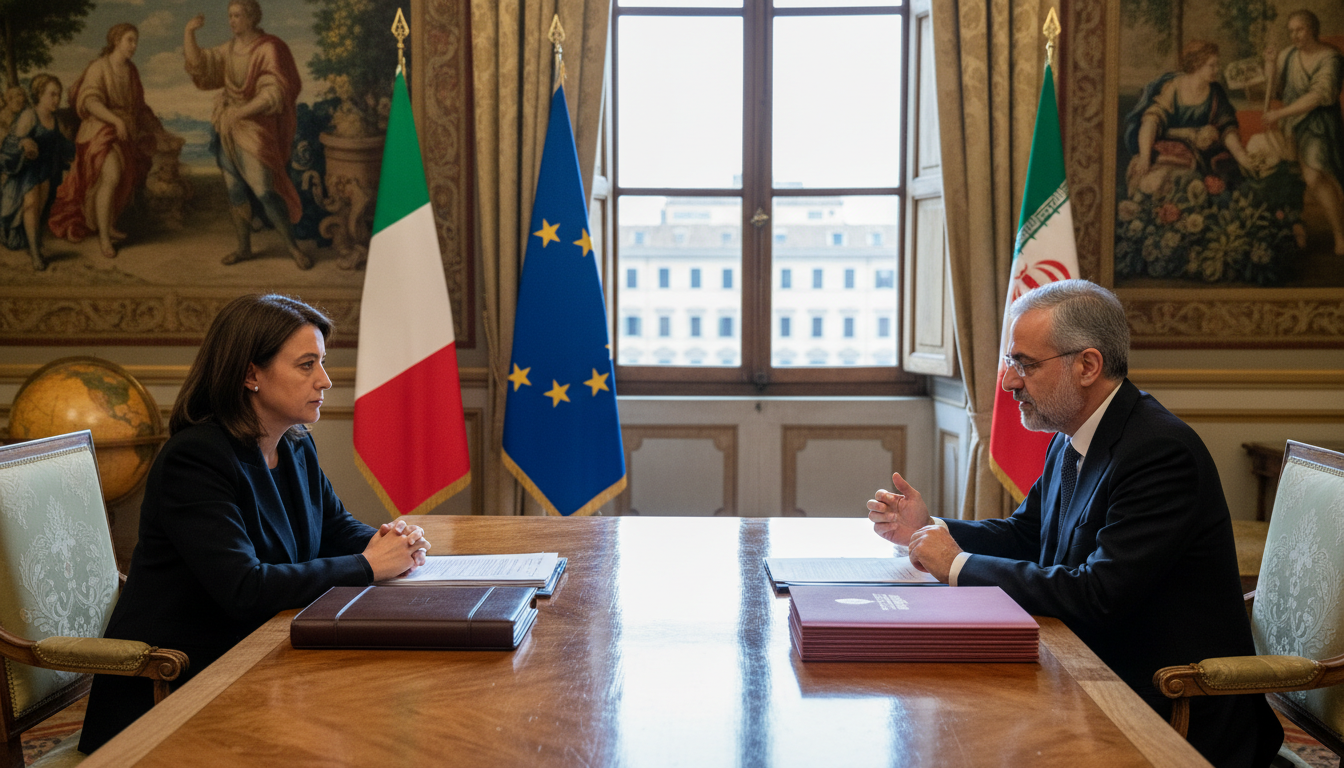
Italy World Cup replacement proposal rejected by sports minister
Italy rejects suggestion to replace Iran at the World Cup; sports minister Andrea Abodi says reinstatement is not possible and teams must qualify on the pitch.
Italy has publicly downplayed suggestions that its national team could be slotted into the World Cup in place of Iran, after remarks by a U.S. special envoy prompted debate. The phrase "Italy World Cup replacement" circulated in media reports following comments by Paolo Zampolli, who described the idea as a "dream." Italian officials moved quickly to close the matter, stressing that tournament places are earned on the field.
Proposal from U.S. envoy draws attention
Paolo Zampolli, identified in reports as a U.S. special envoy, told the Financial Times it would be a "dream" to see Italy in the tournament hosted by the United States, Mexico and Canada. His remarks revived public conversation because Italy is a four-time World Cup winner whose absence from the competition has been a prominent story.
The comments were reported widely and prompted questions about whether FIFA could alter its list of qualified teams in response to geopolitical developments. International proposals of this kind attract attention because they touch on both sporting rules and diplomatic sensitivities.
Italy’s sports minister rejects reinstatement
On Thursday, sports minister Andrea Abodi said reinstatement of Italy "first, is not possible; second, is not appropriate, you qualify on the pitch," according to Italian news agencies ANSA and AGI. The statement closed the door on any immediate ministerial effort to lobby for Italy to take another nation’s place.
Abodi’s wording underlined a principled stance: that World Cup qualification should reflect match results rather than ad hoc substitutions. His comments echoed broader sentiment among officials who emphasized respect for competition rules and the integrity of the qualifying process.
FIFA regulations and logistical barriers
Any change to the World Cup line-up would ultimately rest with FIFA, which administers the tournament and its entry rules. Altering the roster after qualification is complete would require extraordinary justification and agreement among member associations and tournament organizers.
Beyond regulatory hurdles, practical considerations such as travel, accreditation and broadcast arrangements make mid-cycle replacements difficult. Organizers must also weigh precedent and the potential for political fallout before endorsing a non-sporting change to the participant list.
Reactions from political and sporting circles in Italy
Reaction within Italy has been measured, with most politicians and football officials emphasizing sporting principles over opportunism. Some commentators noted the emotional appeal of having a storied football nation return to the World Cup, while many experts cautioned against conflating wishful thinking with feasible policy.
Football fans expressed disappointment at Italy’s failure to qualify but also voiced support for the minister’s insistence that qualification be settled on the pitch. The episode reinforced calls within the Italian football community for reflection on the national team’s performance and qualifying strategy.
Implications for Iran and tournament integrity
The reports sparked concern about the status of Iran’s qualification, though there has been no official move by FIFA to displace any qualified team. Observers noted that singling out one team for replacement would raise legal and ethical questions and could set an unsettling precedent for future tournaments.
Tournament organizers and member associations are likely to emphasize stability and adherence to established rules to preserve the World Cup’s credibility. Any attempt to substitute a qualified team with another would require not only FIFA approval but also broad consensus among stakeholders.
Italy’s swift rebuttal of the replacement suggestion shifted the conversation back to sport, not speculation. Officials framed the matter as one of principle about how teams earn their places at major competitions.
The intervention by Paolo Zampolli reignited attention on Italy’s absence from the World Cup, but the firm response from Rome illustrates the limits of informal proposals when set against regulatory frameworks. For now, the World Cup line-up remains subject to FIFA’s governance, and Italy’s future participation will depend on results earned through qualification.

