
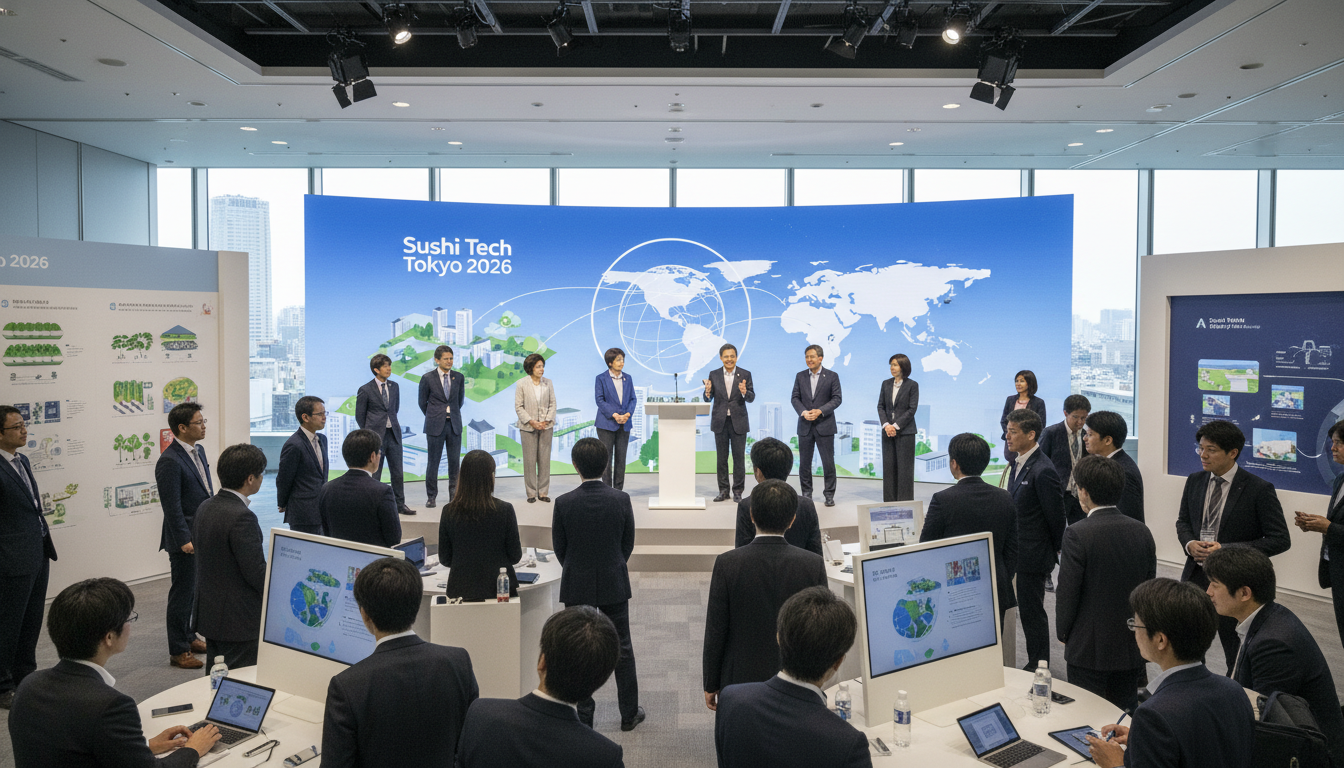
SusHi Tech Tokyo 2026 Highlights Urban Sustainability, Drives Global Startup Partnerships
SusHi Tech Tokyo 2026 spotlights urban sustainability and resilience, linking startups with investors via energy exhibits, global speakers and expanded venues.
Tokyo Vice Governor Manabu Miyasaka said SusHi Tech Tokyo 2026 opens as a global showcase for technologies aimed at urban sustainability, with a particular emphasis on resilience and energy innovation. The event brings together startup founders, corporate executives and international investors in a concentrated program designed to accelerate business collaborations. Organizers expect the conference to deepen ties between Tokyo’s innovation ecosystem and overseas markets.
Vice Governor Frames Event as Global Stage
Manabu Miyasaka, who leads the metropolitan government’s startup and digitization initiatives, described SusHi Tech Tokyo 2026 as an occasion where leaders from Japan and abroad “take the stage” and a worldwide audience gathers. Miyasaka, a former chairman of Yahoo Japan who was appointed to city government leadership in 2019, said the conference is intended to showcase Tokyo as a point of connection for the global innovation economy. He emphasized that the event’s scale and international participation are central to Tokyo’s strategy for growth.
Conference Centers on Urban Sustainability and Resilience
Organizers have structured SusHi Tech Tokyo 2026 around four thematic areas with urban sustainability at the core, and one of those areas dedicated to resilience. The resilience track features a concentration of energy-related exhibits and demonstrations, reflecting concerns about international supply dynamics that affect energy availability. By foregrounding practical technologies—such as decentralized energy systems and efficient grid solutions—the conference aims to present deployable approaches that municipalities and businesses can adopt.
Startups Report Measurable Business Outcomes
Past editions of SusHi Tech Tokyo have been positioned as deal-making platforms, and follow-up surveys indicate that the format yields tangible results. Organizers reported that 45 percent of respondents to a post-event questionnaire said participation led directly to business collaborations or funding over the subsequent six months. Miyasaka pointed to a fusion-energy venture that won a pitch at the 2023 event as an example of a company that met international investors at SusHi Tech and later secured capital to advance its research.
Tokyo Innovation Base Functions as a Local Hub
Tokyo Innovation Base in Chiyoda Ward is highlighted as a physical hub where startups, universities and major corporations intersect, and the venue plays a central role during SusHi Tech Tokyo 2026. The vice governor noted that local governments from across Japan use TIB to stage events and facilitate connections between regional entrepreneurs and Tokyo-based resources. By leveraging the base’s networked facilities, the metropolitan government aims to make it easier for early-stage firms to access corporate partners, talent and investors.
Organizers Stress Jobs, Tax Revenue and Growth Phases
Miyasaka argued that nurturing startups through their growth phase is essential for creating high-quality employment and eventually boosting tax revenue. He observed that newly founded companies often struggle to generate substantial tax contributions while they focus on survival, but once they enter a sustained growth trajectory the economic impact can be dramatic. The metropolitan government’s policies, he said, aim to shepherd promising firms through that transition so they scale, hire and contribute to the broader economy.
Diversity, Public Engagement and International Representation
SusHi Tech Tokyo 2026 deliberately prioritizes diverse participation: a majority of sessions are led by women and roughly 60 percent of speakers are from overseas, according to program figures. The conference’s final day is open to the public, and organizers reported strong family attendance at last year’s public day, with children exposed to hands-on exhibits and demonstrations. Miyasaka said public engagement is a strategic element, designed to inspire young people and broaden awareness of technology pathways in fields ranging from food services to advanced energy research.
Tokyo officials also outlined plans to broaden the event’s footprint next year by staging activities at multiple venues across the city and by exploring international editions to create larger-scale opportunities for Tokyo startups to meet overseas partners. The expansion is intended to increase both domestic outreach and the global visibility of Tokyo’s entrepreneurial community.
SusHi Tech Tokyo 2026 arrives as Tokyo seeks to cement its role as a global innovation gateway, combining sector-specific programming, investor matchmaking and public outreach to translate technological promise into measurable economic growth. The conference’s emphasis on urban sustainability and resilience reflects a municipal agenda that links innovation policy to practical urban challenges, while targeted support for startups aims to convert early-stage promise into jobs and long-term fiscal contributions.

