
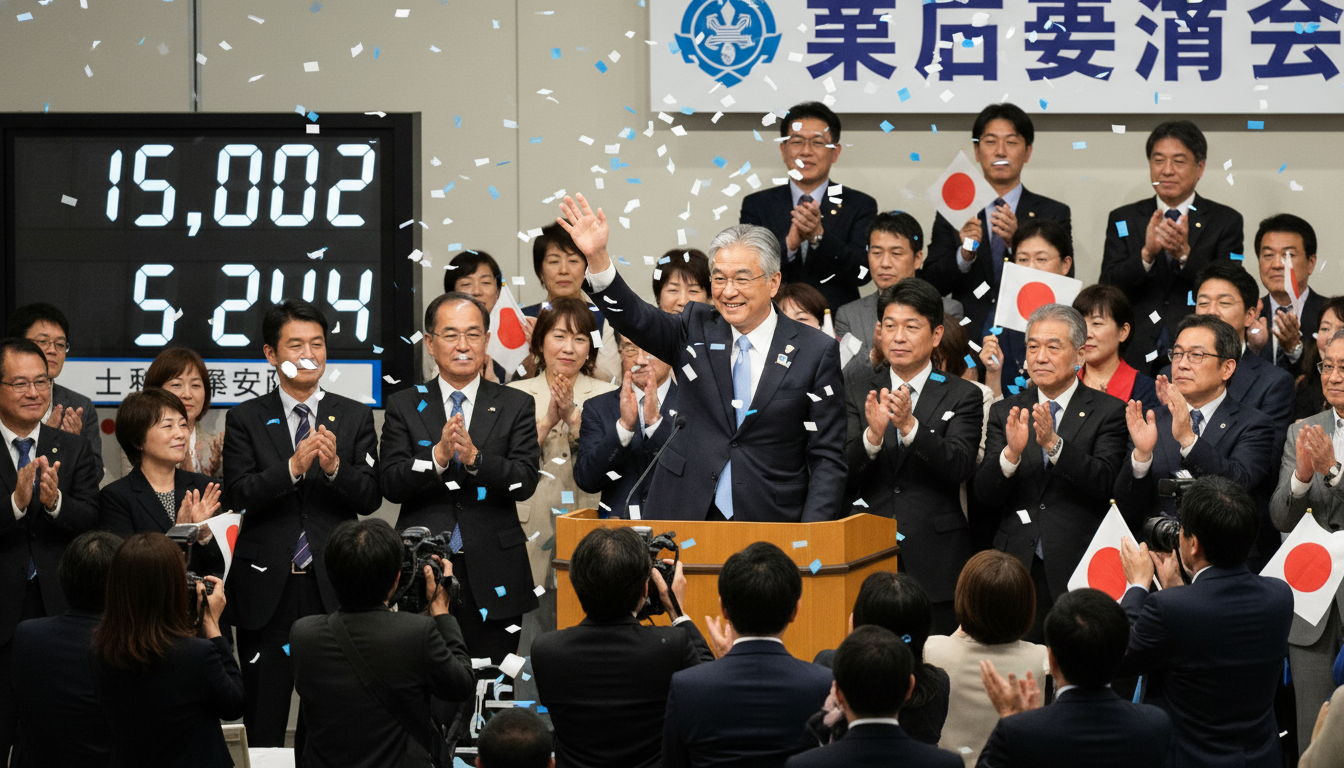
Incumbent Shigeru Sugawara Wins Fifth Term in Kesennuma Mayoral Election as Late Challenger Claims Over 5,000 Votes
Shigeru Sugawara won a fifth term in the Kesennuma mayoral election on April 26, 2026, as a last-minute challenger unexpectedly took more than 5,000 votes. The city election produced a clear numerical victory but an uneasy atmosphere within the incumbent’s camp. The result has prompted questions about voter sentiment and the dynamics of a contest that many had expected to be uncontested.
Official results and vote breakdown
Kesennuma City’s election management committee reported that Sugawara received 19,448 votes while challenger Akira Iwamura secured 5,244 votes. The margin gave Sugawara a decisive victory on the night of April 26, but the raw totals concealed the surprise that followed the count. Officials and campaign members acknowledged the scale of Iwamura’s support as larger than anticipated.
Unexpected candidacy altered expectations
The race had been widely expected to produce an uncontested re-election for the incumbent before Iwamura registered his candidacy just prior to the official campaign start. That late entry transformed what was forecast as a procedural win into a competitive headline during the final days of campaigning. Local observers say the timing of the announcement energized a segment of voters and reshaped media and public attention.
Profile of the challenger and voter appeal
Iwamura, a 79-year-old former seaweed wholesaler, presented himself in a manner that diverged from conventional political imagery, attracting both curiosity and criticism. Despite limited name recognition and an unconventional public persona, he drew a measurable protest vote that surpassed many expectations. The level of support suggests a pocket of the electorate was receptive to an outsider candidacy, regardless of traditional campaign infrastructure.
Reaction inside the incumbent’s camp
Celebration in Sugawara’s campaign headquarters was muted after the result was confirmed, with some local councillors expressing surprise at the size of the vote for the challenger. Campaign staff and allied officials acknowledged privately that they had not anticipated Iwamura’s ability to mobilize more than 5,000 voters in a late-stage bid. That candid assessment underlines concerns about complacency and the need to reassess outreach strategies ahead of the new term.
Implications for governance in Kesennuma
While the numerical outcome secures Sugawara’s continuation in office, the election result carries political signals that the administration may need to address. Analysts and residents point to underlying local issues—such as post-disaster recovery, an aging population, and economic challenges in coastal industries—that can drive voters toward unconventional candidates. The new term could see renewed pressure on the mayor’s office to engage more directly with communities that felt underrepresented.
Campaign conduct and public sentiment
The campaign period featured a contrast between an established incumbent apparatus and a spur-of-the-moment challenger campaign that relied heavily on personal appearances and local visibility. Voter response on April 26 indicated both satisfaction with continuity among a large share of the electorate and a notable appetite for alternative voices. Political commentators in the region say the result will be studied as a case of how last-minute entries can affect local vote dynamics.
Sugawara’s fifth-term mandate gives him a clear legislative mandate on its face, but the unexpected vote for Iwamura serves as a reminder that even well-established local leaders face currents of dissent. The mayor’s next steps will likely focus on reaffirming public trust through tangible policy moves and enhanced engagement with neighborhoods that registered stronger support for change.

