
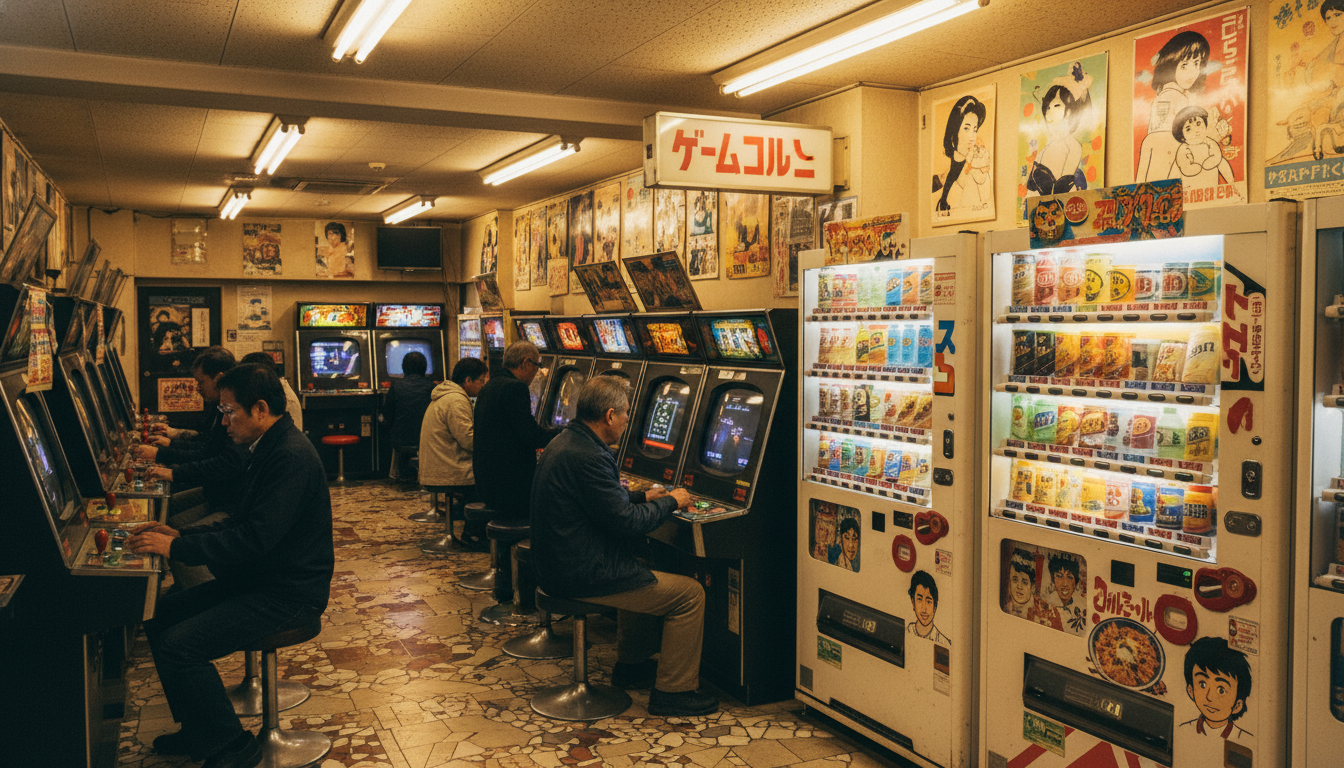
Game Corso Takasaki-ten Keeps Showa-Era Arcade Alive in Gunma
Game Corso Takasaki-ten preserves a Showa-era arcade in Gunma with vintage games, hot-food vending machines and a devoted national following that draws visitors
Game Corso Takasaki-ten, a compact, light-blue arcade in Takasaki, Gunma Prefecture, has remained largely unchanged since its revival in 1999, offering visitors a preserved Showa-era amusement experience. The venue, known for its vintage video cabinets and an array of hot-food vending machines, draws regulars who travel long distances to revisit memories tied to the machines. Manager Suzuko Notsuke, who helped save the facility when its predecessor closed, continues to run the arcade with family members and a commitment to maintaining its retro character. The arcade’s steady mix of solitary players, returning patrons and curious newcomers highlights its role as a living archive of Japan’s leisure culture.
Origins and 1999 Revival
About 40 years ago the site operated as a drive-in entertainment center that served families with arcade games and refreshment machines. When the original operator decided to close the facility, long-time manager Suzuko Notsuke received repeated requests from regular customers to keep the place open. In response, Notsuke rented the building and reopened it as Game Corso Takasaki-ten in November 1999, investing roughly ¥10 million to acquire equipment and restart operations. The name Corso, meaning “main street” in Italian, was chosen to evoke a renewed sense of community and bustle.
Machines, Menu and Atmosphere
The arcade is dominated by white, Showa-era arcade cabinets that sit alongside an assortment of vintage vending machines. Patrons can still buy hot noodle dishes such as soba and ramen from wall machines, toast and canned coffee, creating a mix of gaming and casual dining that feels unchanged by time. The interior is quiet during the day, with drawn curtains and an unassuming exterior that gives way to a compact, memory-laden space. Customers often linger over a single machine or a warm snack, and conversations frequently turn to recollections of childhood outings.
Visitors Travel for Nostalgia
Game Corso Takasaki-ten attracts a surprisingly wide geographic range of visitors despite its rural setting on a prefectural road. Some regulars arrive daily by car, while others make multi-prefecture trips from places as far as Hokkaido and Kanagawa. The clientele spans generations: older patrons who grew up with the machines, college students who bring card games, and solitary visitors content to read a newspaper with a can of coffee. For many, the arcade functions less as a commercial venue than as a social anchor where familiar routines and faces are preserved.
Family Management and Daily Rhythm
The arcade is operated by Notsuke alongside her husband and their son, who rotate responsibilities across the year. Open year-round from early morning until late at night, the venue historically operated 24 hours but scaled back service during the COVID-19 pandemic and has since maintained long daytime and evening hours. Staff and customers sometimes spend New Year’s Eve together, reflecting the arcade’s role as an informal community hub. The family-led model allows the arcade to prioritize regular patrons’ preferences over the pursuit of the latest gaming trends.
Maintenance of Legacy Equipment
Keeping the machines running presents ongoing technical and financial challenges because many of the cabinets and vending units are no longer manufactured. Repairs require specialist knowledge, scavenged parts and occasionally inventive solutions to preserve functionality. Despite those hurdles, the operators deliberately avoid buying modern machines, arguing that the venue’s value lies in its authenticity and continuity. For regulars, the occasional clatter of an old mechanism and the faint wear on a joystick are part of the appeal rather than signs of neglect.
Location, Access and Practical Details
Game Corso Takasaki-ten is situated on a prefectural road in Munadakamachi, Takasaki, and remains accessible by car from nearby stations and expressways. The arcade sits roughly a 15-minute drive from JR Shin-Maebashi Station and about 10 minutes from the Maebashi Interchange on the Kan-Etsu Expressway, making it reachable for day-trippers from surrounding regions. Operating hours typically begin in the early morning and extend into the small hours, accommodating a variety of visitor schedules. The modest exterior and rural surroundings belie the steady stream of patrons who value the space for its preserved character.
The persistence of Game Corso Takasaki-ten highlights a broader interest in preserving everyday cultural sites that link contemporary life to past decades. For the customers who return regularly, the arcade functions as a place of personal history, community exchange and low-cost leisure. Notsuke’s choice to maintain older machines and a familiar layout signals a deliberate stewardship of memory that resonates with visitors from across Japan.

