
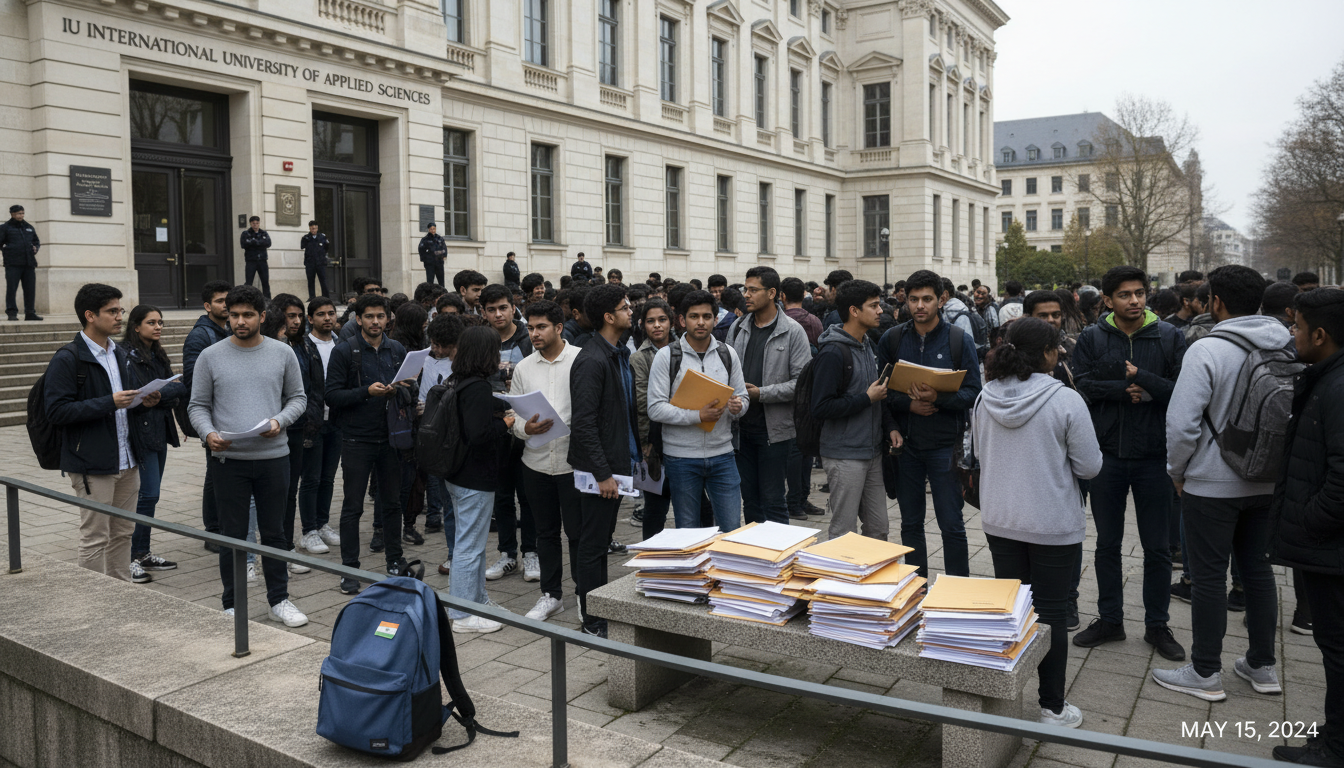
IU Berlin visa permits denied for hundreds of Indian students after university found to have breached rules
Hundreds of Indian students at the International University of Applied Sciences (IU) in Berlin were denied or had visa permits revoked after authorities deemed the private university in breach of regulatory requirements, leaving learners in legal and academic limbo.
BERLIN — Immigration authorities have refused or revoked residence permits for hundreds of Indian students enrolled at the International University of Applied Sciences (IU) in Berlin after a regulatory finding that the private institution had broken rules governing foreign student admissions. The decision, which affects current coursework and students’ legal status in Germany, has sparked urgent appeals and widespread uncertainty among those impacted. Some students described the surreal experience of having the campus nestled behind an Italian restaurant, emblematic of the cramped and improvised facilities cited by critics.
Regulators identify compliance failures
Local authorities concluded that the university failed to meet stipulated standards for enrolling foreign students, prompting a reassessment of visas issued on that basis. The regulatory action targeted institutional procedures rather than individual students’ conduct, but its effect has been immediate for many who depend on their residence permits to remain and study in Germany. Officials say such measures are intended to protect students and uphold the integrity of the higher education system.
Immigration offices enforce visa withdrawals
Foreigners’ offices and immigration officials executing the rulings have implemented denials and revocations in waves, citing the university’s compromised status as the legal basis. For students who received written notices, the immediate consequence is the loss of a lawful basis to stay in Germany, potentially exposing them to deportation or forced interruption of studies. Administrative appeals and requests for temporary tolerance are now the principal recourse available to affected students.
Students report disruption to studies and daily life
Students described sudden disruptions to classes, housing arrangements and part-time employment tied to their residency. Many have invested in travel, tuition and living costs based on the expectation that their permits would be secure, and now face mounting anxiety over the prospect of having to leave Germany or pause their degrees. Some recounted navigating to the campus through an adjoining Italian restaurant entrance, underscoring frustrations about facilities and the practical difficulties they encountered even before the visa decisions.
Legal avenues and university obligations
Affected students are increasingly seeking legal counsel to file appeals and apply for provisional protections while their cases are reviewed. Under German law, administrative decisions of this kind can be contested, and courts may grant temporary relief in individual cases. At the same time, the university bears an obligation to clarify its compliance status, assist students with documentation, and cooperate with authorities to restore lawful enrollment conditions where possible.
Impact on IU’s international recruitment and reputation
The episode threatens to reverberate beyond the immediate cohort, complicating IU’s recruitment pipeline and the broader appeal of private providers to overseas applicants. Prospective international students and agents often weigh institutional compliance and visa reliability heavily when choosing study destinations, and this incident may prompt closer scrutiny of private institutions’ admissions and campus arrangements. Policymakers and education stakeholders may reassess oversight mechanisms to reduce the risk of similar disruptions.
Calls for clearer guidance and student support
Student associations, advocacy groups and community networks have urged clearer guidance from immigration authorities and rapid, transparent communication from the university. Advocates argue for emergency measures that prioritize students’ welfare, including temporary permits or case-by-case tolerance while systemic issues are resolved. Supporters also call for improved information flows so affected students can make informed decisions about appeals, transfers or return options.
The situation remains fluid as legal challenges proceed and administrative authorities process appeals and reviews, leaving many Indian students uncertain about their academic futures in Germany. Rapid clarification from the university and decisive action from immigration officials will be central to resolving the status of those impacted by the IU Berlin visa permits decisions and preventing long-term harm to students’ studies and livelihoods.

