
Taiwan defense funding cut by opposition-led legislature, slashing proposed outlays by about 38% ahead of Trump-Xi summit
Lawmakers in Taipei reduced President Lai Ching-te’s Taiwan defense funding proposal by roughly 38%, trimming military outlays days before an anticipated Trump‑Xi summit in Beijing.
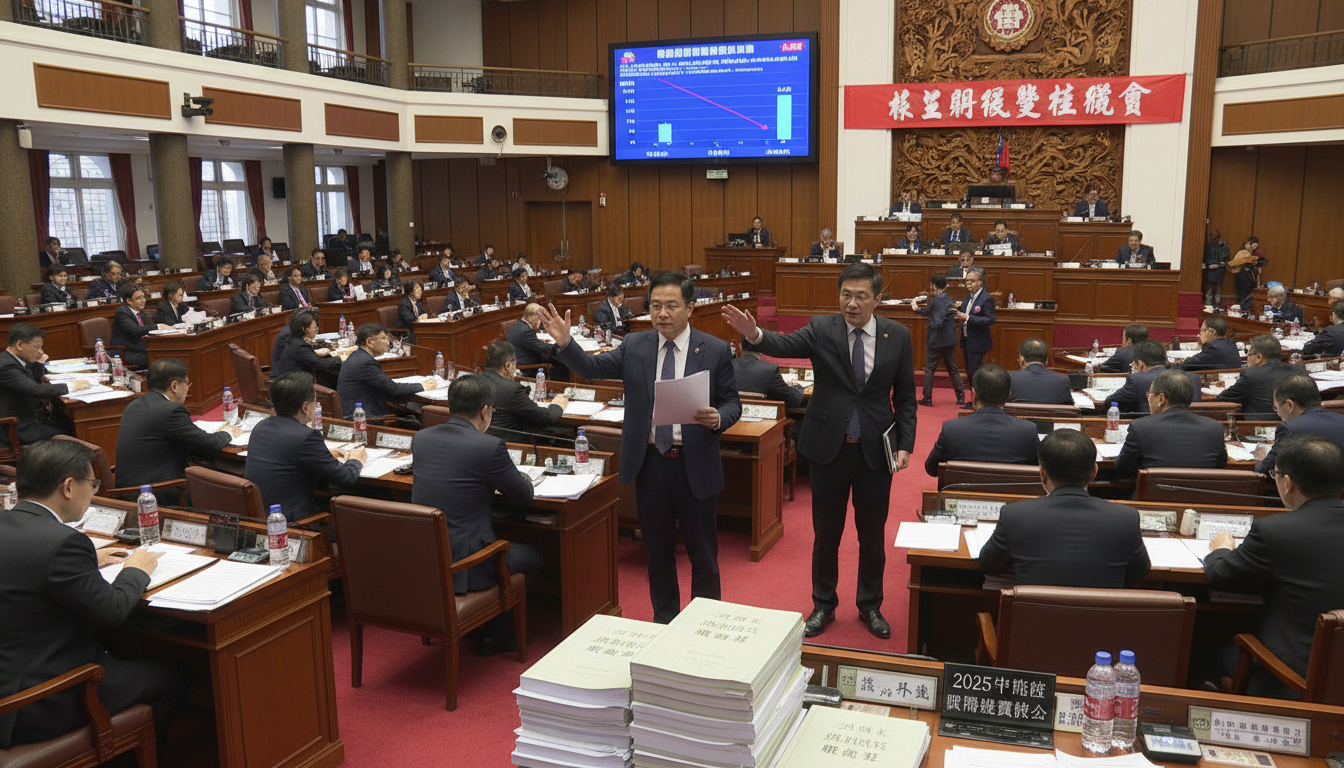
Taipei’s opposition-led legislature voted on May 8, 2026 to substantially reduce the defense budget that President Lai Ching-te submitted earlier this year, cutting the proposal by about 38 percent. The move, which was updated in official records on May 9, drew swift attention in Washington and among regional security analysts worried about the timing and implications for deterrence.
Legislative vote and scale of the cuts
The Legislative Yuan’s decision reduced the size of Lai’s requested military spending package by more than a third, according to parliamentary announcements released after the vote. Lawmakers cited a range of fiscal and policy concerns when advancing the amendments that produced the final reduction.
Opposition members argued the revised allocation better reflects current budgetary pressures and domestic priorities, while members aligned with the administration warned that the cuts could hinder procurement and readiness timelines. The precise lines trimmed were the subject of late-night committee negotiations and were set out in a series of amendment votes on Friday.
Political clash between the presidency and opposition
The vote crystallizes a broader political standoff between President Lai’s administration and the opposition bloc in the legislature. Lai, who campaigned on strengthening Taiwan’s defenses, had framed the proposed spending as essential to deter growing pressure across the Taiwan Strait.
Opposition legislators countered that more transparent oversight and rebalancing toward social and economic programs were necessary amid competing public needs. The clash has unfolded against a backdrop of domestic election politics and differing views in Taipei about the best approach to cross‑strait relations and national resilience.
Security concerns voiced in Washington and beyond
U.S. officials and independent analysts signaled concern over the timing of the cuts, noting the vote came days before an expected summit between U.S. President Donald Trump and Chinese leader Xi Jinping in Beijing. Several Washington-based security observers said the reduction could complicate allied assessments of Taiwan’s near-term force modernisation plans.
Regional analysts pointed to recent imagery and military activity around Taiwan that have underscored the island’s need for sustained investment in asymmetric capabilities. Visuals from earlier this year, including footage of Taiwanese soldiers operating drones during exercises in Kaohsiung, have been cited by proponents of accelerated procurement as evidence of evolving defense requirements.
Diplomatic timing and potential strategic repercussions
The legislative action arrives amid heightened diplomatic focus as leaders in Washington and Beijing prepare for high-level talks scheduled this month in Beijing. Policy experts warn that fiscal decisions in Taipei could factor into broader strategic calculations made by the United States and other partners.
Beijing has repeatedly emphasized reunification and has criticized external support for Taiwan’s defense enhancements, while Washington has framed its interest in Taiwan primarily in terms of regional stability and deterrence. Against that diplomatic backdrop, Taipei’s budgetary choices have drawn scrutiny for how they might alter deterrence dynamics or influence signaling between the three capitals.
Procedural next steps and executive options
Under Taiwan’s budgetary process, the revised appropriation will move through the formal channels required before funds are disbursed, and the administration retains several options to respond. The president’s office can request supplemental budgets, initiate reallocation within existing lines, or pursue expedited procurement measures to mitigate any gaps produced by the cuts.
Officials in Taipei may also seek to highlight specific procurement projects deemed critical to near-term readiness, or to employ contingency financing for urgent acquisitions. How rapidly such measures can be enacted will depend on legal timelines and the political capacity for further bargaining with the legislature.
Regional reactions and longer-term implications
Governments across the Indo-Pacific are watching Taipei’s next moves, with defense planners assessing whether fiscal changes will affect training schedules, weapons deliveries, or interoperability programs. Commercial partners and defense contractors have also flagged potential schedule disruptions if planned purchases are delayed or scaled back.
Longer term, the decision could reshape Taiwan’s defence procurement strategy, accelerating a shift toward smaller, high‑end asymmetric systems or prompting renewed debate over conscription and reserve readiness. Observers caution that while a single budget cycle does not determine strategic outcomes, repeated funding shortfalls may constrain Taipei’s ability to sustain modernization over time.
The legislature’s vote on May 8, 2026 marks a significant moment in Taipei’s domestic politics and its external posture, and it will be closely monitored as the region reacts to both the spending decision and the diplomatic developments surrounding the expected Trump‑Xi summit.

