
Hanoi’s 100-Year Master Plan Prompts Downtown Demolitions and Mass Relocations
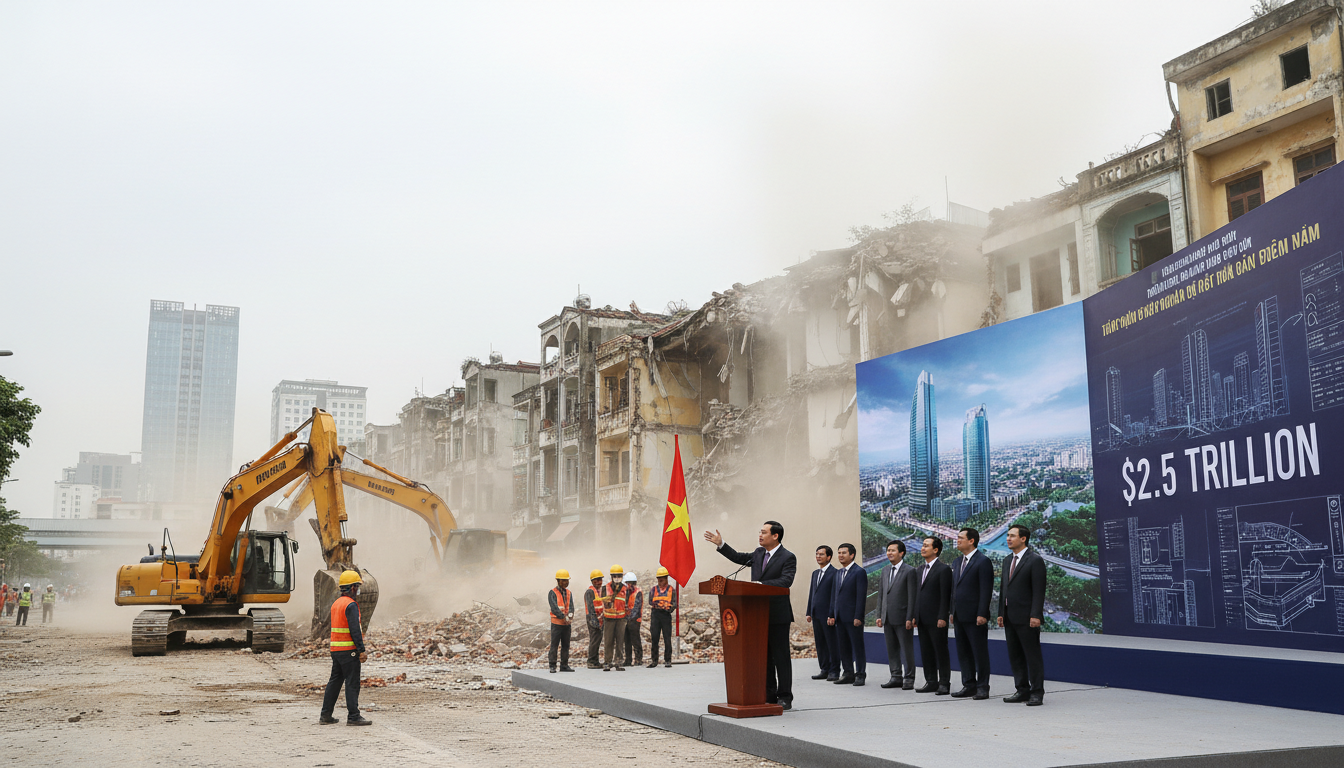
Hanoi’s $2.5 trillion 100-Year Master Plan has begun to reshape the capital’s central districts, with demolitions and relocations underway as city authorities pursue a multi-centered metropolitan model to reach developed-nation status by 2045.
Demolitions Begin in Central Hanoi
On May 6, crews demolished a string of vacant houses in Hanoi’s central downtown as part of an initial clearance phase tied to the 100-Year Master Plan. The work is concentrated in several historic inner-city wards where aging structures and underused plots are being removed to make way for new development corridors.
City officials describe the activity as preparatory works necessary to reconfigure road networks, build transit links and create plots for mixed-use projects. Residents and property owners in affected zones have reported notices and staged relocations in recent weeks.
Scope and Financing of the Project
The Hanoi 100-Year Master Plan is billed by planners as a long-term blueprint to transform the capital into a multi-centered metropolitan region. The plan’s price tag—estimated at about $2.5 trillion—covers infrastructure, transportation, housing and urban regeneration over several decades.
Financing is expected to come from a mix of public investment, state-backed borrowing and private sector participation, though detailed funding timetables and contract awards have not been published in full. Officials say phased spending will align with national targets for economic development and urban modernization.
Relocations and Social Impact
Relocation programs tied to the plan have prompted concerns among displaced residents about compensation levels and the pace of moves. Local authorities say they are offering alternative housing and monetary settlements, but community leaders and civil society groups are monitoring how packages are implemented on the ground.
Advocates warn that hurried demolitions could disrupt livelihoods and erode neighborhood networks if resettlement is not managed carefully. City departments say social support teams will coordinate relocation logistics, but independent observers call for transparent timelines and clearer grievance mechanisms.
Design Vision: Multi-Centered Metropolitan Model
Planners behind the Hanoi 100-Year Master Plan envision shifting the city’s layout from a single, congested core to several satellite centers linked by rapid transit and arterial roads. The multi-centered approach aims to reduce central congestion, distribute economic activity, and stimulate balanced regional growth.
Under the proposal, each sub-center would host clusters of commercial, cultural and residential functions supported by new transport hubs. The strategy aligns with broader urban trends in Asia that favor decentralized metropolitan systems to improve livability and economic resilience.
Economic and National Ambitions Through 2045
The master plan is framed as a municipal contribution to Vietnam’s national ambition of attaining developed-country status by 2045. Hanoi’s transformation is positioned to attract foreign investment, boost productivity and create modern urban infrastructure that underpins long-term growth.
Officials link specific infrastructure upgrades—such as mass transit expansions, new logistics corridors and redevelopment zones—to projected gains in competitiveness and quality of life. Economists caution, however, that benefits will depend on implementation fidelity, cost control and inclusive policies that prevent displacement of vulnerable groups.
Challenges: Implementation, Heritage and Public Trust
Experts and local stakeholders identify multiple hurdles to the plan’s success, including complex land tenure issues, funding gaps and the need to preserve Hanoi’s cultural heritage. The demolition of older structures in central districts raises questions about protecting historic fabric while enabling necessary renewal.
Building public trust is another immediate challenge. Clearer disclosure of project schedules, compensation formulas and environmental assessments could reduce tensions, observers say. City authorities have signaled they will proceed in stages and engage selected community representatives, but critics call for broader consultation.
The demolition activity in early May has made the stakes of the Hanoi 100-Year Master Plan tangible for many residents, turning long-term planning language into visible change on the streets. How authorities balance redevelopment goals with social protections and heritage conservation will shape whether Hanoi’s transformation advances as a model of planned, inclusive urban growth or becomes a source of local conflict and inequality.

