
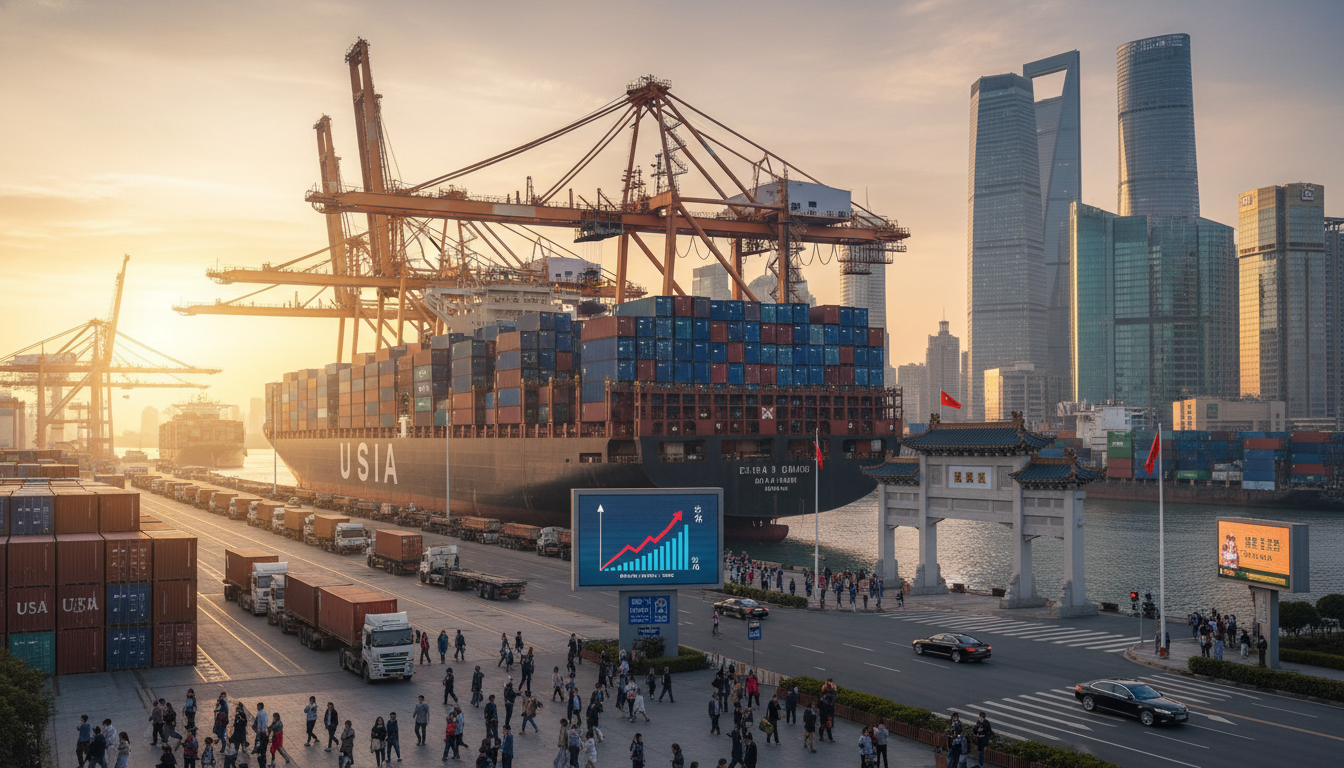
China exports hold steady in April as US shipments rebound and imports surge on AI demand
China exports picked up in April as shipments to the US rebounded and imports surged on AI-related demand, helping offset weak domestic consumption in 2026.
China exports remained resilient in April despite external and domestic headwinds, with customs figures and market reports showing stronger outbound shipments while imports accelerated on demand for technology components. Shipments to the United States rebounded after recent weakness, and imports of artificial intelligence-related goods and high-tech components drove much of the uptick. The performance helped blunt signs of soft domestic consumption and attracted renewed attention as preparations for a high-profile Beijing visit were reported.
Exports Rise in April
Official trade data released for April show China exports recovering from earlier softness, with several sectors reporting firmer orders from overseas buyers. Export growth was broad-based, spanning electronics, machinery and consumer goods, and was supported by steady demand in key markets.
Analysts said the uptick reflected a combination of inventory restocking abroad and continued competitiveness in global supply chains. Despite ongoing geopolitical tensions and volatility in commodity markets, manufacturers ramped up shipments to meet orders placed earlier in the quarter.
Shipments to the United States Rebound
Reports indicate that shipments to the United States, which had flagged in recent months, returned to growth in April as US buyers replenished inventories. The rebound helped lift headline export figures and signaled that demand from North America remains a stabilizing force for Chinese exporters.
Industry sources pointed to stronger orders for telecommunications equipment and component parts as primary drivers of the U.S. recovery. Observers cautioned, however, that the recovery could be fragile and dependent on both US consumer demand and the outcome of diplomatic and trade engagements.
Imports Surge Driven by AI-Related Goods
Imports rose markedly in the first quarter and continued to show momentum into April, with strong demand for AI-related hardware and other high-value technology items cited as a major factor. Exhibitions and trade fairs in southern China highlighted the appetite for chips, sensors and related components needed for artificial intelligence applications.
Market participants said companies had been accelerating purchases of computing and software-related hardware to support product development and production scaling. The result was a notable increase in the value of goods entering Chinese ports, easing some concerns about supply-side constraints for tech firms.
Domestic Demand and Manufacturing Outlook
Despite the external trade improvement, domestic consumption has shown uneven recovery, leaving policymakers and economists attentive to mixed signals. Retail spending and household services lagged earlier expectations, contributing to a gap between export strength and domestic demand.
Manufacturers, however, reported that steady export orders provided a buffer while firms adjusted production to global demand patterns. Still, long-term growth will depend on a revival in household consumption and investment, analysts said.
Geopolitical and Regional Risks
Trade activity took place against a backdrop of geopolitical uncertainty, including disruptions in the Middle East that have unsettled commodity and shipping markets. Such risks have the potential to affect logistics and insurance costs, adding an element of volatility for exporters and importers alike.
At the same time, diplomatic developments drew market attention, with preparations for a high-profile visit to Beijing cited as a contextual factor for business sentiment. Policy makers and firms remain watchful of how international engagements might influence trade policies and cross-border investment flows.
Market Response and Policy Signals
Financial markets responded to the trade data with cautious optimism, pricing in a modest improvement for industrial output and corporate earnings tied to external demand. Currency and equity movements reflected a balance between the positive export news and persistent concerns about domestic spending.
Policy makers signaled readiness to support growth through targeted measures rather than broad stimulus, emphasizing stability and structural reforms. Observers noted that supportive policies aimed at technology investment and supply chain resilience could reinforce import demand for high-tech inputs.
China’s export performance in April offered a welcome counterpoint to slowing domestic activity, with gains concentrated in sectors tied to technology and international demand. Whether the improvement will extend through the summer depends on developments in global markets, domestic policy responses, and the ability of households to lift consumption.

