
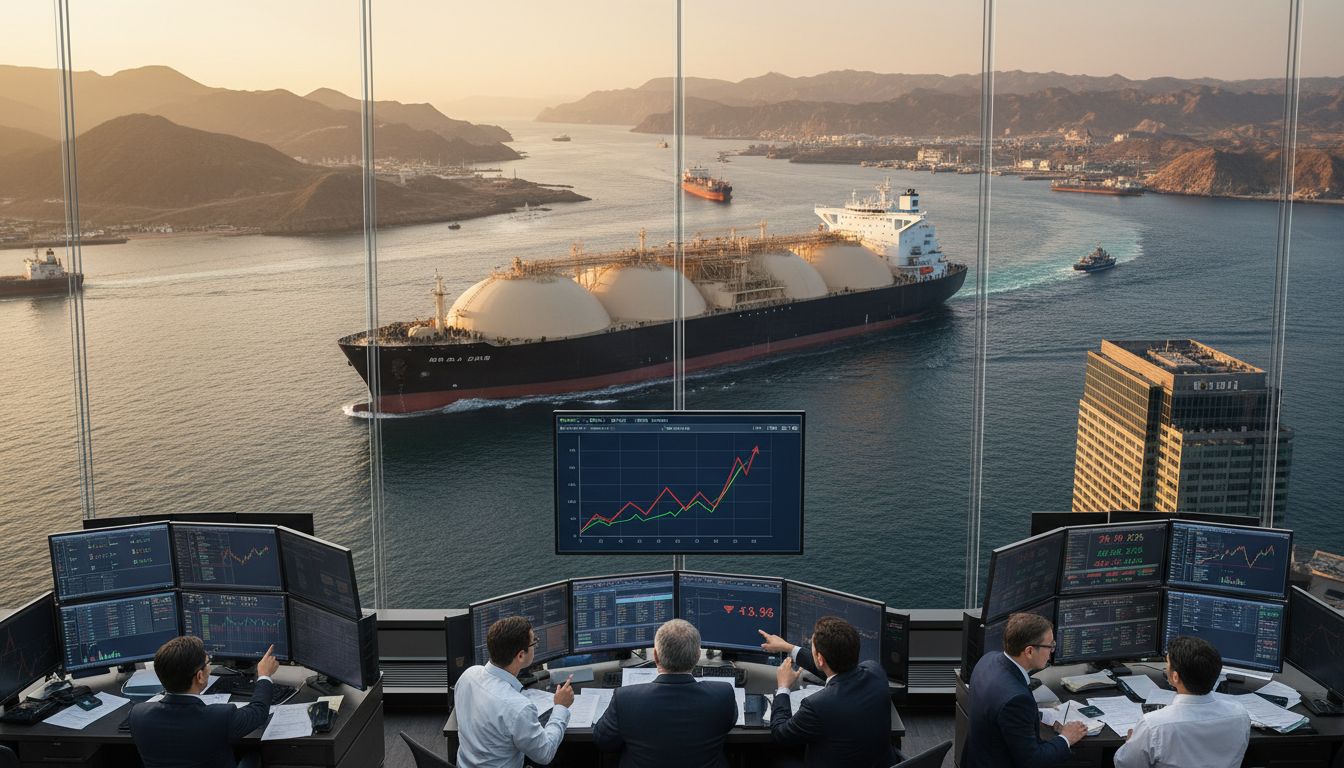
Strait of Hormuz Blockade Shows Signs of Easing as Two LNG Tankers Head to Japan and China
Two liquefied natural gas tankers have passed through the Strait of Hormuz in recent weeks, bound for ports in Japan and China, offering tentative relief from the Strait of Hormuz blockade while underscoring ongoing supply strains and soaring Asian prices. The shipments — one vessel due to berth at Futtsu on Japan’s Pacific coast and a second destined for a Chinese receiving terminal — suggest limited corridors of passage remain open even as the U.S.-Iran confrontation continues to disrupt maritime traffic. Market data and industry observers say the small volume of cargoes contrasts with a wider squeeze that has driven Asian spot LNG prices roughly 60% higher.
Two LNG Tankers Bound for Japan and China
Ship-tracking platforms and port notices show the two tankers transited the Strait of Hormuz within the last several weeks and are proceeding to Northeast Asian ports. One of the tankers is scheduled to dock at Futtsu, a major LNG receiving terminal south of Tokyo, while the other is listed as heading to a Chinese import facility. Industry analysts describe the movements as isolated shipments rather than a wholesale reopening of the corridor.
Evidence of Partial Passage, Not Full Relief
While these transits indicate some vessels can still navigate the strait, shipping sources caution against interpreting the activity as a full easing of the blockade. Passage may reflect temporary de-escalation along specific routes or individual arrangements rather than guaranteed safe transit for all commercial vessels. The limited scale of these shipments highlights how the overall blockade continues to constrain global flows of energy commodities.
Asian Spot Prices Spike About 60%
The blockade and related supply disruptions have contributed to a sharp surge in Asian spot LNG prices, which industry benchmarks estimate rose by roughly 60% over a short span. The surge has amplified cost pressures for utilities and large industrial consumers across the region and has prompted buyers to scramble for alternative supplies. Elevated spot levels also increase the risk of wider energy inflation, weighing on economic planners in energy-importing countries like Japan.
Security, Insurance and Rerouting Costs Remain High
Beyond the immediate risk of naval confrontation, insurance and security costs for tankers operating near the Strait of Hormuz have climbed, adding to the price pressure on delivered cargoes. Many operators remain cautious about routing vessels through high-risk waters and have continued using longer alternatives such as the Cape of Good Hope when feasible. Those longer voyages increase transit time and fuel costs, reducing the volume of cargo that can quickly reach markets.
Tokyo and Beijing Monitor Shipments and Contingencies
Japanese and Chinese authorities have stepped up monitoring of energy shipments amid the uncertainty, coordinating with port operators and industry stakeholders to manage arrivals and storage. Both capitals are managing inventories and contingency drawdowns to blunt short-term shortages, while also exploring diplomatic and commercial measures to shore up supplies. State-owned and private buyers in the region are reported to be diversifying contract structures and seeking shorter-term cargoes to cover near-term demand.
Market Outlook Hinges on Further Transits and Diplomatic Moves
Analysts say the immediate market reaction will depend on whether additional vessels can pass safely through the strait and whether diplomatic channels reduce the risk of wider escalation. A steady resumption of passage would ease acute supply tightness, but sustained stability is required to normalize spot pricing and lower insurance premiums. Conversely, renewed attacks or intensified sanctions could push buyers to lock in more expensive long-haul deliveries, perpetuating elevated prices.
The passage of two LNG tankers provides a cautious signal that limited movement is possible despite the Strait of Hormuz blockade, but the small scale of these shipments underscores how fragile regional energy security remains. Markets and governments will be watching closely for follow-on transits, insurance developments, and diplomatic shifts that could either stabilize supplies or further tighten global energy markets.

